
TJ L’Heureux

Audio By Carbonatix
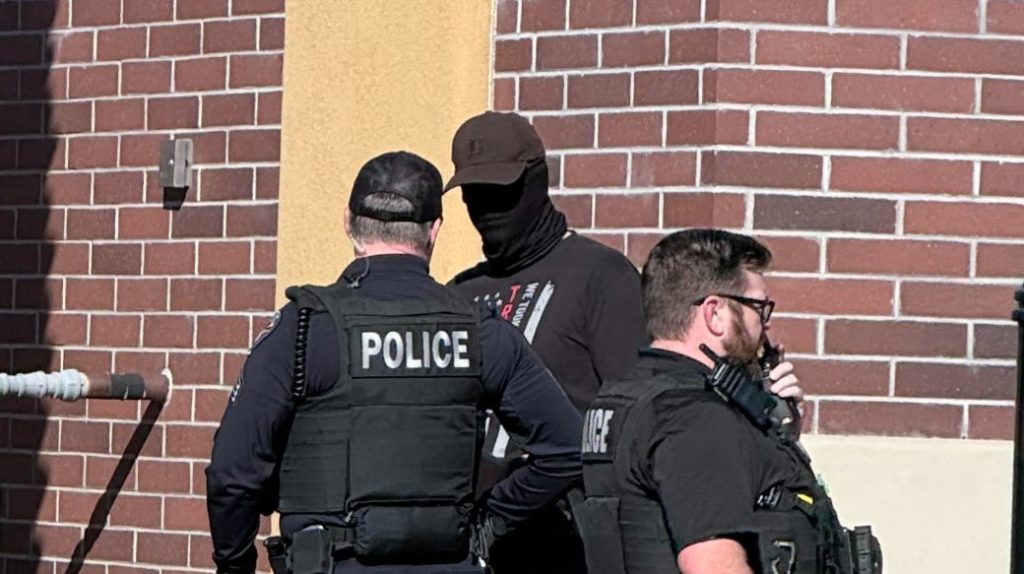
Dusten Mullen, the Phoenix cop fired for his off-duty behavior at a student protest, lost a battle on Thursday. But he may win the war.
In a 15-page ruling issued Thursday in Mullen’s lawsuit against the city of Phoenix, federal Judge Susan Brnovich denied Mullen’s request for a temporary restraining order and preliminary injunction that would have seen him reinstated with the Phoenix Police Department. But Brnovich acknowledged that Mullen has strong First Amendment claims against the city, which fired him after he showed up masked and armed at an anti-ICE student protest in Chandler and told local police he wanted to bait students into assaulting him.
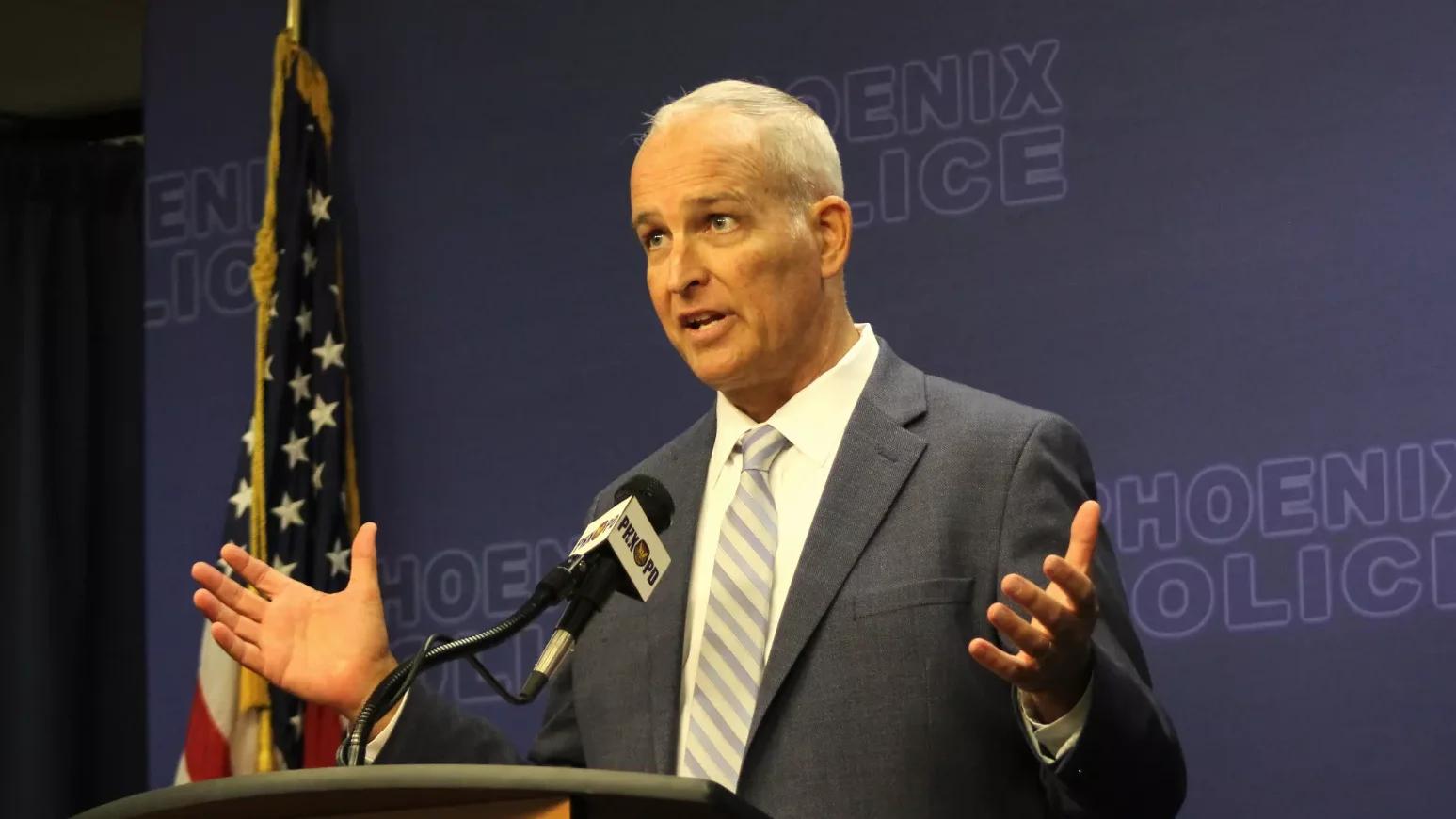
Mullen, who was a sergeant, was fired on May 14 after what’s known as a Loudermill hearing in front of Phoenix Police Chief Matt Giordano and other city officials. Mullen’s attorney, Steve Serbalik, immediately filed a motion asking the court to reverse that decision while Mullen’s ongoing lawsuit plays out.
Brnovich, who heard oral arguments on the motion in court on Monday, denied that request, saying Mullen hadn’t shown enough evidence that he’d be irreparably harmed if his firing were allowed to stand while the case pends. But, she wrote at length that Mullen’s attorney argued persuasively that Phoenix retaliated against him for his protected First Amendment activity and fast-tracked his firing after media coverage of the incident exploded.
“The merits of Plaintiffs’ case are strong,” Brnovich wrote. “But the Court finds that Plaintiffs again fail to articulate imminent irreparable injury warranting the preliminary injunctive relief they seek.”
In an emailed statement, Steve Serbalik, Mullen’s lawyer, said that Mullen was grateful that the court gave a “thorough and fair analysis” of the case.
“We will continue to pursue this matter in the appropriate venues,” he wrote.
The city of Phoenix declined to comment or provide more information due to the ongoing litigation.
This is the second temporary restraining order requested by Mullen that Brnovich has denied. Mullen also requested one before his Loudermill hearing, which Brnovich denied on the grounds that any harm Mullen might suffer was speculative because the city’s disciplinary process had not been completed at the time. In her latest ruling, she noted that any harm suffered by Mullen in light of his firing — essentially, lost salary — could be remediated by backpay should the lawsuit ultimately result in his reinstatement.
Courtesy of Megan Craghead
First Amendment claims
The ruling was a win for the city, but perhaps a pyrrhic one. Throughout most of her ruling, Brnovich largely took Mullen’s side and suggested that the evidence supports the assertion that the city railroaded him.
The judge agreed that Mullen was present at the protest as a counter-protester and that he was engaged with issues of public concern. In addition to Chandler police identifying him as a counter-protester on the scene, she wrote, the Phoenix Police Department also acknowledged his counter-protesting in its internal investigation. Mullen also wore a Trump 2020 t-shirt, which clearly identified his political stance, and filmed his interactions with law enforcement.
“Sgt. Mullen’s recording of police activity alone is sufficient to trigger First Amendment protections,” Brnovich wrote.
Mullen has claimed that the city changed the severity of his alleged policy violations and sped up its investigation of them after media reports identified him and after Anna Hernandez, a member of the Phoenix City Council, spoke publicly about the incident. Previously, a lieutenant with the department’s Professional Standards Bureau testified in court that the investigation felt rushed.
Brnovich apparently found that persuasive. Her ruling outlined the timeline of events, from protest to firing, and found that it “evidences a rushed and conclusory investigation” that was influenced by public sentiment.
“Accordingly, Plaintiffs can clearly show Sgt. Mullen’s First Amendment protected activity was a substantial or motivating factor in his termination,” she wrote.
Despite the free speech protections, the city could have justified the firing by showing that it had caused a disruption in the workplace. Brnovich felt the city failed that test, as well as a test that would have required the city to show it would have fired Mullen even if no First Amendment activity had been involved. She pointed to a video played by Mullen’s lawyer at the hearing that showed the minutes leading up to his notorious comments about instigating the students to assault him and get them arrested. The city argued that it would have fired him for trying to provoke a crime, but Brnovich wrote that the video did not show that.
Instead, she said, it showed Mullen attempting to interact with protesters peacefully. She said Mullen’s attorney persuasively argued that Mullen’s eventual comment to a Chandler officer about baiting protesters into attacking him was made out of frustration, given that protesters were hounding and following Mullen and that one had thrown water on him.
“That video does not depict Sgt. Mullen instigating or provoking any students to assault him,” she wrote. “In fact, the video showed Sgt. Mullen asking students if they wanted to have a conversation.”
It remains to be seen what happens in the case from here. Mullen termination stands, but Brnovich’s ruling suggests that ultimately may not stick. (Notably, her ruling did not address the fact that Mullen can still appeal his firing to the city’s Civil Service Board, which could overturn the termination.) A full trial could theoretically bring to light additional facts that support the city’s position.
If Brnovich’s ruling is any guide, though, it may be time for the city to broach settlement talks.