Arizona Department of Corrections, Rehabilitation and Recovery

Audio By Carbonatix
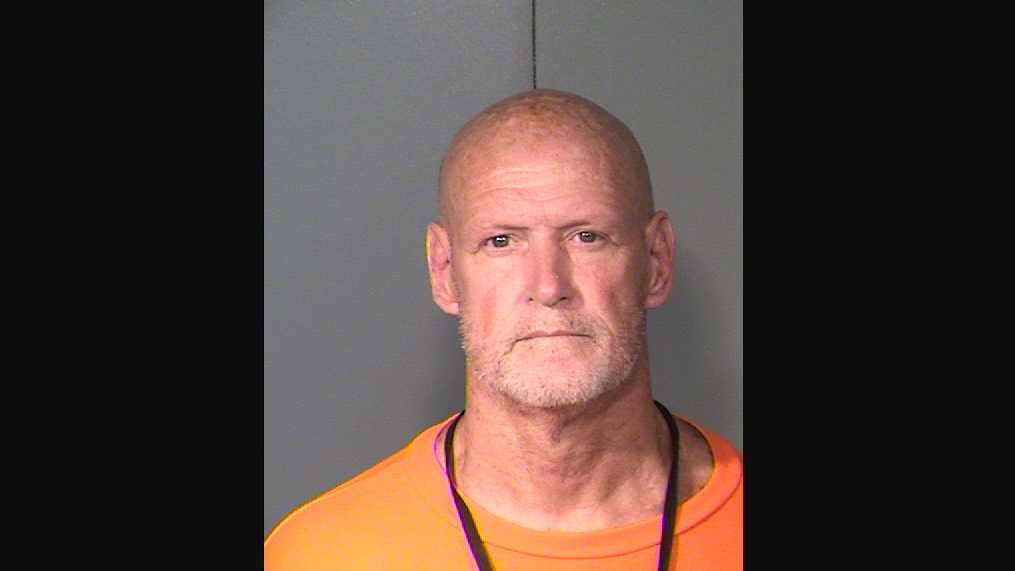
Arizona killed Leroy McGill in the state’s first execution of 2026.
McGill, 63, was executed by lethal injection at Arizona State Prison Complex-Florence on Wednesday morning. He was convicted of first-degree murder in 2004 for killing Charles Perez two years earlier. McGill poured gasoline on Perez and set him on fire. McGill was also convicted of arson and other charges, including the attempted murder of Perez’s girlfriend, Nova Banta, whom he also burned.
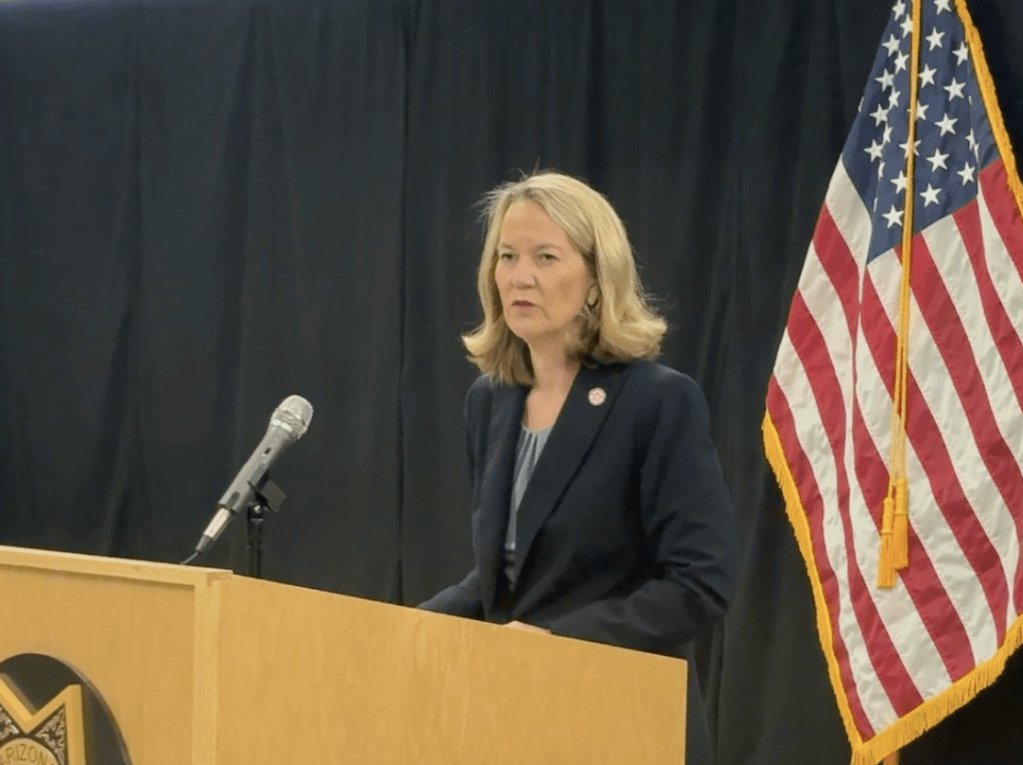
“As Arizona voters have affirmed, and Arizona courts have reinforced, the death penalty is the law of the land in Arizona,” Arizona State Attorney General Kris Mayes said in a press conference at the prison after the execution. “As Arizona’s top law enforcement official, it is my duty to enforce the law of our state. Today, that duty has been carried out. My thoughts today are with the family and the loved ones of Charles Perez, as well as with Nova Bonta.”
McGill was the 13th person executed in the United States this year. His was also the first of three executions scheduled in the country this week. Two executions are planned for Thursday: Tony Carruthers in Tennessee and Richard Knight in Florida.
There are now 108 people — three women and 105 men — left on Arizona’s death row.
Arizona Department of Corrections, Rehabilitation & Reentry
McGill was pronounced dead at 10:26 a.m., said John Barcello, deputy director of the Arizona Department of Corrections, Rehabilitation & Reentry. His last meal was onion rings, bread and butter, green salad, cottage pie and chocolate cake. The victims’ families and representatives did not attend. His body is now in the custody of the medical examiner.
McGill did not resist, Barcello said.
“I personally observed the process and events today, including the execution,” Barcello said. “I can say that the process went according to ADCR policy and procedure.”
Barcello and the two media witnesses, Josh Kelety of the Associated Press and Sean Rice of 12 News, described the execution.
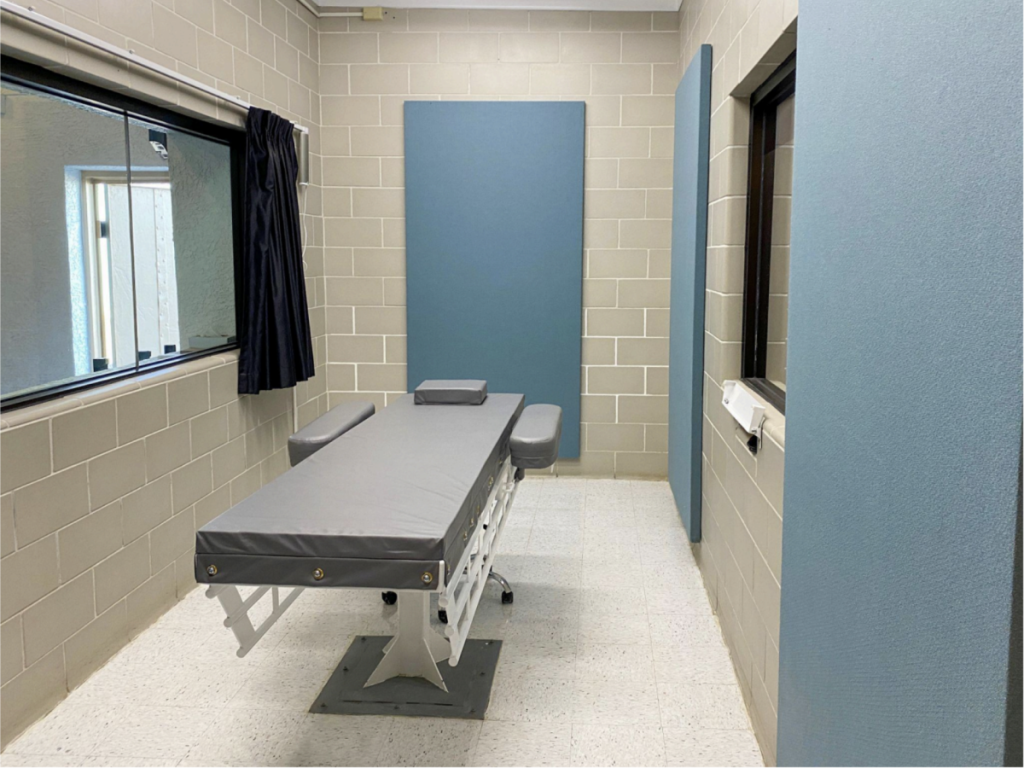
Just before 10 a.m., witnesses were seated in a room with a window into the death chamber. The window’s black curtain was drawn but they could see the inside of the chamber on TV monitors. McGill, dressed entirely in white, entered the execution chamber at 10:01 a.m. with four unidentifiable workers dressed entirely in white with only their eyes showing. The workers strapped him to the table. McGill appeared to be breathing deeply, his abdomen rising visibly. The media witnesses confirmed that he did not resist.
At 10:04 the curtains opened. From 10:05 to 10:08, the workers inserted the IV’s. They looked for suitable veins in both of his arms and appeared to insert each needle on the first try. While they hooked up the IV’s, McGill scanned the room of people watching through the window and nodded at a few who were not identified.
McGill spoke his last words.
“I just want to thank everyone for being so accommodating and nice,” he said. “I’m going home soon.”
His spiritual advisor entered the chamber and stood by his head. He said the Lord’s Prayer. When he finished, McGill said, “Amen.”
Staff read the execution warrant at 10:09 a.m. At 10:11, the staff began the lethal injections. They pushed down a black syringe, then a green. McGill took a few deep breaths then made a snoring sound. At 10:14 they pushed another green syringe. The snoring sound stopped. At 10:15 they injected the final black syringe. Other than a small twitch in his face, McGill didn’t move again.
Arizona Department of Corrections, Rehabilitation & Reentry
McGill is the third person executed by the state of Arizona since Governor Katie Hobbs restarted them last year with the executions of Aaron Gunches and Richard Djerf. Their executions came after a two-year pause in the wake of flawed and contentious executions under previous administrations, including the botched two-hour-long 2014 execution of Joseph Wood.
While running for office, Hobbs said that Arizona would not do executions if it could not do them humanely. She enlisted retired federal judge David Duncan to investigate the state’s execution procedures. She later fired Duncan before the report was published, saying she didn’t like the direction he’d taken. She cited his recommendation that the state consider using a firing squad, as lethal injections could not consistently be performed humanely.
A draft of Duncan’s report was ultimately released, laying out his concerns about transparency and lethal injections. The Arizona Department of Corrections, Rehabilitation and Recovery released its own report, giving its current protocols a green light. At the same time, Hobbs and Mayes faced pressure from Maricopa County Attorney Rachel Mitchell, who threatened to circumvent the two Democrats and seek death warrants from the Arizona Supreme Court herself. Instead, Hobbs and Mayes resumed executions, and the state executed Gunches in March and Djerf in October.
Experts say that people executed with pentobarbital, the main drug used in lethal injections, sometimes die painful deaths while not properly anesthetized. They suffer from pulmonary edema and their lungs fill with fluid, killing them.
Neither witness described McGill as being in evident pain. Kelety said he could not speak to whether he experienced any. Rice said his death appeared to be painless and that McGill’s long deep breaths and snoring sounds only last for about a minute.
Whether or not McGill suffered from pulmonary edema won’t be known until his autopsy is completed and published. The autopsy reports for Gunches and Djerf did not show signs of pulmonary edema. However, Djerf’s report, which was released in January, renewed scrutiny of the state’s lethal injection protocols. The report showed that ADCRR medical staff struggled to set an IV line in his arms. The autopsy report documented seven needle punctures — three on the right, four on the left. But witnesses said his execution went generally smoothly otherwise.