

Gage Skidmore

Audio By Carbonatix
While the Arizona legislature is on break for the rest of May, lawmakers will collectively make nearly $200,000 in daily subsistence payments, whether or not they travel to the Capitol or do any work.
The Republicans who control the Arizona House of Representatives and the Arizona Senate voted on May 5 to adjourn for the rest of the month, after Democratic Gov. Katie Hobbs vetoed their partisan budget proposal.
The Senate plans to meet one more time this month, on May 11, and both chambers could be called back to the Capitol at any time by legislative leaders.
The GOP budget proposal included 5% cuts to most state agencies and more restrictions on both the Supplemental Nutrition Assistance Program, formerly food stamps, and the Arizona Health Care Cost Containment System, the state’s Medicaid program. That’s on top of work requirements from the federal government that the budget architects supported.
While some Arizonans trying to get access to healthcare and food will have to prove that they’re working to qualify for those payments, legislators have no such requirements to receive their per diem pay.
Each legislator is paid a per diem for every day of a regular or special legislative session, including Fridays and weekends, “whether the Member is present at the capitol or not,” according to the Arizona House’s legislative subsistence pay policy.
That means that even if the legislator isn’t working, they still receive daily payments until the legislative session ends. Legislators who report trips to the Capitol after the end of the session can receive per diem payments on a more limited basis.
The base pay for Arizona legislators is far from generous, at $24,000 a year — a number that hasn’t changed since 1998. Being a lawmaker in the Grand Canyon State is supposed to be a part-time job, but it requires long days and late nights during the legislative session, and it regularly blows past its scheduled 100 days, and into June, as lawmakers negotiate a budget by the June 30 deadline.
The amount each lawmaker is paid per diem depends on where that legislator lives and how long the session lasts. The nearly two-thirds of legislators who live in Maricopa County, the state’s most populous county and where the Capitol are located, receive $35 per day for the first 120 days of the legislative session and $10 per day after that.
May 15 is the 120th day of the legislative session.
After a law change in 2021 meant to help rural lawmakers who must travel long distances to the Capitol, legislators who don’t live in Maricopa County are paid $269 per day for the first 120 days and $135 after that, putting a big gap between pay for lawmakers who live in Maricopa County and everyone else.
This means that during the May break, legislators who live in Maricopa County will receive a total of about $500 each, while the 33 legislators who live outside the county will get about $4,700 apiece. During the four-week break, the state is set to spend about $178,000 on per diem payments to legislators who don’t have any official work to do.
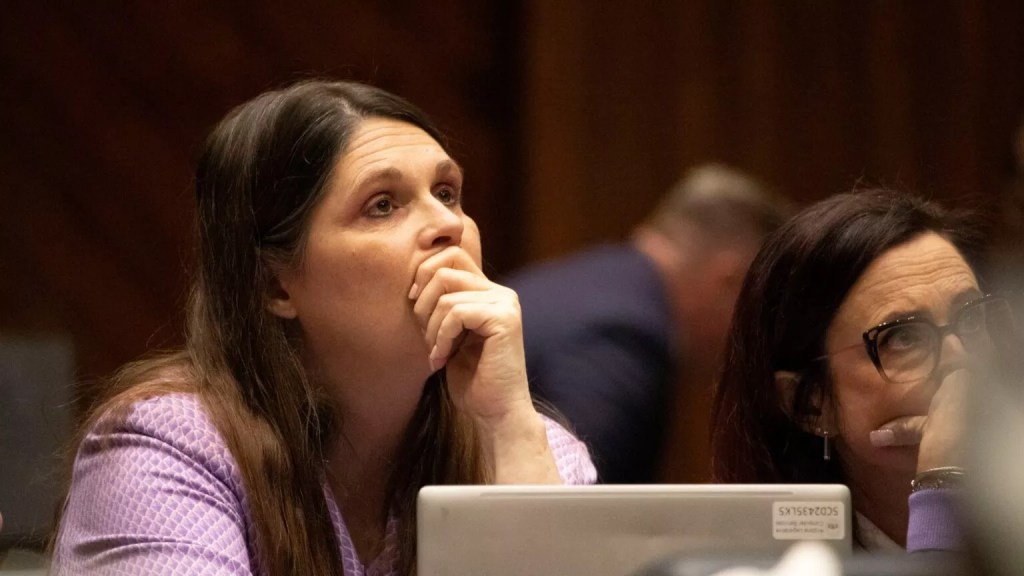
Jerod MacDonald-Evoy/Arizona Mirror
Some still working
Kim Quintero, the spokeswoman for Arizona Senate Republicans, told the Arizona Mirror that the GOP-backed work requirements for people to receive health insurance and food aid were not comparable to per diem payments to legislators.
“Equating responsible budget reforms — like adding commonsense work requirements to promote self-sufficiency in welfare programs — with lawmakers’ legitimate compensation is a false and misleading premise,” she said in a statement. “Arizonans expect their representatives to control spending and encourage work, not to forgo their own lawful reimbursements while doing the job they were elected to do.”
Undoubtedly, some lawmakers are working during the break, especially those in leadership roles.
Rep. Stephanie Stahl-Hamilton, D-Tucson, told the Mirror that she thinks the good that comes from work on the $18 billion budget during the break will be worth the comparatively small amount of per diem paid to legislators if Democrats can negotiate a budget they believe is better for the state.
Stahl-Hamilton, who is among the lawmakers tasked with creating a bipartisan budget that will get the approval of the Republican-led legislature and Hobbs, said that Democrats are still hard at work on their budget plan during the break.
It’s a difficult budget year, with decreased federal funding and economic impacts from tariffs and the war in Iran, but Stahl-Hamilton is optimistic that Democrats can make the cuts less painful through negotiations with Republicans.
Stahl-Hamilton said that sometimes it’s easier to hammer out a budget deal when the legislature is adjourned because there are fewer lawmakers who aren’t involved in the budgeting process there to cause distractions.
“For the people not involved in the budget discussion, it’s better for them to be at home in their districts and clear out the extra noise for the people working on the budget,” she said.
Although it might anger some people to hear about the break, Stahl-Hamilton said it will be worth it if Democrats can negotiate a budget that is less painful for Arizonans than the one that Hobbs vetoed.
“We’re working hard for our constituents,” she said.
Stahl-Hamilton said that includes lawmakers who are at home in their districts instead of at the Capitol.
Quintero bristled that anyone was questioning the nearly $200,000 in payments to lawmakers during the monthlong break, calling the Arizona Mirror’s questions evidence of a “partisan hit piece disguised as journalism.”
“Legislators are elected officials who represent their districts year-round — not hourly state employees punching a clock. Per diem reimbursements for travel, lodging, and meals when conducting official business or attending required events are standard, transparent, and fully compliant with state law,” she said.
“They are not ‘payments for not working.’”
This story was first published by Arizona Mirror, which is part of States Newsroom, a network of news bureaus supported by grants and a coalition of donors as a 501c(3) public charity.