
Alan Staats

Audio By Carbonatix
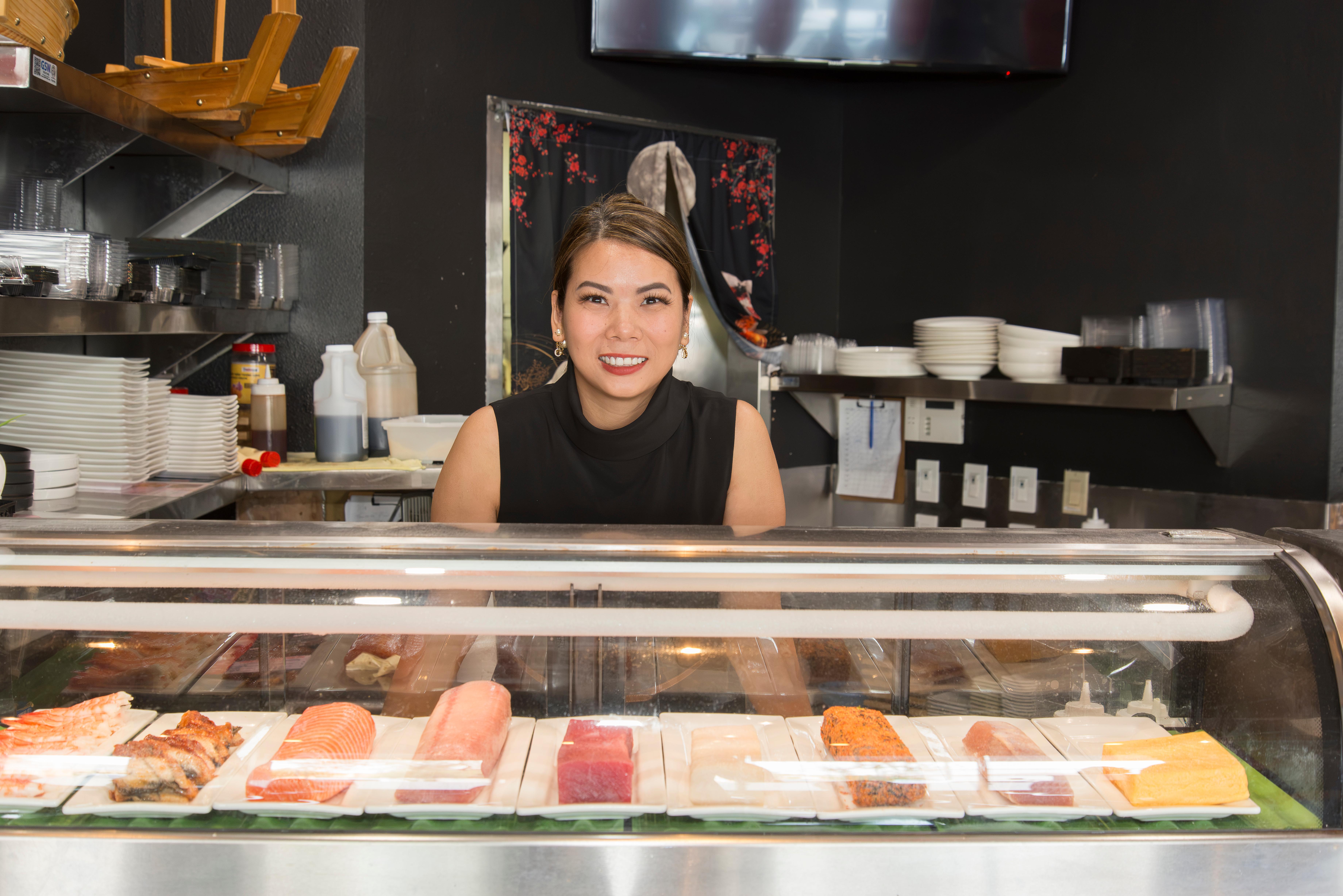
It was a cool Friday evening earlier this year when Kelly Yu finally returned to work. The Peoria sushi restaurant owner opened the front door of her strip-mall establishment. She slipped her black apron over her head, tied a bow, tightened it around her waist and threw on a baseball cap with her restaurant’s logo.
After spending more than eight agonizing months away, Yu was home. The co-owner of Kawaii Sushi & Asian Cuisine had been locked up in Immigration and Customs Enforcement’s detention center in Eloy since May 2025, more than 80 miles south of her restaurant. She spent nearly all of 2025 in ICE custody as the U.S. government tried, unsuccessfully, to deport her to China.
What does she remember most about that first day back?
“Tears, tears, tears,” Yu told Phoenix New Times. “Most of my customers came here to support me for fighting.”
Her story became national news as restaurant patrons, U.S. Senators, congressional representatives and community activists from both sides of the aisle advocated for her release. Even amid the unbridled nightmare that Trump’s mass deportation machine inflicted on Americans in the past year — ICE agents shooting civilians, families being ripped apart, the White House falsely tarring critics as terrorists — Yu’s story stood out for its maddening disproportionality.
This cheerful mom who shakes Cosmopolitans and runs miso soup to the lunch crowd in Peoria? This is who we built an $86 billion law enforcement Leviathan to bring to justice?
To be fair to ICE — she came to them. She had an appointment, after all.
She’d initially caught ICE’s attention during the final year of the Biden administration. ICE picked her up intending to deport her, but ultimately just detained her in Eloy while trying to get China to process her. After three months of failing to deport her, ICE released her. She wore an ankle monitor and began to meet with immigration officials monthly at the agency’s field office in central Phoenix.
The monthly meetings had become routine. That changed during Yu’s late May check-in. That was the month White House Chief of Staff Stephen Miller ordered ICE leadership to increase the agency’s daily arrest quota drastically. Now, ICE aimed to arrest 3,000 people per day, triple the previous rate.
To meet that quota, ICE leadership dropped Trump’s “the worst of the worst” charade of a campaign promise. Instead, agents began to round up anyone they could get their hands on, including people like Kelly Yu.
In Phoenix, agents started showing up at the downtown Phoenix immigration court. They’d lie in wait for a person to leave their hearing and come in and scoop them up. ICE was also detaining people during their mandatory scheduled check-ins at the agency’s field office in central Phoenix.
On May 28, Yu drove down to the field office for one of those check-ins with her U.S. citizen husband, whom she married during her first detention in a Texas ICE facility. He’d voted for Trump six months earlier. (He declined to be interviewed for this story and asked not to be named.)
Instead of heading back to work at Kawaii Sushi that afternoon, ICE shipped her to its detention center in Eloy. She’d be detained in the medium-security immigration facility for nearly nine months. The facility, run by private prison company CoreCivic, has nearly 1,600 beds and has become notorious for allegations of abuse and dreadful conditions.
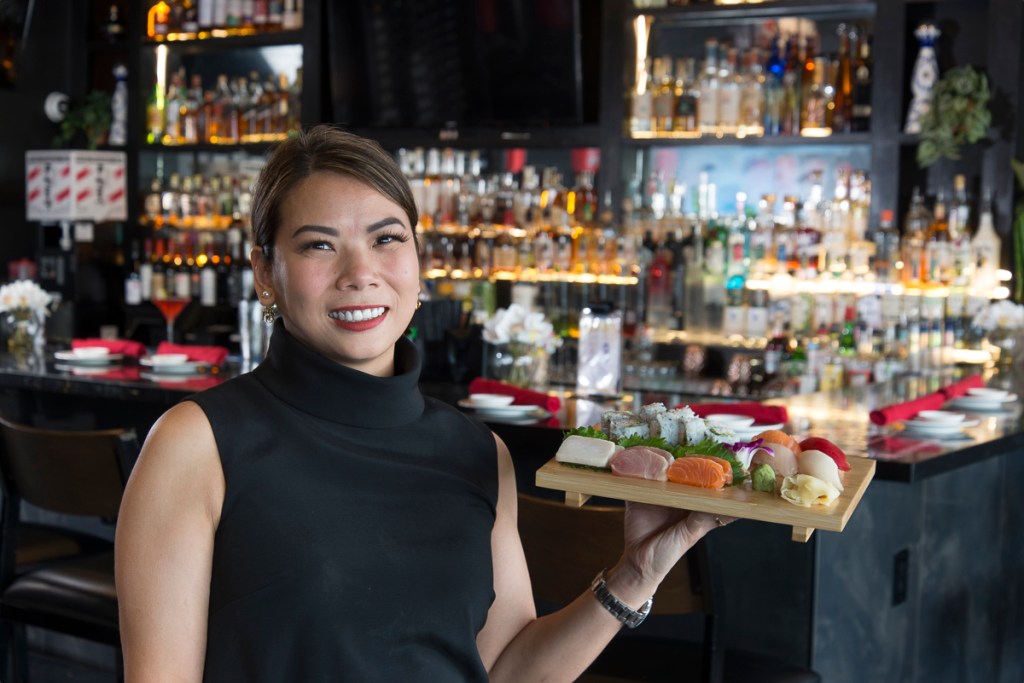
After nearly nine months in ICE custody, Yu won her release through a habeas corpus petition in late February. Friends and family poured into Kawaii’s Peoria location — nicknamed K2 — that Friday night to greet her. The following night, Yu wore an ornate red blazer jacket and clinked wine glasses with patrons at the full wrap-around bar. The restaurant was packed.
But Yu’s extended detention, uncertain residency and the constant threat of deportation has put a chill on her life. She has taken a step back from her restaurant’s expansion to a third location in north Peoria and transferred responsibilities, at least on paper, to her 22-year-old daughter. (Her daughter also declined to be interviewed and asked not to be named in this story.)
She knows she’s living with a shadow over her head. If the government decides they want to grab her again, they know where to find her.
“Everybody knows me. Kelly is Kawaii. Kawaii is Kelly,” Yu said. “But I know that I’m living here, not stably. I could get picked up again any time.”
An asylum claim rejected
Yu has been the face of Kawaii Sushi’s brand for the past 12 years, since she and her aunt, Lisa Selamat, bought the restaurant’s first location, in Glendale. The menus vary slightly by location but mix Arizona favorites with Japanese-inspired sushi and traditional southern Chinese cuisine from a small town in Guangdong, near Hong Kong.
Selamat came to the U.S. in 1995 after her husband, a U.S. citizen, sponsored her. In the Valley she worked in kitchens, including Good China in Peoria. Yu was still in Hong Kong, working for McDonald’s.
“My first job here was in a restaurant, and I’ve always dreamed of having my own place,” Selamat said through her daughter-in-law Yanming Situ, who translated from Kaiping, a Chinese dialect. “Back in China, I watched my mother work with food and plan to open a restaurant, so I wanted to finish that dream in my own way. Kelly had the same dream, so we decided to build it together.”
Nearly 10 years after her aunt settled in the States, Yu set out to join her. She traveled to Mexico and crossed the border in 2004. Pregnant and 18 years old, she sought asylum to escape China’s restrictive one-child policy and to give her yet-unborn child a better life.
But an immigration judge denied her asylum claim. And a year after she arrived, a judge ordered her removal from the country. As she appealed that order, Yu began making a life for herself. She got a waitressing job in Scottsdale at a Chinese restaurant where she worked for seven years.
Eventually Selamat came across a struggling sushi restaurant, Kawaii Sushi & Asian Cuisine, in a strip mall on Happy Valley Road in Glendale. She and Yu took a chance in 2014 and bought the restaurant from the previous owners. Selamat was in charge of the kitchen; Yu ran the front of the house.
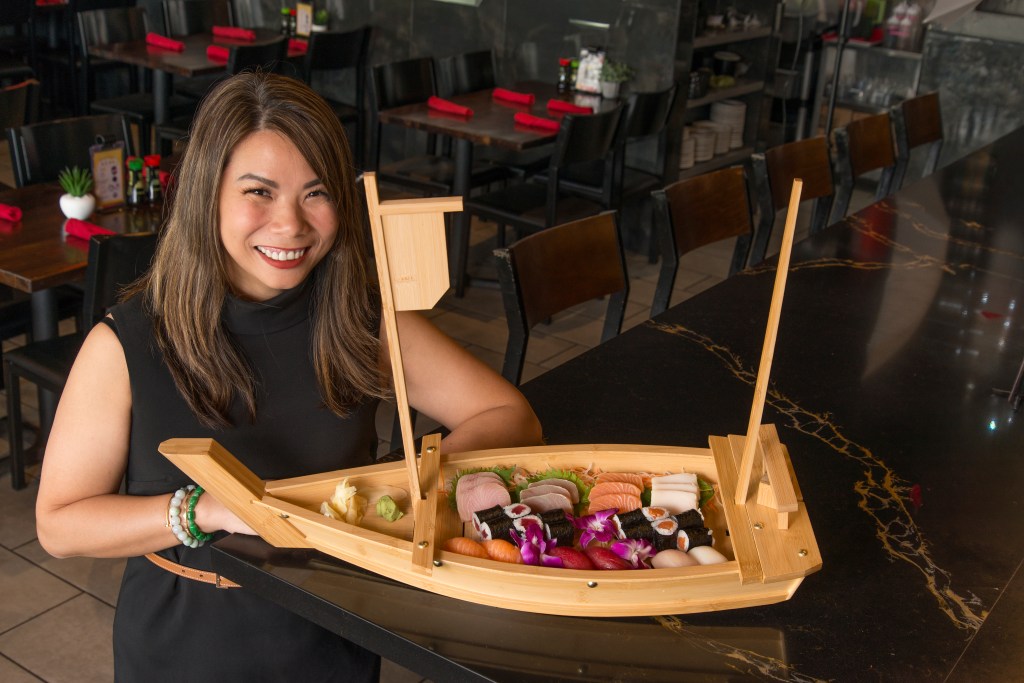
Bubbly and upbeat, Yu greeted guests and forged easy connections with them at the bar. She became the face of the restaurant online and in print promos, and has been featured on the front page of the Northwest Valley’s hyper-local community newspaper, the Upper Westsider. The restaurant sponsored local Little League teams and supported the city’s firemen and police.
Alan Staats
While Yu was becoming a community pillar, her immigration status was wobbling. Two years after taking over the restaurant, her final asylum appeal was dismissed.
But years passed before deportation proceedings began. Yu and her aunt kept working. In 2018, they opened a second location, in Peoria. They were employing more than 30 people, including high school students working their first jobs. Four years into the second location, the business relationship between Yu and Selamat began to strain. They decided to split control of the restaurants: Selamat would take over the first location in Glendale, and Yu would control the second Peoria spot.
Still, the two women kept in close contact and in the early 2020s floated the idea of coming back together and opening a third location. Yu had her eye on a space in north Peoria, in the master-planned community of Vistancia. Many Vistancia residents — and Kawaii Peoria regulars — encouraged her to bring a location to the neighborhood.
“Many years ago, I told them that one day I’m gonna open a restaurant near Vistancia so you guys don’t have to drive that far,” Yu said. “That is like my promise to the community.”
In 2023 she came across a retail space for sale in a Vistancia strip mall. She sent it to Selamat. It was just an idea, but they wanted to make it happen.
Then ICE grabbed Yu. She focused on surviving and keeping the Peoria location running while Selamat trucked ahead on opening the new location. Situ, Selamat’s daughter-in-law, took on a co-ownership role.
In January, when ICE released Yu from her second detention stint, Selamat asked if she wanted to help run the new restaurant. With her status uncertain, Yu said no. The elevated, mid-century modern restaurant opened five months later without her direct involvement.
“I don’t even have legal status to be able to situate myself,” Yu said. “How can I make sure all three locations are taken care of?”
‘At most, a misdemeanor’
On a sunny Sunday afternoon in 2025, a political strategist walked through multiple steel doors, past barbed wire fencing. Just behind him, a local GOP legislative chair and Democratic progressive activist followed. The group had ditched their keys, phones and jewelry at the door. They were patted down and put their belongings through an X-ray machine.
Once through the security checks, the odd throuple slid and squeezed into one side of a plastic booth-like seat inside the filthy visitation wing of Eloy Detention Center.
A few minutes later, detention staff escorted Yu, sporting a greenish-gray scrub uniform, to the booth on that hot, August afternoon. She hugged each of the three activists before sitting down on the other side of the booth, divided by a thin, five-inch wooden slat. For the next hour, they got to know each other.
Earlier that day, the team — Republican activist Lisa Everett, progressive organizer Brent Peak and strategist Jeremy Helfgot — made the hour-and-a-half trek from the West Valley to visit Yu. Over the past few weeks, the bipartisan group had begun organizing and bringing attention to Yu’s case to get her out. The team had come together after Peak enlisted Everett’s help. They’d met on the opposite side of a protest, but struck up a cordial relationship.
“It was a medium-security prison,” Everett said, reflecting on the trip to New Times nearly a year later. “I vividly remember an igloo cooler sitting on a counter with cold water on it, with no cups.”
Peak also called the facility a medium-security prison, describing it as “stark,” he added. “We treat prisoners better.” Helfgot consistently describes the facility as a “concentration camp,” and added that, “at most, Kelly’s guilty of a misdemeanor,” yet “she’s locked up for (nearly) nine months in a facility that is run more poorly than a federal corrections facility.”
Several members of Arizona’s congressional delegation, notably all Democrats, also visited Yu at the federal detention facility. In an interview with New Times, Sen. Mark Kelly described the facility bluntly. “Hey, it’s not a great place to be,” he said. “It’s prison. I don’t see why these people have to be sent to prison.”
Despite the environment she was living in, Kelly described Yu as a smart, impressive “valuable member of the community” who loves the United States. And Rep. Greg Stanton said it was “heartbreaking” to see Yu in detention, but added that even there, in uncertain, scary times, Kelly was building a community.
Alan Staats
“Her fellow detainees loved her,” Stanton said. “She was a positive force, keeping their spirits uplifted.”
Yu’s stoic yet upbeat personality among her detained peers translated from visit to visit. During his visit, Sen. Ruben Gallego said he could tell Yu was worried, but trying to be strong for the other detainees. Before he left, Gallego hugged her. She broke down in sobs.
“It’s something that will always have a big impact on me for the rest of my life,” he said. “Seeing her break down a little. I think she had been holding a lot up.”
Yu saw Eloy differently. It’s not a prison, she maintains.
“Maybe not like home,” Yu said. “But at least it’s a bed for us. They are providing medical, food and clothes to change into.” The food in Eloy wasn’t great, she said. Her hair became damaged, and a lot of it turned gray. She promptly colored it once she was released.
“Maybe stress. Maybe the water. Maybe the nutrition,” she said. “I don’t know.”
She had been living freely and independently in the U.S. for more than 20 years before she was suddenly locked up. While her status was unstable, she had felt “solid” in Arizona after opening her first restaurant. In that sense, for Yu, Eloy did feel like a prison.
Per ICE’s budget overview submitted to Congress for fiscal year 2025, the agency spends about $165 per day to house a person in detention. Yu was detained for 268 days, meaning that U.S. taxpayers spent north of $44,000 just to keep her locked up. That estimate doesn’t include her arrest, transport, processing, and legal back-and-forth. Nor does it account for what the economy loses by imprisoning a productive member of society. Before ICE grabbed her, Yu paid business, property and personal taxes, employed dozens of people in Peoria and put charity dollars back into the community.
Spending the equivalent of a teacher’s salary to confine a woman like Kelly Yu in a cell for most of a year is a policy choice. America’s elected leaders keep making that decision again and again and again. As of May, ICE has detained more than 400,000 people since Trump returned to power in January 2025, according to Brookings. ICE is now holding more than 60,000 people in detention daily — meaning that taxpayers are shelling out nearly $10 million a day just to house detained immigrants.
The bipartisan advocacy team and the Democratic congressional delegation worked for months to secure Yu’s release. Everett and Peak made public and media appearances. They reached out to congressional offices, federal agencies, the White House. The members of Congress reached out to ICE and the Department of Homeland Security. Kelly requested that Yu receive humanitarian parole. That request was denied. Outreach wasn’t returned or was outright rejected. The new year came and went without any apparent progress in Yu’s case.
Early February brought a breakthrough. Yu’s attorney filed a habeas corpus petition in the U.S. District Court of Arizona to challenge the legality of her detention. The petition requires the government to justify detaining or imprisoning a person, calling upon the Fifth Amendment’s requirement that no one be “deprived of life, liberty, or property, without due process of law.” These petitions have become a tool for immigration attorneys to free their clients from detention. Since April, at least 1,100 such petitions have been filed in immigration cases in Arizona’s U.S. District Court.
In response to Yu’s petition, Arizona’s U.S. Attorney noted that Yu had been detained for more than eight months. The government considers six months the outer limit of “reasonable” detention in these cases.
The government ultimately didn’t oppose her release from custody, and District Judge Krissa Lanham granted Yu’s petition. She was spared, for now, because China hasn’t processed the travel paperwork DHS requested to legally deport her.
Three days later, she was back inside K2 wearing an ankle monitor.
Supporters and activists poured in to celebrate. Everett, Peak and Helfgot visited the restaurant the night Yu was released. “It was euphoric. There’s no other way I could describe it,” Helfgot said. “I remember being over the moon.” Stanton came the next day to give Yu a big hug. Kelly came a few weeks after that.
Her daughter has filed a petition to sponsor her for a green card. She sports an ankle monitor under her black flared leggings as she greets customers in the restaurant. ICE could re-detain her at any time. And if China provides the U.S. with her travel documents, she could be deported back to the country she hasn’t been in for more than two decades.
“Every time I go to ICE, I have to check in,” Yu said. “And I just feel like they’re gonna lock me up again.”