
Morgan Fischer

Audio By Carbonatix
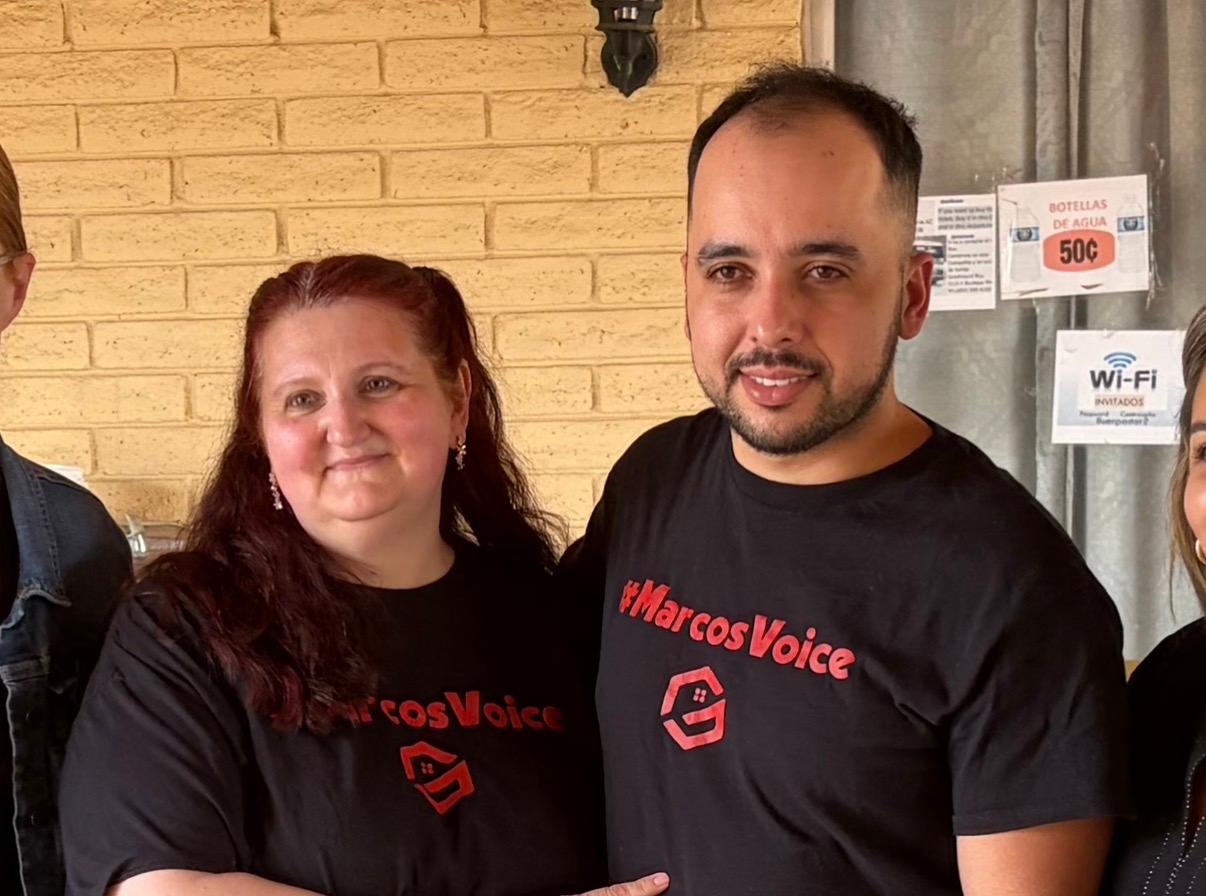
In the covered courtyard of a Spanish Wesleyan church in West Mesa, Alessia Da Silva reached out to her husband and brushed his right arm. She’d just finished speaking to a small crowd. Elizabeth Lee, an activist, held a microphone and gestured toward him.
“Do you want to?” she asked 33-year-old Marcos Gaspar-Da Silva, whose hands were clasped in front of his waist. “Are you sure?” He nodded his head and took a step forward. A small, closed-mouth smile formed across his face.
“Hi,” he said, standing in front of a few media types. “Thanks so much, everyone. Especially the church.”
Less than 24 hours earlier, Immigration and Customs Enforcement agents dropped the Brazilian national — without his phone and driver’s license — at Iglesia Cristiana El Buen Pastor. For the first time in seven months, Gaspar-Da Silva had clean drinking water, nutritious food and a Pepsi. Then, in one whipsaw morning, an immigration judge made him a legal permanent resident.
Since his release, Gaspar-Da Silva has had trouble readjusting. The months-long experience in ICE lockup traumatized him.
“I’m free. Everybody waits for free,” Gaspar-Da Silva told Phoenix New Times. “You can’t eat. I’d like to eat some stuff, but I cannot eat because I need to go slowly.”
During the interview with New Times, his eyes were bloodshot — he hadn’t slept in 24 hours. He has felt numb, unable to process sadness or happiness. Eating makes him sick. So does coffee, a favorite of his. He feels like a different person from the man ICE grabbed from the side of the road seven months ago.
“The emotions that I had before, I don’t have them right now,” he said. “It’s about the traumas I had inside. It’s about some people who stay over there.”
In early January, ICE agents picked up Gaspar-Da Silva on his way to work in Maine after he missed an immigration court hearing. He had a pending asylum case and an I-130 petition, filed by his U.S. citizen wife, but no permanent residency. For the past seven months, ICE bounced Gaspar-Da Silva around to different ICE detention facilities across the country, including Mesa’s infamously crowded AROCC facility. He ended up in ICE’s Florence facility, some 2,000 miles from home.
‘Best of the worst’
The couple previously spoke with New Times about the poor conditions in a now-infamous, overcrowded short-term holding facility at Phoenix-Mesa Gateway Airport, known as AROCC. Gaspar-Da Silva was forced to sleep on a freezing floor without a blanket during his weeklong stay. He was denied a shower or change of clothes. An overflowing toilet had covered the floor in fecal matter.
Gaspar-Da Silva was transferred to Florence, which his wife described as the “best of the worst.” He was initially detained in an area of the detention center called “motel.” More than 150 people were kept there, and 13 to a room. The crowd made it difficult for Gaspar-Da Silva to talk with his family and use the tablet to reach the outside world. It cost 30 cents to send a text. He got a toothache that went untreated until it was so bad medical staff had to pull the tooth.
“It’s very bad,” he said. “You cannot sleep well. I bought earplugs over there because some people snore a lot.”
After Democratic Rep. Yassamin Ansari met with him during an oversight visit to the facility, Gaspar-Da Silva was transferred to a quieter, less-crowded area called “delta” that had just 20 rooms with two people per room and bunk beds. The food was still terrible. The chicken soup came in a large container. The soup’s water rose to the top, while the chicken stayed on bottom — like oil and water, they didn’t mix. When the meat was gone, detention staff served detainees bowls of broth.
“They don’t have food for everybody,” he said. “There’s no meat, only water.”
Detainees told staff they didn’t want to eat the leftover chicken soup water. The complaint resulted in a lockdown. Eventually they got better food , Gaspar Da-Silva said, but after a week or so, the staff was back to serving bad food. By then he’d lost more than 26 pounds. He started buying his own food.
ICE did not respond to New Times’ request for comment.
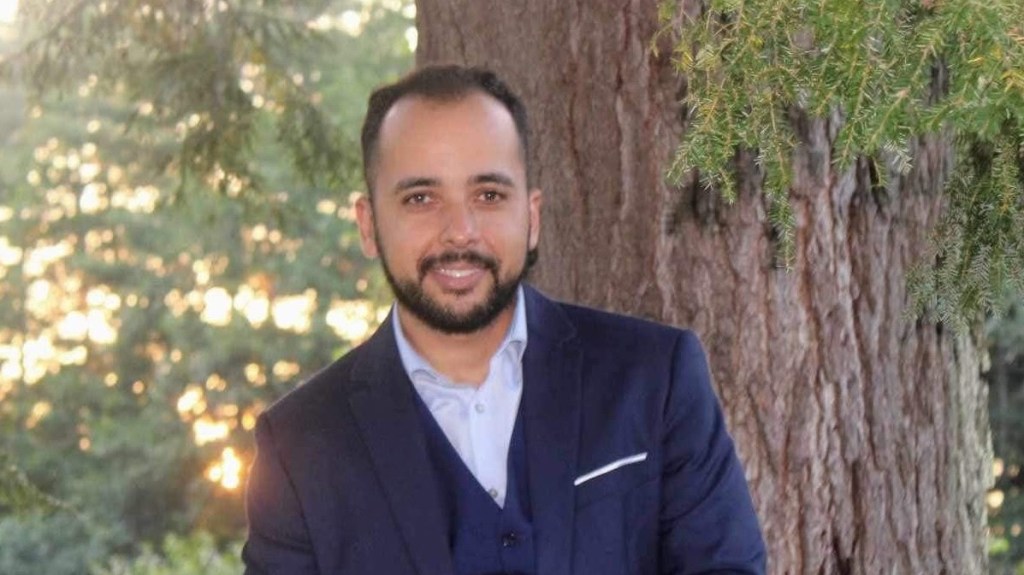
Courtesy of Alessia Da Silva
Not ‘100% protected’
Then, before the sun rose on the morning of Aug. 12, Gaspar-Da Silva’s prison-like routine would finally change.
Detention staff woke him at 3:30 a.m. He was lying on the top bunk of his two-person cell, wearing his ICE-issued brown sweatsuit and knockoff Crocs. Officers handcuffed him. He walked up the small stairs of the transfer van bound for Eloy Detention Center, where the immigration court is located. A half-hour later, he shuffled off the bus with other detainees and into the courtroom. It was just after 6 a.m.
Soon, immigration judge Victoria Levin granted Gaspar-Da Silva an adjustment of status and made him a permanent legal resident through his I-130 petition, per immigration court paperwork shared with New Times. Levin ordered that Gaspar-Da Silva be released from ICE custody.
The next day, he walked onto another bus, this time bound for Mesa. He hadn’t slept since finding out that he’d be free. Still, he wasn’t sure where to go. Other detainees were being dropped off in various East Valley locations. Gaspar-Da Silva stayed on until the bus reached its final destination: Iglesia Cristiana El Buen Pastor.
There, he was met with kindness and hospitality. He called his wife and was soon greeted by Lee, a nurse who had been advocating for his release. She’s also running for Congress against former Pinal County Sheriff Mark Lamb.
“I look at this family, and I see a lot of trauma,” Lee said. “They’re going to need a lot of time to rebuild.”
The next day, Gaspar-Da Silva and Lee went to pick up his wife at Phoenix Sky Harbor Airport. It was the first time she’d been on a plane since she was 12 years old.
Their reunion was bittersweet. Gaspar-Da Silva still felt numb. His wife was still scared.
“Our work is not done in that area and we don’t feel 100% protected,” she said, holding up court paperwork that confirms her husband is a lawful resident. “But having a piece of paper and having safety is still something we do not feel we have completely.”
U.S. Citizenship and Immigration Services still has to take his biometrics before he receives his green card, Alessia Gaspar-Da Silva said.
The next day, they were flying back to Maine. Airports have recently been hotspots for ICE activity. Once back home, Gaspar-Da Silva can finally see his 11-year-old daughter and lie in his own bed. He’ll also seek psychological counseling, he told New Times.
“Marcos is free, but others are not,” Lee said at a news conference. “There are so many people whose family is waiting for them on the other side. A wife who has no idea when her husband will come home. A kid who doesn’t understand why their mom or dad disappeared. Families trying to find thousands of dollars for legal support, for fresh water inside detention facilities.”
Do you have a story to share with New Times? Contact the reporter on Signal at 623-295-9472 or by email at morgan.fischer@newtimes.