
Photos by Morgan Fischer and Gage Skidmore/Flickr/CC BY-SA 2.0

Audio By Carbonatix
This article was originally published by Votebeat, a nonprofit news organization covering local election administration and voting access. Sign up for Votebeat Arizona’s free newsletter here.
Officials in one of the nation’s biggest swing counties huddled in separate, windowless jury chambers at a courthouse Monday.
Outside, a summer monsoon storm unleashed dust, wind, rain, and lightning over Phoenix. Inside, long after business hours, a local judge hurried back and forth, carrying proposed terms from one room to the other.
Around 10 p.m., they reached a consensus. Maricopa County finally had a plan for running its elections, and its board of supervisors enacted it in a 3-1 vote at a hastily scheduled emergency meeting Tuesday.
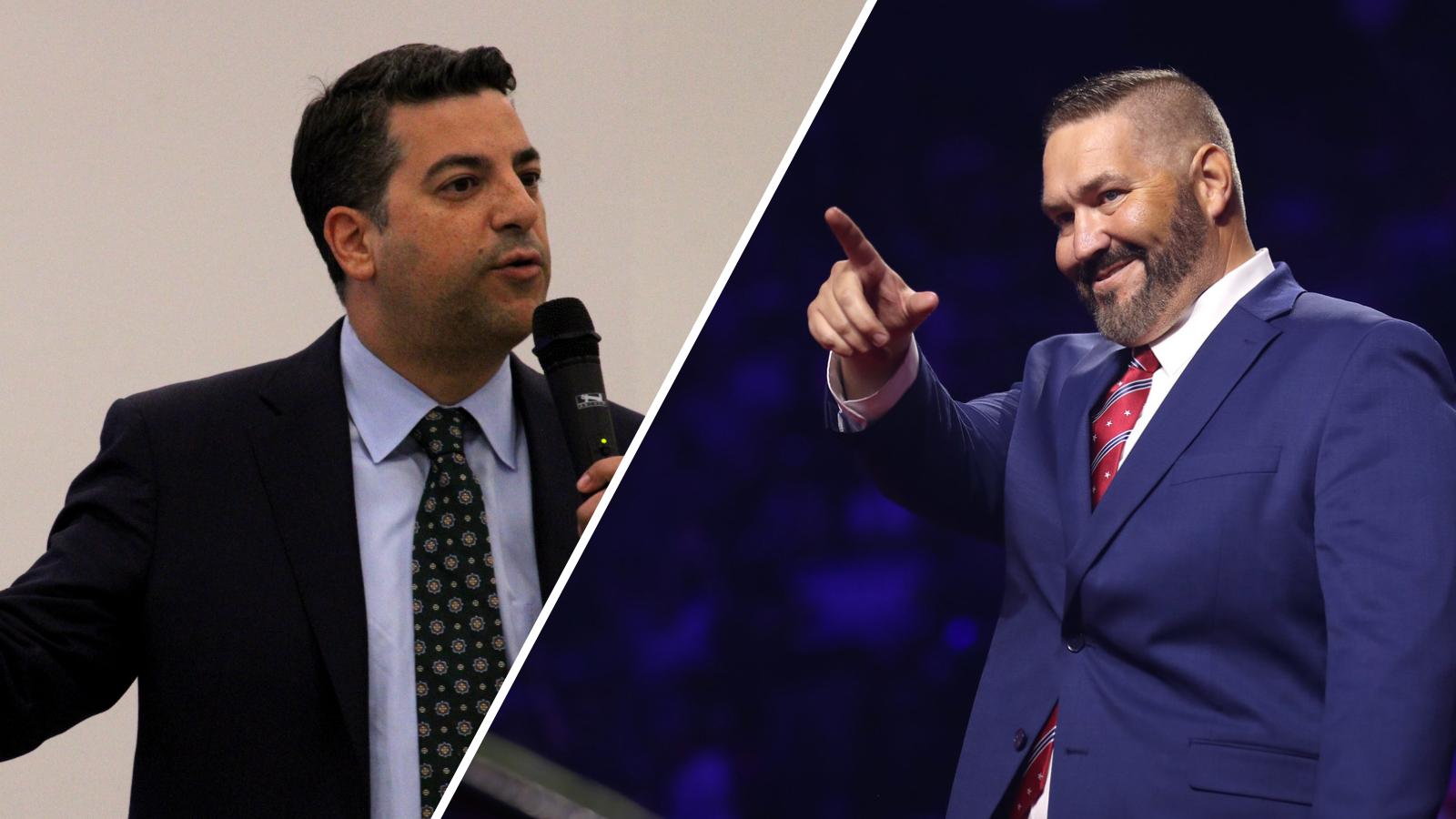
The deal ends a long-standing legal battle over election control between Recorder Justin Heap, a Republican, and the majority-GOP board. The county’s top election officials had been locked in litigation for more than a year, culminating in a state Supreme Court decision last week that found in Heap’s favor.
In a joint statement, both sides suggested the new deal was a win for county voters. But the compromise, crafted during a series of closed-door, hourslong sessions mediated by Maricopa County Superior Court Judge Christopher Coury, effectively builds a wall between the board’s elections department and the recorder’s office — agencies that traditionally have worked hand in hand to administer elections for the county’s 2.5 million voters.
It’s unclear how the new approach will play out. The agreement doesn’t apply to the upcoming July 21 primary, which could leave the process for resolving disputes in that election unclear. While the agreement resolves officials’ legal battle, tensions remain high between their offices.
As a result, the first true test of the deal will come in the high-stakes general election on Nov. 3. In Arizona, highly competitive state and congressional races are underway. Voters in Maricopa County, the state’s most populous jurisdiction, are certain to drive the outcome of top contests and could help determine control of the U.S. House of Representatives.
Bill Gates, executive director of Arizona State University’s Mechanics of Democracy Laboratory, said election officials can expect to be under the nation’s microscope.
“We know there’s no such thing as a perfect election,” he said. “It’s an important election. There will be a lot of eyeballs on it.”
But Gates, a former GOP county supervisor, also said the deal between election officials is “superior to the alternatives” at this point in the dispute and lays out “a rational framework” for election administration, though he would prefer “a more collaborative environment.”
John Moore/Getty Images
What the Maricopa County election deal says
The fiery dispute between Maricopa County officials started well before they entered litigation.
Heap has long contended that county supervisors usurped much of his power to run elections through a deal they struck with his predecessor, Republican Stephen Richer, months before he took office. He sued over the matter last year — and after months of back-and-forth in county court, a judge ruled largely in his favor on April 16, ordering the board to return control of several election-related functions and information technology staffers to the recorder’s office.
Supervisors moved to stay that ruling, arguing it was too close to the primary to implement the court’s directives without risking a tumultuous election. An appeals court ultimately sided with them.
Then, Heap took the matter to the Arizona Supreme Court, which reinstated the county court’s order and adopted a primary-specific plan proposed by Heap.
The new agreement is designed to draw clear lines between officials’ responsibilities, down to even the most minute details of election administration.
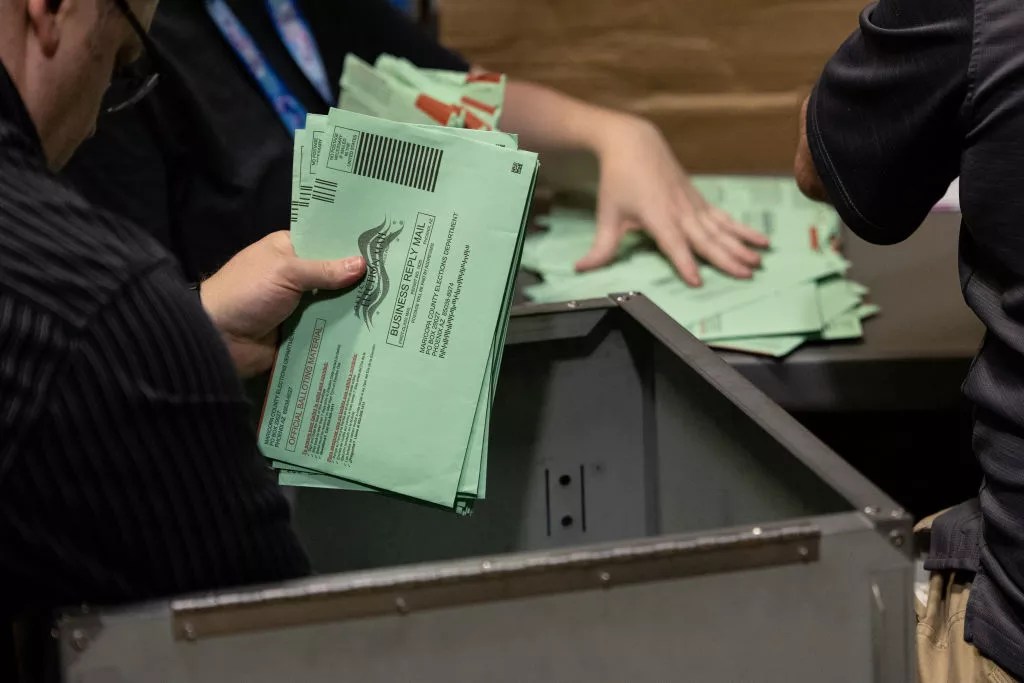
Heap will retain full control of voter registration under the deal. He will also oversee most aspects of early, in-person voting and mail voting, including locating ballot drop boxes across the county.
However, the board will still draw precinct boundaries and prepare all of the county’s ballots. Supervisors will also determine the maximum number of early voting sites and drop boxes operating in the county. The agreement stipulates that, in coming years, the number of early voting sites must equal at least 20% of the vote centers scheduled for Election Day.
Heap will also get his own IT team and system, as well as new staff for his office’s early voting division. To facilitate those changes, the board agreed to allocate millions of dollars to pay for the new positions and equipment. While Heap’s technology system is being built, he and the supervisors will jointly control the county’s existing system.
Supervisors will retain control over voting at the polls on Election Day. They will oversee emergency voting, which occurs the weekend before each major election, and all aspects of ballot counting. The board will also continue to vote to certify election results, as mandated by state law.

Gage Skidmore/Flickr/CC BY-SA 2.0
Will Maricopa County see a smooth election cycle?
While the deal ends the legal battle between the two parties, it’s unclear if lingering tensions will affect upcoming elections — especially the primary.
Heap and the board have butted heads on several occasions in recent months. In May, they argued over how to communicate a new voting option at polling sites during a local election. Then, another scuffle erupted over ballot drop box locations for the upcoming primary. Heap later asked a judge to hold the supervisors in civil contempt of court. He also sought to stop a special prosecutor’s investigation into whether his employees broke the law by removing a scanner from the county’s vote tabulation center during a local election earlier this year.
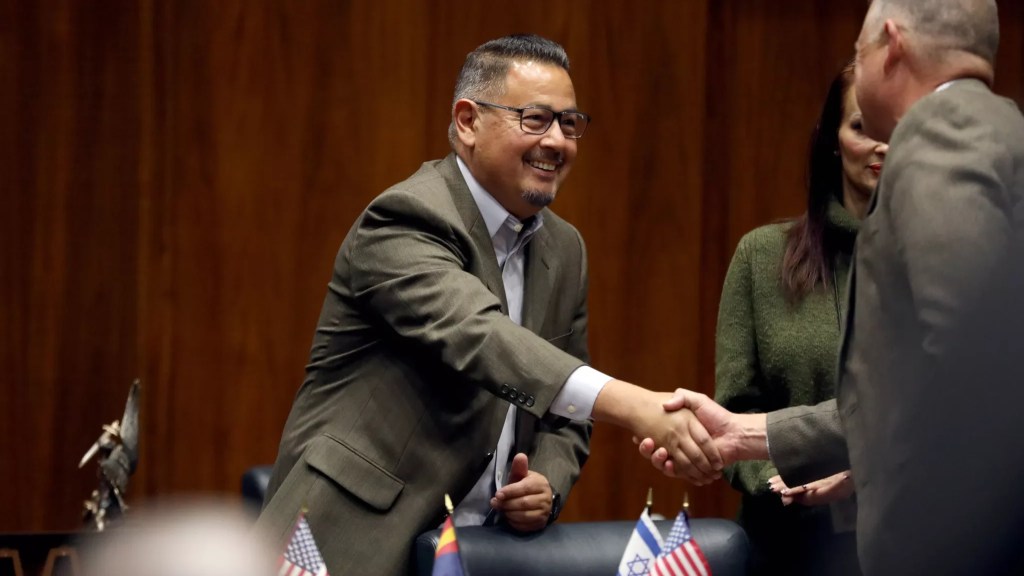
Even after this week’s agreement was struck, relations appeared to remain contentious. Heap, who did not appear at the board’s Tuesday meeting, said in a statement that the deal will “ultimately be measured by its faithful implementation.” Democratic Supervisor Steve Gallardo, the only board member to vote against the agreement, suggested Heap would try to put his “thumb on the scale” of the county’s elections. Supervisor Kate Brophy McGee, a Republican, told reporters she was “not required” to trust Heap to execute the deal.
“We have a path forward,” she said, adding that her “personal opinion” was “not part of it.”
That path includes a framework for resolving future disputes, should they arise. Officials will take any further disagreements to a special master: Coury, the judge who mediated the deal. He will then make a determination on how to proceed.
If either party disagrees with his decision, they can ask the Arizona Supreme Court to hear the issue. The court is not required to do so, and no further appeals would be available.
The setup aims to avoid costly, time-consuming litigation in the future, but it could lead to some confusion during the upcoming state primary.
The agreement stipulates that prior court orders in the case will be vacated. It also states that officials will adhere to the Arizona Supreme Court’s recent ruling for the primary, which is already in motion.
That order adopted a temporary plan to divide election responsibilities and created its own framework for addressing disputes. It directs the board and recorder’s office to appoint operational and legal liaisons who would attempt to resolve issues jointly and file expedited lawsuits if they can’t reach a resolution.
Gage Skidmore/Flickr/CC BY-SA 2.0
Primary questions
However, it remains unclear whether those liaisons or the special master would resolve disputes that arise during the primary.
Brophy McGee told reporters after the board’s vote that the primary was “in process” and that “the way it’s working is how it will continue to work through Election Day.” But Kory Langhoffer, an attorney representing four of the board’s five members, told Votebeat he believed the parties would resolve disputes using the special master process during the primary. A spokesperson for Heap did not respond to a request for comment on the dispute resolution structure for the upcoming election.
Vince Funari, a spokesperson for the Maricopa County Superior Court, told Votebeat on Tuesday that judges would be on standby during the primary to handle urgent election matters. Even if emergency lawsuits aren’t the proper way to handle disagreements during the primary, other election matters could still arise unrelated to the officials’ infighting.
By November, county officials said the new agreement’s framework will be fully in place. But there’s still a question of how often county supervisors and the recorder’s office will need to use it.
Brophy McGee said she anticipates the deal will help make the county’s election functions “boring again.”
“It provides a lot of clarity,” she said from the dais Tuesday. “This agreement spells out, word for word, what the job is.” She added that she believes the deal will facilitate “elections that nobody will worry about, have anxiety attacks about, or have to ask about.”
But Gallardo, the lone vote against the agreement, was less confident.
“I don’t want anyone to fail, but I think we all know how this is going to play out,” he told his colleagues. He described Heap as “hyperpartisan” and predicted, “This is not the last of it.”
Sasha Hupka is a reporter for Votebeat based in Arizona. Contact Sasha at shupka@votebeat.org.