
Morgan Fischer

Audio By Carbonatix
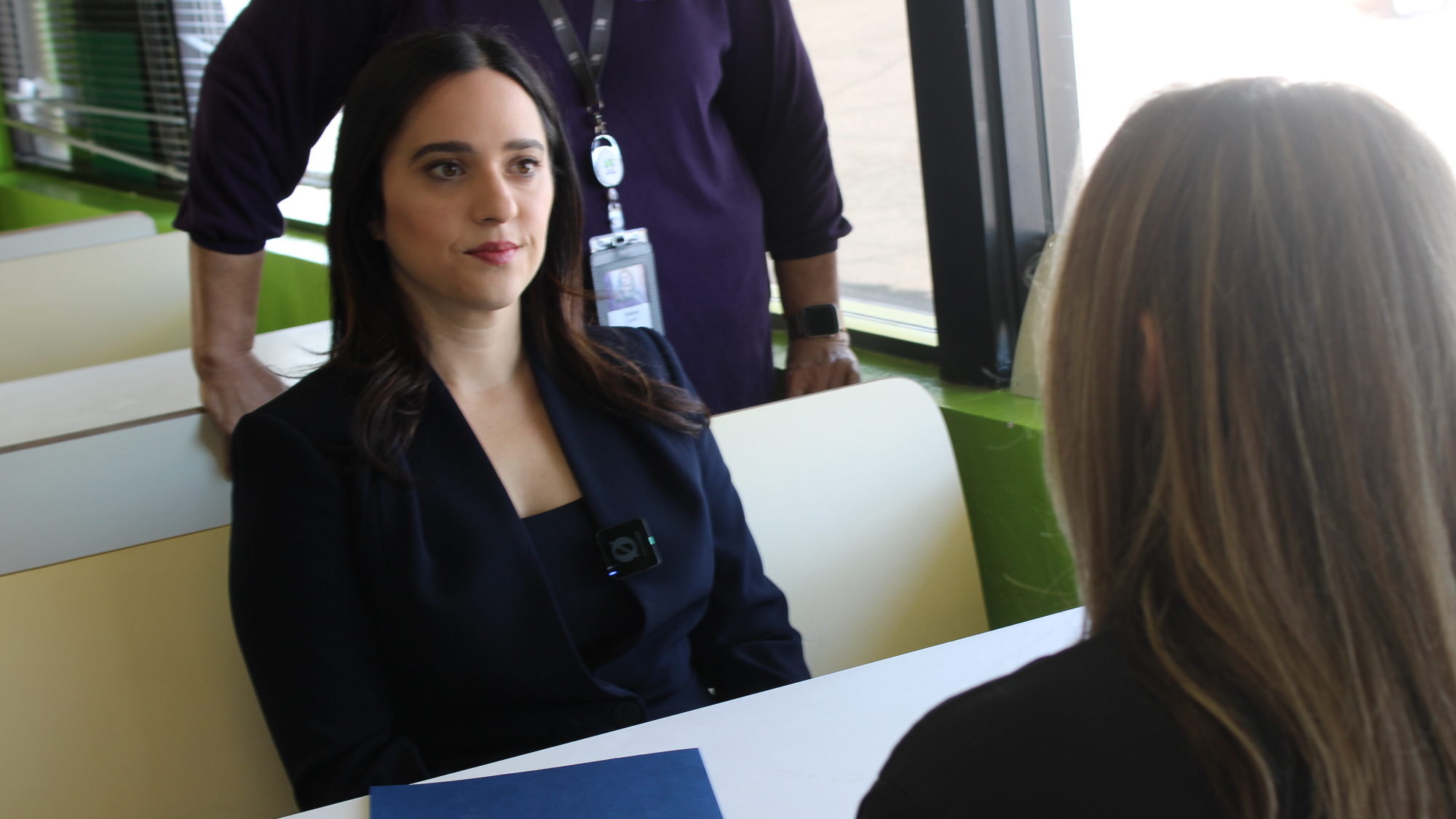
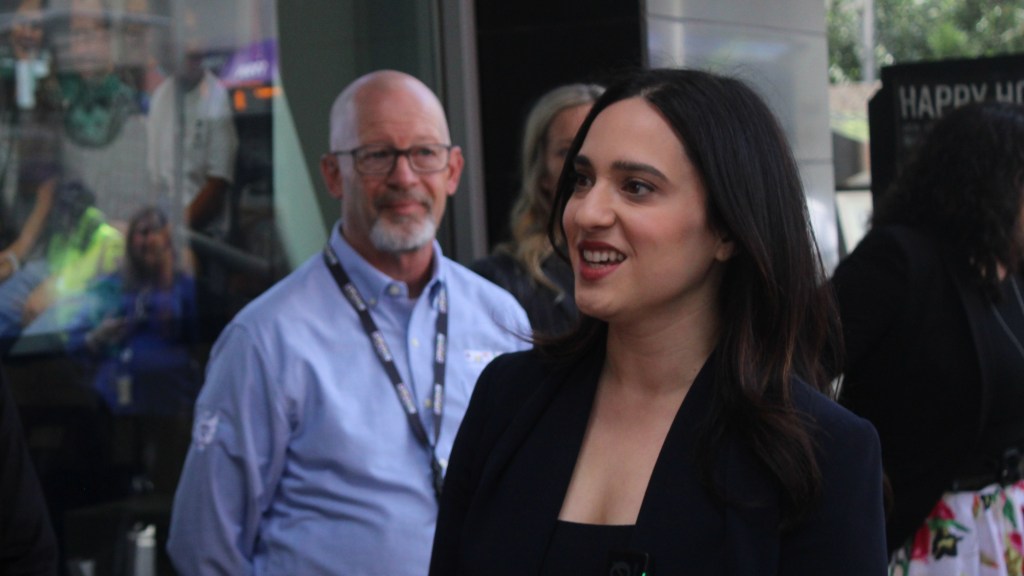
On a rainy Tuesday morning, Rep. Yassamin Ansari stood outside of Valley Metro’s downtown community hub, chatting with company leaders, customer service representatives and on-rail security. Over a year into her congressional term, she was back in her old stomping grounds.
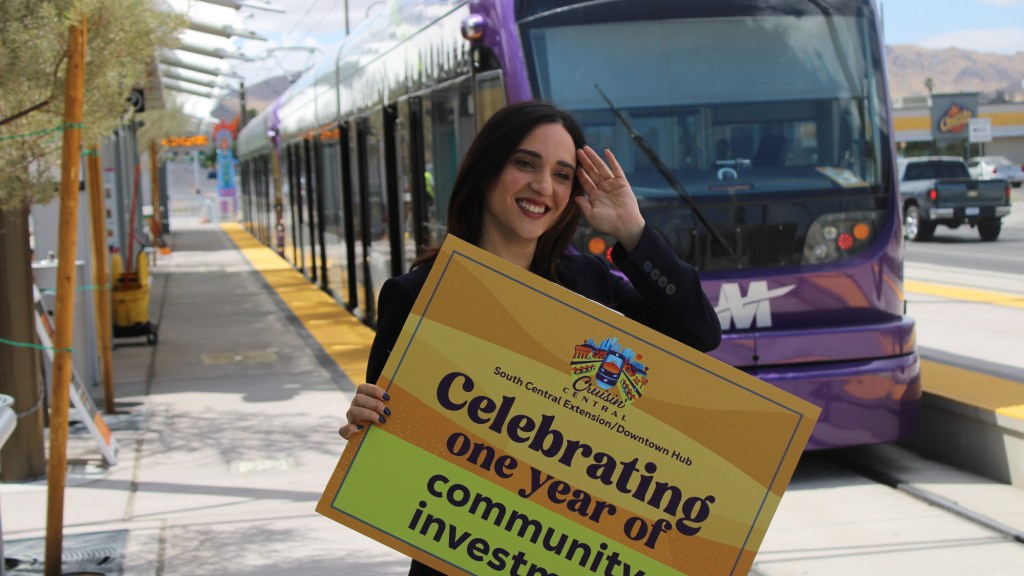
The freshman Democratic congresswoman was there to celebrate the upcoming first anniversary of the light rail’s South Phoenix extension, which is on June 7. In 2021, a year into the project’s lengthy five-year construction, Ansari joined the Phoenix City Council, representing the city’s District 7. During her time on the council, Ansari advocated for public transportation and the use of electric buses. While she resigned from the council nearly three years later to focus on her congressional campaign, her involvement in Valley Metro has continued on the local level. Late last year, a pilot version of Ansari’s electric bus project took to the streets, and she secured $1 million in federal funding for Valley Metro’s Community Safety Project earlier this year.
On Tuesday morning, Phoenix New Times tagged along with Ansari, Valley Metro CEO Jessica Mefford-Miller and their respective teams to ride the South Phoenix extension. A stop was made at casual Mexican restaurant El Tacazo to chat with the restaurant’s owner and chow down on some flautas, before grabbing a pineapple water for the road. Then the team traveled to the end of the South Phoenix extension at Baseline Road. There, it hopped on one of 12 electric buses in the pilot program’s fleet. On the drive back downtown, New Times sat down with Ansari to chat about light rail, as well as the big issues of the day, including the Voting Rights Act, the 2026 midterms, the war in Iran and federal immigration detention centers.
The interview has been edited for clarity and brevity.
Morgan Fischer
What was it like riding the Valley Metro South Phoenix extension today?
I’m honestly in awe of how successful it’s been, and it’s incredible to see just all of the work finally pay off. It’s very clear how thoughtful the team has been in considering all aspects of the experience for the rider and for the surrounding communities.
Obviously, the South Phoenix community endured construction for many years, which was a huge challenge. But now seeing it come to life, I hope that the neighborhoods surrounding the community recognize that it was worth it, and the benefits are coming.
Shifting away from the light rail, are you worried that the Supreme Court’s decision to limit the Voting Rights Act will impact your district? What was your reaction to that decision?
My first reaction to the decision was deep disappointment. Unfortunately, the decision was not a surprise. I think many expected that this Trump-appointed Supreme Court would do everything possible to get voting rights restricted. It’s a racist decision, and the goal is to disenfranchise communities of color in the long term.
The most important thing that we have to do at all levels of government is to prioritize voter registration. We have to legislate our way out of this. We will be launching a campaign on May 6 called “Protect the Vote” to enshrine vote-by-mail in our state constitution. We’re working to collect half a million signatures by July 2 to get on the ballot.
Are you worried that your district could be rewritten to no longer be a Democratic majority?
If you had a Republican governor right now, we would absolutely be one of those states that is severely redistricted.
Going into the midterms, how does that change your strategy going forward?
My number one priority is Arizona. Between this campaign and what I’m chairing to protect mail-in voting, I’ve also made a commitment to register 5,000 new voters in my district. We have a significant registration gap in Arizona that has been exacerbated by efforts from Turning Point, for example.
While we do have Democrats elected statewide right now — and I am confident they will win again — the truth is, the numbers have gotten worse for us in terms of registrations. We need to be investing there.
Affordability seems to be the name of the game going into November. If Democrats flip the House, how do you plan to make things more affordable for Arizonans?
As part of the Progressive Caucus, we just unveiled the “New Affordability Agenda,” and it’s a very concrete, 10-point plan based on 10 bills that have already been introduced in Congress to make everything from housing to childcare to groceries more affordable for everyday Americans.
These policies, we’ve found, have support from the vast majority of Americans, including 60% of Republicans. So there’s no reason why all Democrats should not also be behind them. We are pushing our caucus to get behind this plan. So the moment we do take back the majority, we are ready to go on day one to pass legislation to do so.
The Trump administration has no shame in moving very quickly, even when it’s destructive. And that’s an issue our party has always had: We strive for perfection. We want to have the perfect coalition, the perfect policy, with all the details hammered out when people are struggling so immensely.
Are more moderate Republicans supportive of this affordability agenda?
Republicans, broadly in the public, are very supportive, and we did extensive polling and actually picked the 10 policies that would have the biggest impact on people’s lives and also have the broadest support. I do really believe that when we are in the majority, we can pass this. The tide will change and there will be massive sweeping changes.
Morgan Fisch
You believe Democrats will flip the House?
I do, I do.
Because of how unpopular President Trump is right now?
Yeah! Nothing they’re doing is popular.
Typically, when the United States is at war, there is a massive rally-around-the-flag effect, and people are supportive. Right now, 60% of Americans disapprove. It took three years with the war in Iraq to get to that type of disapproval rating. It took six years to get this rating in Vietnam. And that’s just one issue.
On the Epstein files, underwater, negative 40. Democrats are now viewed more favorably on the economy for the first time in decades.
You spoke out about “bad actors” using AI to target your family over your disapproval of the war in Iran. What kind of content were you seeing? How were they targeting your family?
It’s been a tough time. Unfortunately, there appears to be a very well-orchestrated online propaganda campaign; in general, I’m not alone in dealing with this. Iranian Americans who are speaking out against the war have seen an onslaught of bots that seep into real life. There have been egregious conspiracy theories trying to say that my family is somehow tied to the regime in Iran.
My parents, my staffers’ parents who are Iranian American, have been doxxed with addresses on the internet. We really had to up our security. It’s fine for me, but my parents are having a hard time.
What was it like to return to the ICE facility at Phoenix-Mesa Gateway Airport after hearing ICE was moving detainees out of the facility prior to your first oversight visit?
Once we got in, it was vastly different than it was during that first visit, when they had the seven-day lead-up. Obviously, the conditions always are horrible, there’s nothing they can do to change the appearance of it, but seeing cells that very clearly say 21 people max per cell, they were packed. We were counting the people inside.
Through the windows, people were trying to gesture to us and tell us how many were in there. One man, through one cell window, told me, like someone’s sick in here and has the flu. It was chaos. It was absolute chaos. I think a lot of the staff, I mean, they’re doing this every day, it seems they’ve become desensitized to the amount of horror.
How are you feeling about the success of the bill you introduced to mandate that individuals cannot be held in short-term ICE holding facilities for longer than 12 hours? In the current Congress, is there any way to force change at a site like AROCC?
If I’m being completely honest, it’s easy to feel hopeless when it comes to ICE issues in this context and environment. But I also have seen things that I didn’t think were possible happen because of public pressure and because of pressure from elected officials. Every time we introduce a bill, or every time we relay a message or go to a facility and come back and do a press conference and expose it, I think it helps build momentum.
Right now, we’re seeing Trump and Republicans, because they weren’t able to get traction in the Senate on getting Senate Democrats to cave on the issue of money for DHS, they’re now planning to use the reconciliation process to give more money to ICE and DHS. We’ve had a win now that, for months, we have not given more money to ICE. We just have to hold our ground and push these common-sense policies and continue to try to expose what’s going on.
We’re going to hire some illustrators and describe what is going on in some of these facilities to create imagery that we can then share publicly. People just need to be able to see what’s happening. With what happened in Minnesota, people were able to capture it, and that caused public outrage. We haven’t had that yet with the detention centers.