
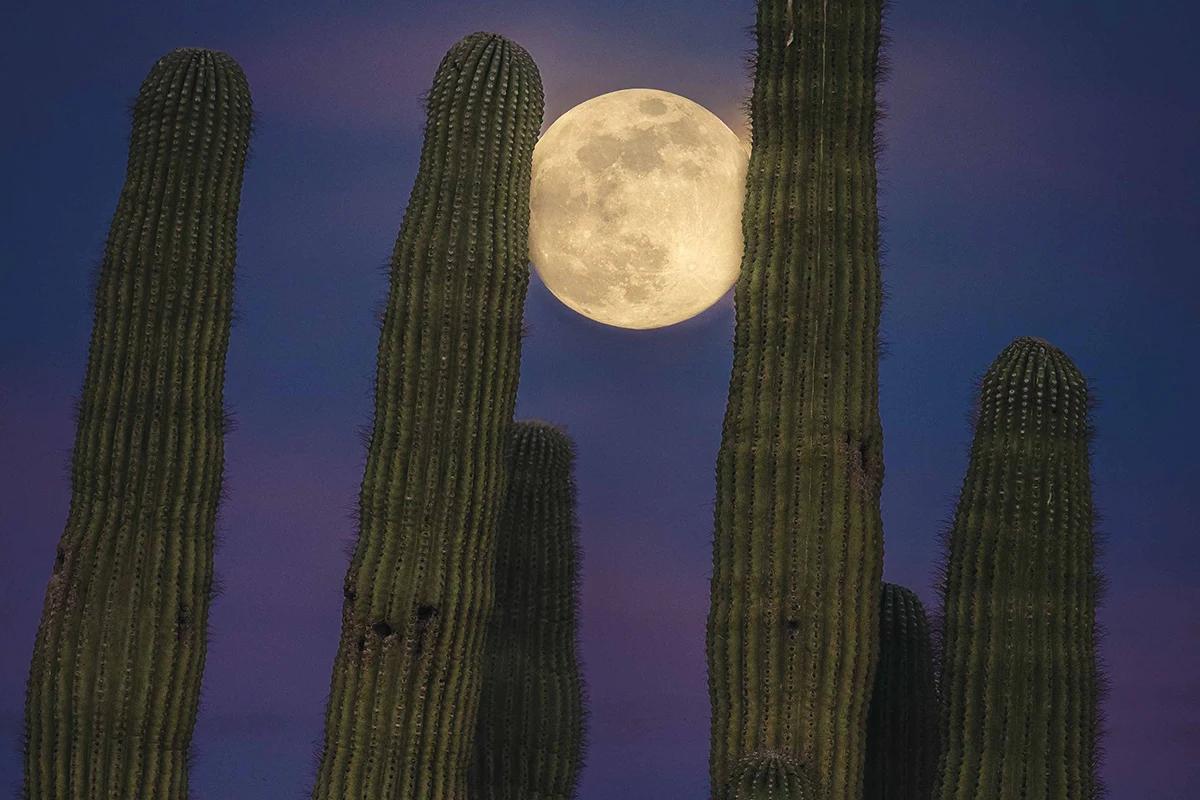
Getty/Matthew Perkins

Audio By Carbonatix
Independent Journalism in Phoenix Needs You
We need to raise $15,000 by August 9 to support the reporting our community depends on. Reader support keeps us independent and is playing a larger role in funding local journalism and shaping what comes next. If you believe independent local journalism matters, make a contribution today.
Few sights are as striking as a full moon lighting up the night sky.
This weekend, skywatchers can see the second full moon in a single month. A blue moon will be visible over Arizona on Sunday, May 31, in the early evening.
Don’t let the name fool you, though. This weekend’s moon won’t actually appear blue. The term refers to a second full moon occurring in a calendar month.
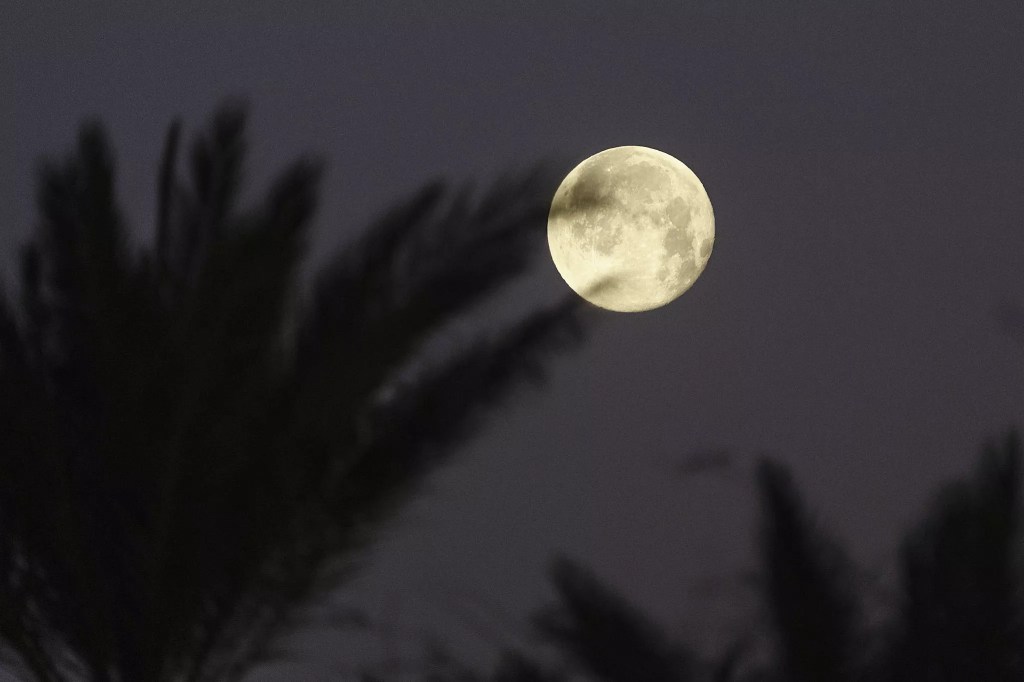
May’s full moon is also a micromoon, meaning it will appear slightly smaller than normal because it is near its farthest point from Earth.
The lunar event will still be visible to the naked eye without needing binoculars or a telescope.
Here’s when to see the blue moon in Arizona this weekend.
Is there a full moon tonight?
The full moon in May 2026 will occur on Sunday, May 31.
What time is blue moon?
Moonrise is at 8:28 p.m. Arizona time on Sunday night. The full moon will appear in the eastern/southeastern sky approximately an hour after sunset. It will slowly transition to the southern sky as it rises higher. The moon will set at 5:18 a.m. on Monday, June 1.
How rare is a full blue moon?
Blue moons are relatively rare, but tend to occur once every two to three years. Hence the phrase, “once in a blue moon” that signifies something that happens every so often. The last blue moon was in August 2023, while the next one occurs in May 2029.
When are the full moons in 2026?
The remaining full moons of 2026 occur on June 29, July 29, Aug. 28, Sept. 26, Oct. 26, Nov. 24 and Dec. 23.
When is the next supermoon?
The last supermoon of 2026 will happen on Dec. 23. Supermoons happen three or four times a year when a full moon occurs at perigee, or when the moon’s orbit reaches its closest point to the Earth. The phenomena causes the moon to appear larger and brighter than normal. December’s full moon is also known as a Cold Moon.