Liz Linder

Audio By Carbonatix
Advertising Can't Do It Alone
The challenges facing local news organizations are very real. That's why reader support matters more than ever. If you believe independent journalism matters, make a contribution today and help us reach our summer fundraising goal of $15,000 by August 9.
I’ve seen The Fixx six times, yet my favorite moment’s always the same. Jamie West-Oram commands attention, guitar slung as far as his arms extend, then chops at silence with a celebrated riff.
No further communication is required. This cut famously begins “Reach the Beach,” the LP that broke the band stateside in mid-’83. Today it serves another purpose: pulling the seated to their feet, then to the stage, ready to shout what they know comes next. “The deception with tact,” vocalist Cy Curnin begins, asking, “just what are you trying to say?” And he usually gets an earful in response.
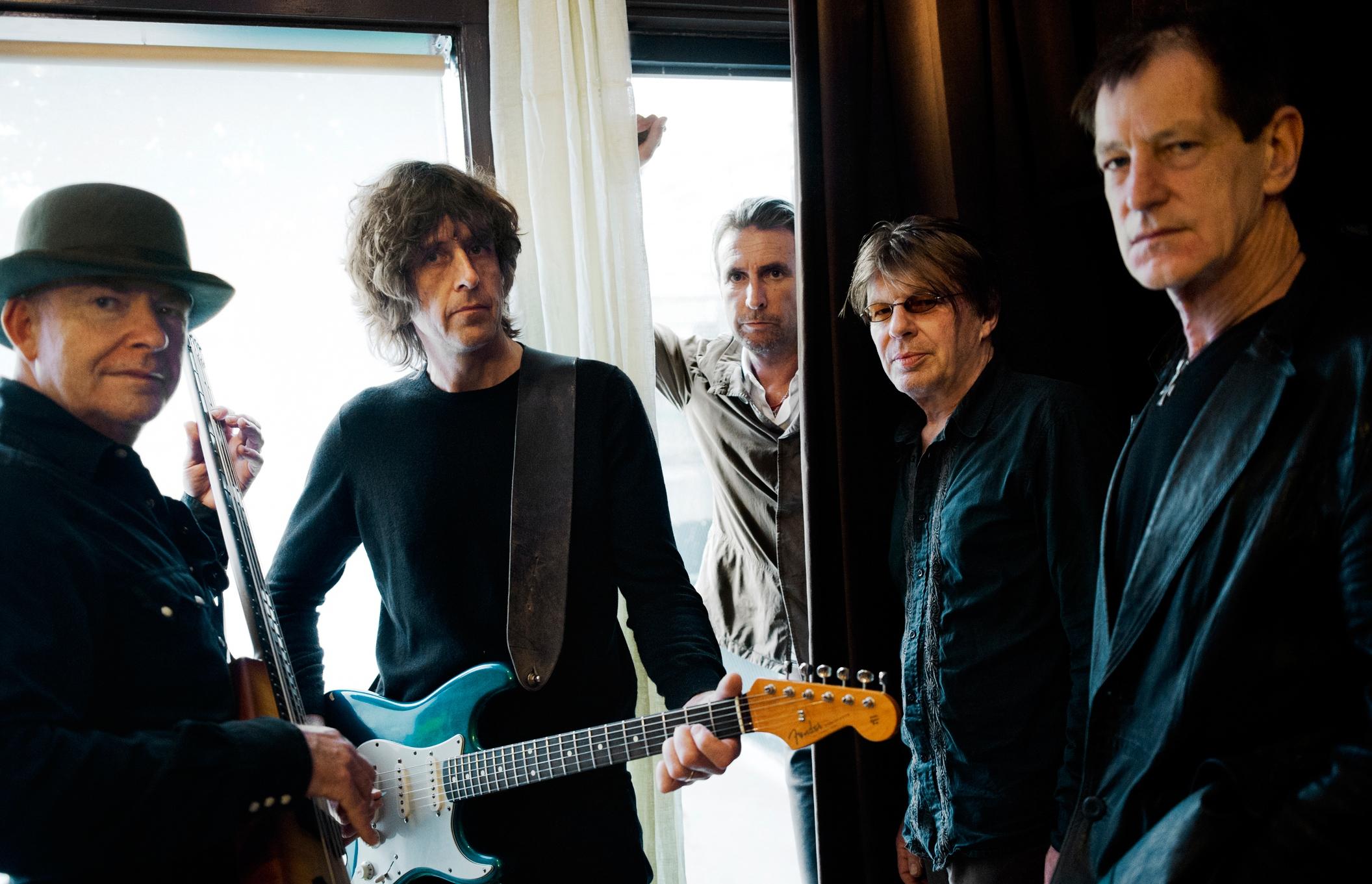
Wherever it lands in a Fixx set list, “One Thing Leads to Another” never fails. And Jamie West-Oram’s on the other line, reminiscing curbside from Clearwater, Fla. He’s enjoying downtime before a late July Texas run, where the song will again overwhelm senses. A similar reception will greet the band when it surfaces Wednesday, July 29, at the Marquee Theatre in Tempe.
Fans, of course, have their own attachment to “Thing,” which reached the Billboard Top 5. West-Oram, though, recalls assembling the riff, through which he drove shards of ska, the Talking Heads, Chic’s Nile Rodgers and James Brown funk. Really, did it need more than that?
“It came out of a jam,” he says, then corrects himself. “It came out of nowhere, Cy providing lyrics like a stream of consciousness. For us musicians, it was a stream of consciousness, too. After a while, I thought, ‘OK, I’ve got to get something rhythmic and choppy going to work against what the other guys are doing.’ I came up with what you hear on the record. Then I wondered, ‘Where do I go next? Another bit?’ But I never came up with anything, so I was stuck with that riff.”
He laughs.
“It glued the whole thing together,” he continues. “OK, I’ve arrived somewhere. I don’t have to come up with another part. It worked.”
Minus the occasional hiatus, The Fixx has worked for more than 40 years. Generations beyond X have embraced them since new wave actually qualified as “new,” finding solace in everything from “Are We Ourselves,” “Deeper & Deeper,” “Less Cities, More Moving People,” “Stand or Fall,” “Red Skies” and “Sunshine in the Shade” to “Happy Landings,” “Fatal Shore,” “Want That Life,” “Brave,” “No Hollywood Ending,” “Spell” and “Lonely as a Lighthouse.” There are lives in those hooks, hooks in those lives.
Enjoy the hits, but tour the studio albums, which for decades have soundtracked the first pangs of love to more current pangs of doubt. The Fixx have embarked on another — their 13th — as we speak, a follow-up to 2022’s “Every Five Seconds.”
“We’ve been writing and recording furiously,” West-Oram reports. “Cy’s sent me some lyrics, and I’ve turned them into songs. It’s the Bernie Taupin/Elton John technique. He doesn’t know how it goes, and I don’t know how he wants it to go. I just make it a certain way and hope that he likes it, which has been really successful.
“We started off with an imaginary deadline, but we’ve given up on that. We’ll just keep plowing away, and when it’s done, it’s done.”
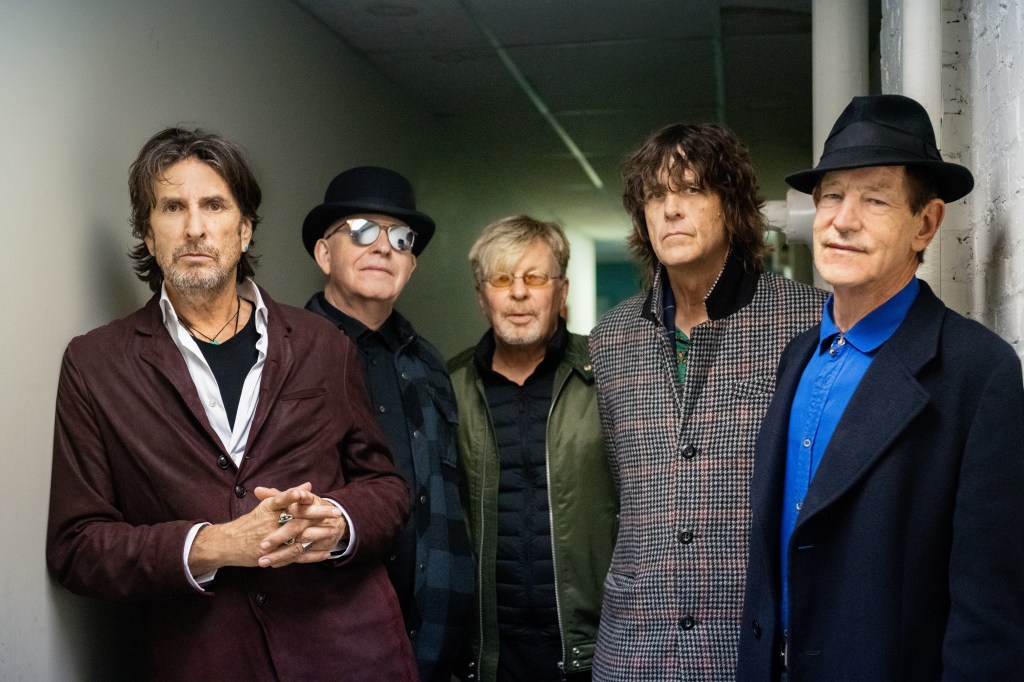
Jamie West-Oram and Rupert Greenall.
Liz Linder
The following interview has been edited for length and clarity.
Phoenix New Times: The Fixx came in part from a group called Portraits, which, as suggested by the “Little Women” and “Hazards in the Home” singles, embodied quite a different sound. You came in around 1980 from The Doll, a new wave, punk-ish outfit.
Jamie West-Oram: I remember when I got the call from (bassist) Charlie (Barrett), who was in the band then. “What kind of things do you like?” he asked. I replied, “My favorite bands are Television and Magazine, the spangly, edgy side of postpunk.” “OK,” he said, “that’s perfect.”
So, I got together with them in a rehearsal. We jammed and played some of the songs they’d been writing. They wanted another writing partner, which made me very keen to join.
Afterward, I heard some Portraits songs, which were much more pop. Not quite my cup of tea, but I respected that they wanted to move on and become more experimental. They just wanted to do what they felt, and that’s what I wanted to do, too. If it was successful, great; if it wasn’t, at least we tried.
They were very well-organized. We’d rehearse in a squat, which was a derelict factory, meeting up at 10 every morning. It was all exciting: Write a song, play it to an audience, see how it goes down. So that’s how The Fixx started out.
What I’ve always liked about the group, aside from Cy’s vocals, is the musical relationship between Rupert Greenall’s synthesizer, Dan K. Brown’s bass, Adam Woods’ drums and you, who carry a host of textures on guitar. Could you talk about finding that balance between electronics and traditional rock instrumentation?
It was a challenge, in a way. Rupert’s always had a unique sound, so it was about learning to play without blotting him out. With the help of the other guys and [producer] Rupert Hine and engineer Stephen Tayler, I ended up with a more transparent guitar — a glassier sound, one you could see or hear things through.
The day I showed up at my first rehearsal, I had an old ’50s Les Paul Junior. One pickup, one knob, straight into a Marshall combo with no effects. That worked. It was powerful.
As the recordings went on, my spangly, glassy sound evolved, but we never lost sight of that gnarly rock thing. It’s an ongoing, ping-ponging dialogue. Someone fires a shot at you. You try to fire back in the right way, responding to the lyrics and enhancing the atmosphere.
“Shuttered Room” (1982) came out around the time music videos went from being novelties to promotional necessities. The Fixx made quite a few great ones over the years, using directors like Brian Grant (“Saved by Zero”) and Jeannette Obstoj (“Are We Ourselves,” “One Thing Leads to Another”). How did you regard the format?
Some of us did better than others. I never felt that comfortable in that world. For me, it was all about the music. Then again, you’re in this situation where you’re being filmed and you’ve got to make something happen. After a while, one does get into the creative spirit.
Back in the MTV days, videos did have the effect of being a promotional device. But they’re an art form, too. Look back at David Bowie or Peter Gabriel’s, and theirs are as much a piece of creative work as the music.
I’ve always wanted to ask about the end line in “Secret Separation”: “I’ll bear one precious scar that only you will know.” It’s a fantastic song already, but that takes it higher. Was it always part of the song or added later?
It was in the original lyric sheet. I don’t know at what point we decided to make that a coda vocal as opposed to weaving it into choruses or verses. I think it worked well. Jeannette Obstoj wrote the lyrics, and I never thought to ask her about it. But it is a beautiful line.
There’s roughly a seven-year gap between 1991’s “Ink.” and 1998’s “Elemental.” What brought The Fixx back?
The creative juices were still flowing. I think Adam started the ball rolling: “Look, what are we wasting our time for? We had something amazing. Let’s see if we can carry on.” Sure enough, it worked.
And a million years later, here we are. It’s still working. It’s a crazy, very rare thing that band members last this long physically and put aside differences to make music the center, let that be the energy that drives them.
About 25 years ago, I picked up a strange compilation called “When Pigs Fly,” which featured artists covering songs one wouldn’t expect. For instance, Lesley Gore did AC/DC’s “Dirty Deeds Done Dirt Cheap,” Devo reworked Crosby, Stills, Nash & Young’s “Ohio” and you guys pulled off Nancy Sinatra’s “These Boots Were Made for Walking.”
(laughs) We all liked the song, but we didn’t choose it. The mastermind behind that project did. We thought, “That’s such a crazy idea, we’ve got to do it.” We didn’t copy it; we kept the same lyrics and the same chords, more or less, then turned it into weird psychedelic rock. It was great fun, a great project. But that’s the only cover we’ve ever done.
The late Rupert Hine produced three of your records and a track on “Ink.” What did he bring to The Fixx?
He came on the scene not long after we decided who we were. He pulled it all together and helped with arrangements and visions, like the structure of (1982’s) “Lost Planes,” which I think was the first thing we recorded. And Stephen Tayler was a huge part of our sound, too. That clarity, that speed of working was amazing. You should see him splicing tapes like some crazy, mad professor.
Rupert Hine kept the lighthearted, zany humor going. He was patient, good at spotting good takes and making suggestions that made you say, “Great idea.” That’s what production’s about.
Bill Whitman, who also worked on “Ink.,” was a great producer too. However, there were a couple of tracks we hadn’t quite nailed, but we wanted them, so we recorded in London with Rupert. It put a fresh perspective on an album we’re largely happy with.
In 2023, you released your first solo album, “Skeleton Key.”
We all went through lockdown in different ways. That’s how I kept my sanity. My wife, Bibi, encouraged it. “Key” was going to be instrumental, and then Nick Jackson, who coproduced it, said, “Why don’t you come up with some actual songs that you sing?” I’d send him tracks, and he’d play tastemaker. “Yeah, that’s on the A list. I like that.” Or “Not sure about that. Let’s put it on the B list.” He was very helpful to me.
Tom Ashcroft did all the drums in two days. I’d written out all the parts, and he sight-read. He didn’t record at my place, but everything else I did myself at home. It was a vanity project, in a way, and just a way to keep body and soul together.
You mentioned Nick Jackson, who’s also helmed Cy’s solo work as well as the last three Fixx records. How’d he enter the fold?
Nick’s a friend of the band with his own band, IT. A good musician with great ears and great ideas. He has a very nice setup where he lives. It isn’t huge, but it’s big enough to record live drums and everything. He’s just the right character for the band.
The lineup’s experienced some turnover, but the band that hits the stage now is the same one that entered Rupert Hine’s Farmyard Studios to make “Reach the Beach” in 1982. What’s it like to go out there with people with whom you share so much history?
We’ve never gone away, in a way, because we’ve toured so much together. It’s comfortable as it ever was. I was talking to Rod Argent recently and mentioned a few disagreements within the band. He said, “Oh, I never thought you argued.” I asked, “Did The Zombies not?” “No,” he said. “We never argued about anything.”
That’s not the case with The Fixx. Yet we have this resilience and a sense of the ridiculous. The other guys are all very funny. I think that helps. It’s unbelievable that we’re still doing it, but there you go: We are.
When you’re of a certain age, you’re not just playing at it anymore. You have to make it that much better. When you’re 25, you can be forgiven for having a bit of an ego, making mistakes and misbehaving. But we’re not 25. We’ve just got to have a fantastic show and make people feel good, send them home feeling better than they felt before they came.
The first gig of a tour, we say, “OK, that wasn’t too bad.” The second one’s always tricky. The third you go, “Ah, that’s it. That’s what we’re about.” So we’re getting tighter and tighter. By the time we get to Tempe, be warned: It’s going to be very tight.
The Fixx: 7:30 p.m. Wednesday, July 29. Marquee Theatre, 730 N. Mill Ave., Tempe. Tickets start at $53.20.