
Gage Skidmore/Flickr/CC BY-SA 2.0

Audio By Carbonatix
It’s not a great time to be a surveillance camera in Arizona.
Valley cities, including Tempe, Cave Creek, Surprise and Chandler, have all recently canceled or trimmed their contracts with Flock Safety, a license plate reader camera company that’s been overrun with allegations of misuse and abuse. On Thursday, state Attorney General Kris Mayes said she’ll conduct a statewide review of Flock cameras, surveillance cameras and automated license plate reader systems. In November, voters will have the opportunity to weigh in on whether photo-enforcement traffic camera systems could be largely banned statewide.
Arizona is amid a statewide referendum against surveillance cameras. But one Phoenix man took it a step further on Aug. 18.
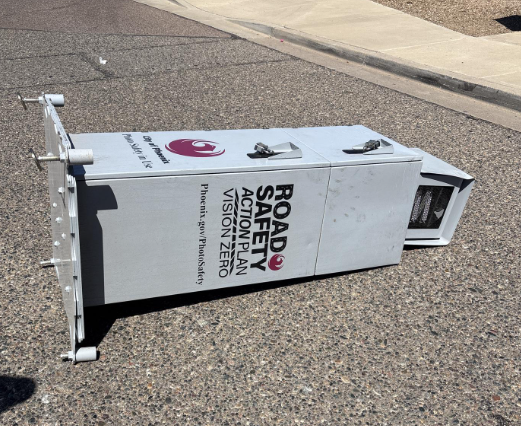
Brandon Ribadeneira, 20, allegedly caused more than $47,000 worth of damage to one of Phoenix’s semi-newly installed speed enforcement cameras after kicking the shit out of it on Aug. 18. According to police, he’d triggered it by speeding and came back to take revenge on the tattletale machine. On Tuesday, Phoenix Police Department investigators arrested him and charged him with criminal damage, a class 4 felony.
Phoenix New Times posted the video of what police said is Ribadeneira attacking the machine. In the timeless battle between man and machine, readers overwhelmingly sided with the man. More than a thousand people commented on the post, and nearly all were positive and supportive of Ribadeneira. Many even offered dubious alibis.
Readers scoffed at the machine’s high price, calling it the “bigger crime.” Others joked about having fake alibis for Ribadeneira, writing that he was “with me playing video games at the exact time,” spotted “rescuing a kitten,” or “with me feeding the homeless.” Readers called him a “king,” an “American hero,” a “fucking legend,” and a “man of the people.”
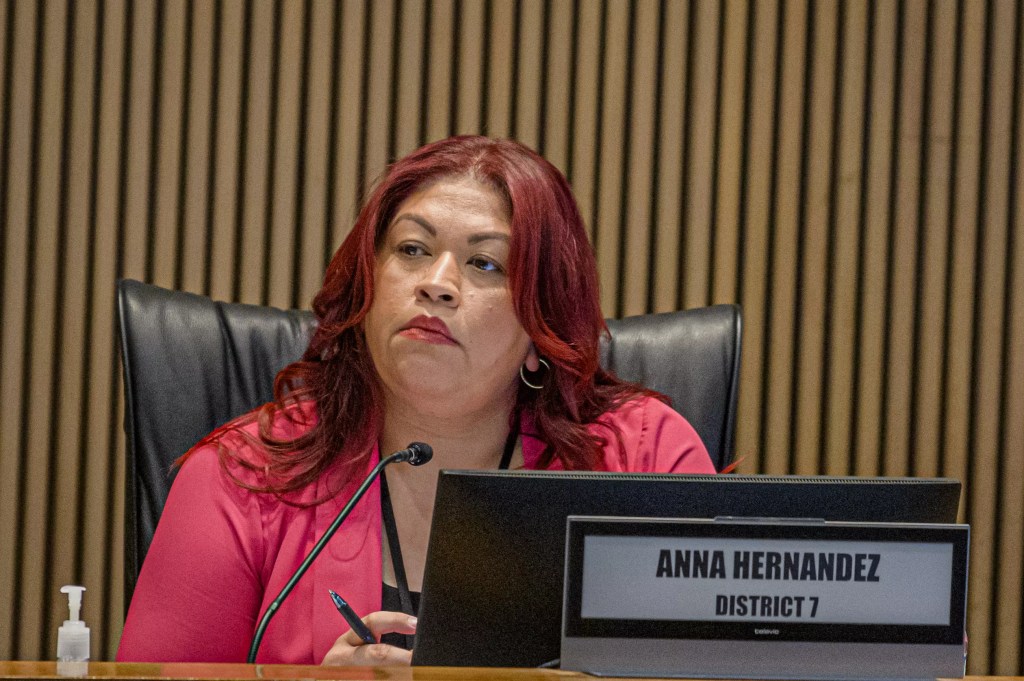
The strong, Luigi-like reaction from Phoenix residents didn’t surprise progressive Phoenix City Councilmember Anna Hernandez, especially after reporting uncovered that two Phoenix cops brutally assaulted residents during a traffic stop and were subsequently arrested.
“Folks can’t afford housing, childcare, groceries, or apparently water soon, while police get 49% of our city budget plus millions more to surveil us,” she wrote in a text to New Times. “Maybe the $47K replacement camera isn’t the emergency here.”
Kevin Hurley
But Hernandez told New Times she doubts there could be a policy change regarding Phoenix’s speed cameras. Instead, she said most of the council is “supportive” of the cameras, but that could change if the community “organizes around it.” None of the other Phoenix City Councilmembers, including Mayor Kate Gallego, responded to New Times’ request to comment.
‘What concerns me is that so many people are cheering this on’
Many other local policymakers, including state lawmakers from both sides of the aisle, councilmembers from other local jurisdictions and candidates for Phoenix city council, generally agreed. However, most condemned Ribadeneira’s decision to take the camera to the ground and instead suggested venting your concerns to local representatives.
“There are legitimate questions about surveillance technology and how it’s used. But destroying public property isn’t the answer,” wrote Ashley Harder, a candidate for Phoenix’s open council seat. Harder said she’d support a “serious review” of how the cameras are being used “to best determine next steps,” as “the frustration is real, and policymakers should listen and respond with accountability, transparency and public debate.”
Ed Hermes, who is running against Harder, called the Flock cameras and other ALPRs a “risk to privacy and civil liberties.”
The Phoenix speed cameras might be here to stay, at least for now, but momentum appears to be building to change surveillance-camera-related policy statewide. At a recent public safety forum for the governor’s race, Gov. Katie Hobbs dodged taking a firm stance and said decisions about the cameras should be left to local governments. Her GOP challenger, Rep. Andy Biggs, called them a “gross violation… of a free society.” During next year’s legislative session, the issue is sure to be a hot-button one, no matter who is sitting on the 9th floor.
“What concerns me is that so many people are cheering this on. That tells us there is a real trust problem that policymakers cannot ignore,” wrote Democrat Sen. Flavio Bravo in a text to New Times, adding that it’ll likely be an issue during next year’s legislative session. “The answer is stronger oversight, transparency and accountability, not violence or destruction.”
Progressive Democrat Sen. Lauren Kuby and far-right Sen. Jake Hoffman will work together to draft legislation on surveillance technology, Kuby told New Times, adding that Hoffman is “in the process of drafting a range of bills.” Kuby, who represents Tempe, cited the city’s decision to turn off the cameras as the “conversation we should be having — listening to our communities, demanding transparency and establishing the strongest guardrails at the state level while allowing cities to ban ALPRs like Flock.”
Provided by Phoenix Police Department
“We can address these constitutional concerns without taking matters into our own hands,” she added.
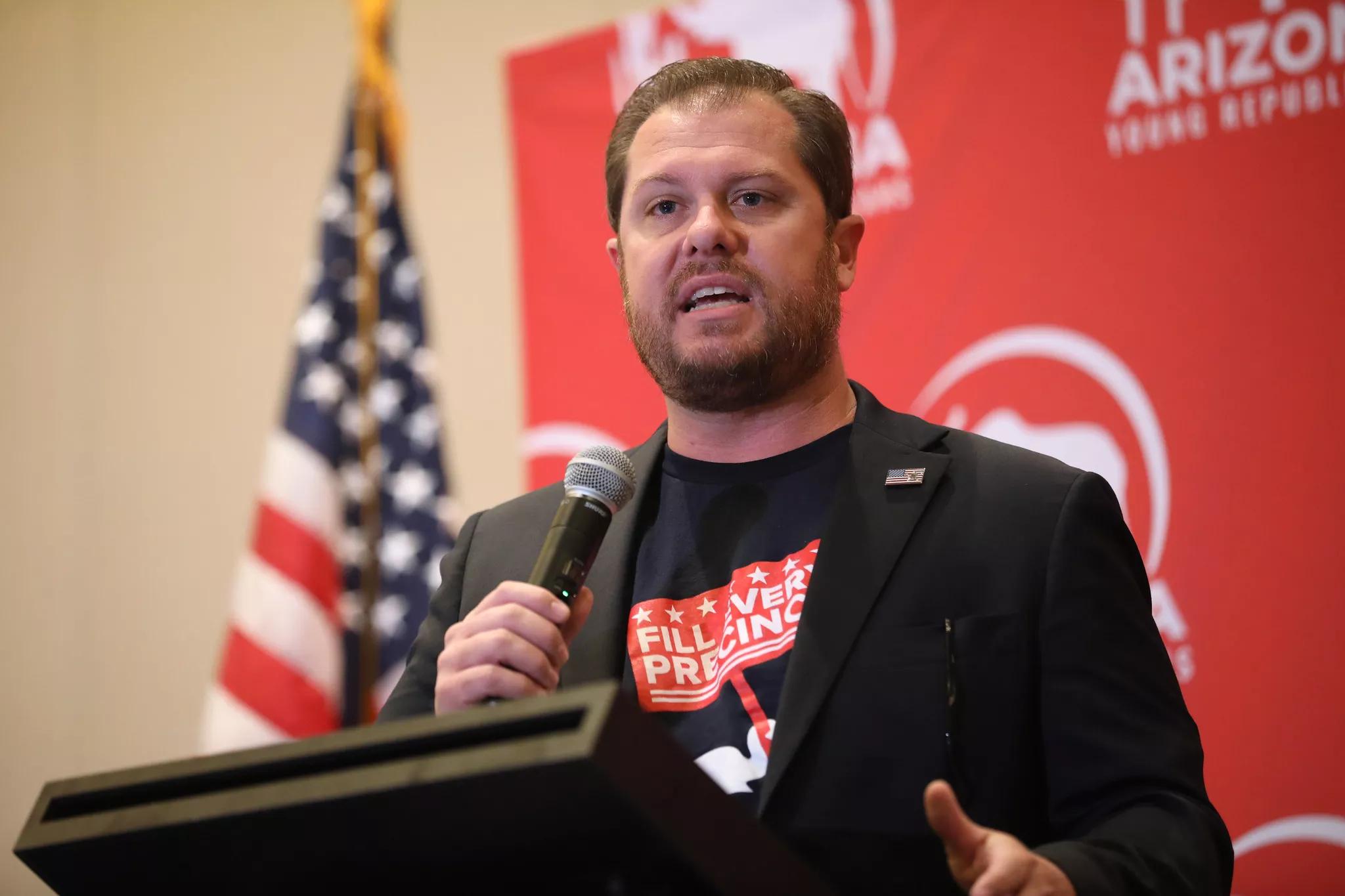
In a statement to New Times, Hoffman took it a step further. He said readers’ reaction to the video was “understandable, given the American people’s great detest for government mass surveillance,” and said Hobbs should call a special session this year to “ban the practice of mass surveillance and red light cameras once and for all.” In an email to New Times, Hobbs spokesperson Christian Slater directed New Times to Hobbs’ comments at the public safety forum.
Any state legislative action might have to wait until January, but there does appear to be “bipartisan opposition” to surveillance technology, said Democrat Rep. Cesar Aguilar, in an interview with New Times. With more and more cities getting rid of their contracts, state lawmakers will have to “make sure that this is something that local government doesn’t want before we just go out and ban this,” Aguilar said, adding that he supports cameras in certain situations, such as photo radar near schools.
“Because this is all happening right now, people want a fast reaction,” he said. “But you need to be able to take in information to see, like, are there places where people do want this? I don’t know, maybe there is.”