
Joseph Darius Jaafari for LOOKOUT

Audio By Carbonatix
This story was published in partnership with LOOKOUT, a nonprofit LGBTQ+ news outlet focused on accountability reporting in the Southwest. Sign up for their newsletter here.
This article was updated July 10 at 12:45 p.m. to include comments from Fry Bread House’s owner.
Matthew Moody is in deep shit.
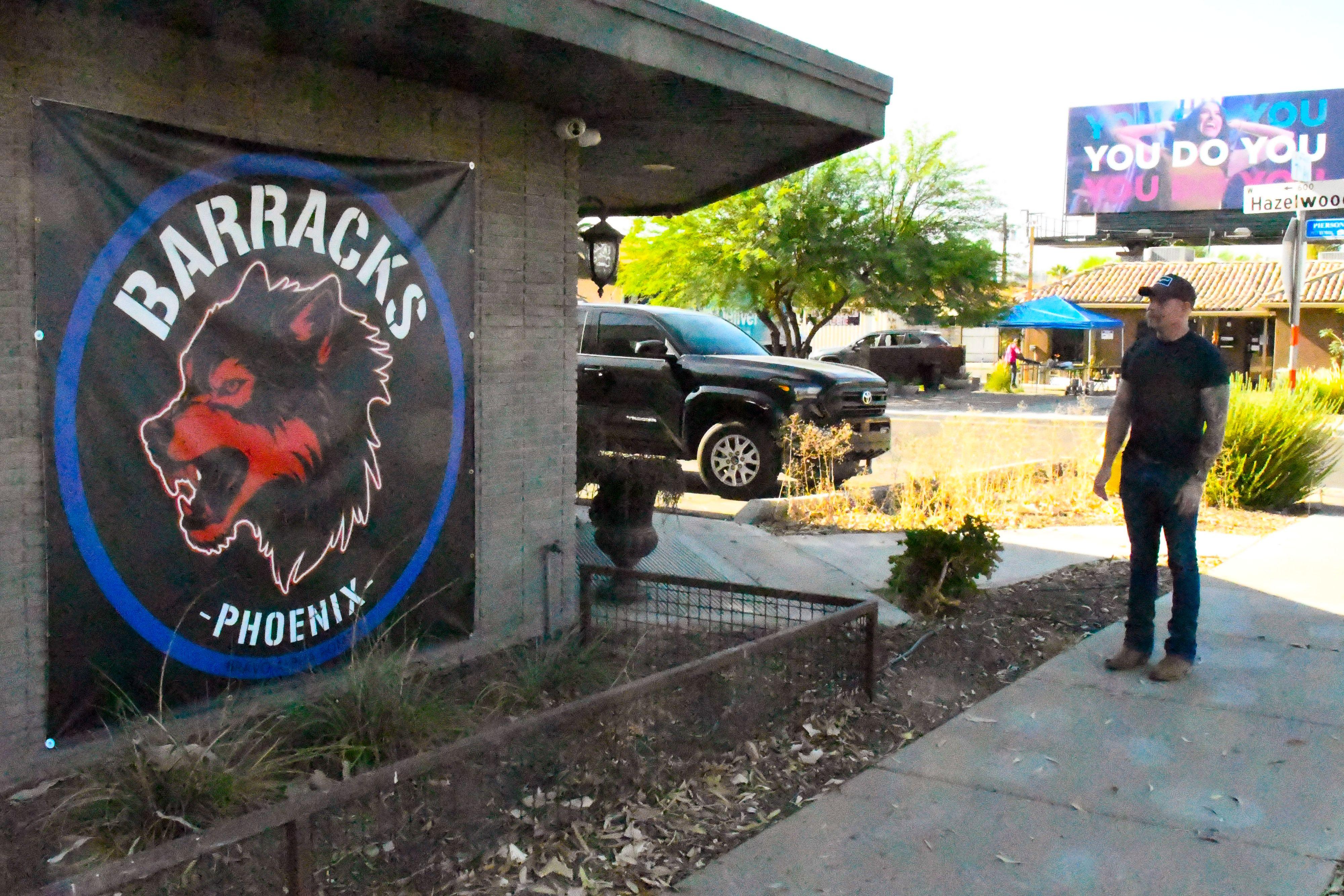
The leather and kink party promoter has spent years building a reputation as one of the region’s go-to DJs for underground queer events, spinning at leather weekends and fetish festivals from coast to coast. These days, though, he’s buried in drywall.
On a recent Monday morning, Moody wandered through the shell of what he hopes will become one of Arizona’s newest queer spaces: Barracks Phoenix.
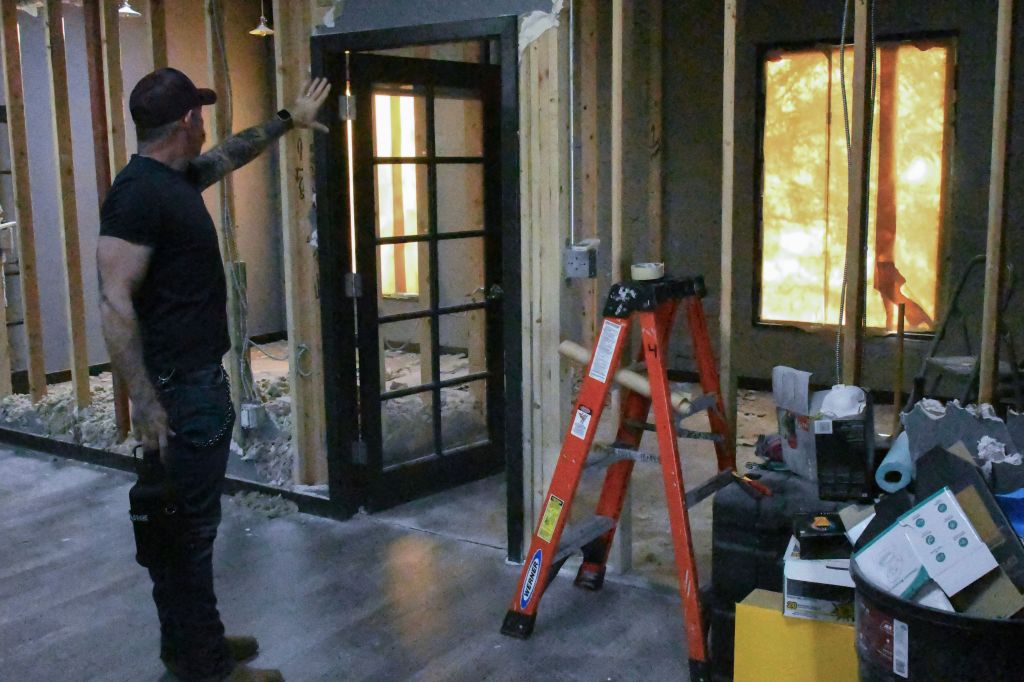
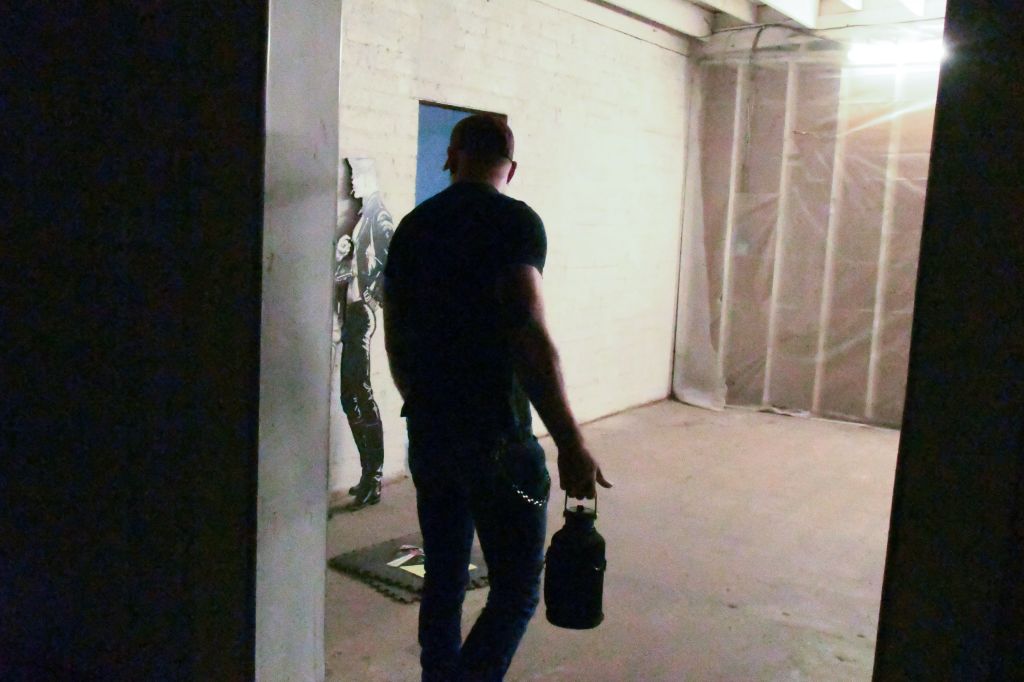
The inside of the building — sitting alongside Seventh Avenue in the heart of Phoenix’s Melrose District — still looks more like a construction site than a bar. There are exposed studs framing rooms that don’t yet exist. Stacks of vintage artwork lean against unpainted concrete walls. Light fixtures sit disassembled, while boxes cover the wall space of some rooms.
Standing near the center of the building, he points to a wall that’s already halfway gone.
“I got tired of waiting,” he said with a laugh. Months of contractor delays eventually pushed him to start swinging the sledgehammer himself.
Eventually, he hopes the space will feature a bar that extends the length of the outside patio, anchored by towering Tom of Finland-inspired artwork. Inside, he envisions a dance floor, a leather shop, an event venue that could host community education workshops and bathrooms built to handle packed weekend crowds.
Everything is already finished in Moody’s mind. In reality, though, it’s still got a long way to go. Nothing can move forward until the paperwork does — and that is the deep shit he’s in.
Moody is locked in an expensive legal battle over Barracks that has pushed him to the brink of bankruptcy, he said. At the center of it is a fight with his neighbor, who happens to have one of Arizona’s wealthiest last names: Shoen, the heirs to the multi-billion dollar U-Haul fortune.
Through his company, 18 SAC LLC, former vice president for his family’s company Stuart Shoen has been the only one formally opposed to Moody’s application for a Series 6 liquor license, triggering months of hearings, legal filings, subpoenas and delays that have left the project in limbo.
Shoen’s lawyers say they have legitimate concerns against the business, and say Moody has not been forthcoming with all the details. But every delay comes with another bill, Moody said, estimating that he’s already invested close to half a million dollars in the project, buoyed by a second mortgage on his home. After that, there’s no money left to finish the project as he envisions it.
But the dispute has grown into something much larger than one liquor license, and instead has become a fight over who gets a say in what gets built in Phoenix’s gayborhood, and whether LGBTQ+ spaces can exist there without protest in a Trump 2.0 world.
Joseph Darius Jaafari for LOOKOUT
A bar with history
Moody’s original plan wasn’t Barracks. It was the Eagle.
The Eagle name — part of a historic network of unaffiliated gay leather bars stretching from Tokyo to New York — has long been synonymous with leather culture and queer underground nightlife.
Phoenix has had an Eagle before, near 32nd Street and Cactus Road in north Phoenix. The location closed down in 2008. Padlock, a dive near Seventh Street and Indian School Road, catered to leathermen for years. Today, Anvil off Thomas Road and 24th Street remains the city’s only leather-themed bar.
A new Eagle in Phoenix would have helped position the city as a destination for leather queens, punks, rockers and nightlife enthusiasts from across the country. But the Eagle name comes with its critics: Everyone who’s been to an Eagle has an opinion on what an Eagle “should” be — and everyone has their favorite. In this writer’s opinion, Silverlake has the best patio, New York used to be fun but still has a good rooftop, and Vegas is laughable as a leather bar, but has strong and cheap drinks. (It’s notoriously difficult to appease gay men.)
So when Barracks near Palm Springs, California, closed in 2024, Moody saw an opportunity.
The brand carried deep credibility within the leather community. Moody was a frequent guest DJ at the space, and partnered with Barracks owner Richard “Scott” Murchison to bring the name to Phoenix in the Melrose district, the city’s widely acknowledged gayborhood.
Melrose, a stretch of Seventh Avenue, is where LGBTQ+ bars, restaurants and small businesses have survived Arizona’s (and Phoenix’s) consistent pendulum swings between progressive and conservative politics. It’s one of the few places in Phoenix where queer life — in the day and at night — has an outwardly visible home.
Moody envisions Barracks rounding out a niche within the queer leather community that is deeply ingrained in the LGBTQ+ rights movement’s history, but has been misunderstood by many.
“We’re losing these spaces,” Moody said. “If we don’t preserve them, they’re just gone.”
For Moody, the project is rooted in his own experience growing up in a small Iowa town before finding acceptance elsewhere. “I don’t want some kid thinking, ‘I have to leave Phoenix to be gay,’ the way I felt I had to leave Iowa,” he said. “This is about the future.”
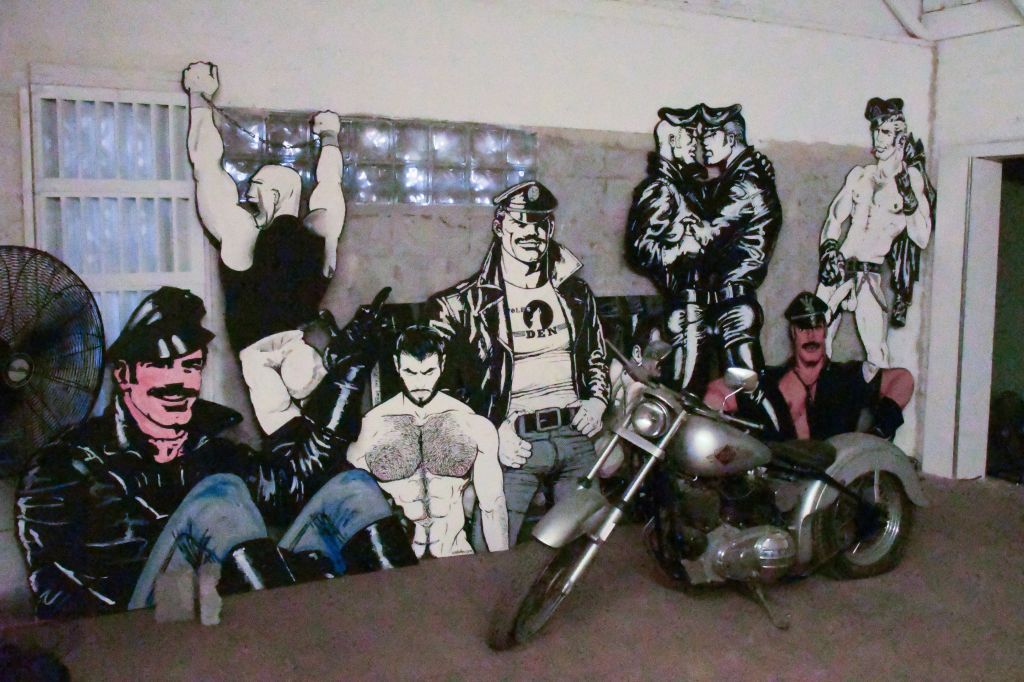
Various artwork is strewn across the interior of Barracks without a place to be hung.
Joseph Darius Jaafari for LOOKOUT
The neighbor next door
Before the first drink has been poured, the project has already faced opposition from at least two fronts, both of them neighbors.
Public records reviewed by LOOKOUT show Shoen purchased the neighboring property in March through his company, 18 SAC LLC. According to Moody and his attorneys, Shoen is using the building to house part of his private automobile collection, and said the use of land is improper, referring to Phoenix’s Seventh Avenue Overlay District that prohibits private storage garages in an effort to encourage active commercial uses along the corridor.
In a response, Shoen’s lawyer, Michael Raine, said the space is used for car storage, saying they “use the property lawfully and according to their interests,” but disputed it being a collection. “Barracks’ attempt to make the Protestor’s use of their property significant seeks to undermine the important role the public plays in liquor licensing and to detract from the sole relevant issue of its own qualifications.”
But even before Shoen had purchased the property, The Fry Bread House, located across the street from where Barracks would open, complained about parking and sound. Moody said they made coded remarks about the areas being a “family” neighborhood — something he understands to mean “straight.”
“By family, what do you mean?” he said, referencing the discussions with the owner of the restaurant. “That phrase has been used against our community multiple times. I mean, family was code for straight. Gay people have families, too.”
One of The Fry Bread House’s owners, Jennifer Miller, said in an emailed statement that the characterization of her saying “family” meant “straight” is inaccurate and false, and that the chief complaints with Barracks was parking and noise.
“We have proudly supported LGBTQ rights for years,” Miller wrote. “Over the past few years, Fry Bread House hosted a Pride event with Native American drag performers, donating part of the revenue to help them compete in Miss Gay USofA. LGBTQ+ authors have read at our restaurant, and we have held back-to-school supply drives for LGBTQ youth. We have LGBTQ staff – past and present – working at our restaurant.”
“While I understand Mr. Moody’s frustration with my concerns, these legitimate logistical concerns need to be addressed,” she said.
Records show Moody has addressed the concerns from The Fry Bread House. According to filings with the Arizona Department of Liquor Licenses and Control, he secured additional parking through a long-term lease and incorporated sound-mitigation measures into the building’s design.
Even though Shoen’s legal filings also cite concerns over parking and noise, a large portion of Shoen’s complaints against Barracks appear to be focused on events that never happened in Arizona — and did not involve Moody.
Shoen’s attorneys have pointed to the history of the original Barracks in Cathedral City, California, as a reason to deny the bar its license.
Opened in 1992, Barracks became one of the country’s best-known leather bars, drawing visitors from around the world for leather weekends, educational events and nightlife. But after more than three decades in business, it closed in 2024 following an investigation by the California Department of Alcoholic Beverage Control.
Documents submitted as part of Shoen’s protest to the Arizona liquor license application show California regulators conducted a four-month undercover investigation after receiving anonymous complaints alleging lewd conduct.
The investigation resulted in 66 administrative allegations, including claims of public sexual activity, nudity on an outdoor patio and adult pornography displayed inside the establishment.
No criminal charges were filed. Instead, Murchison, the former Barracks owner, agreed to surrender the bar’s liquor license and close the business rather than contest administrative revocation proceedings.
“Barracks’ problem is that it did not run a ‘leather bar’ in California; it ran a sex club,” wrote Raine in response to LOOKOUT’s questions. He referenced the findings of the police sting that showed, “numerous patrons in as many as 60 separate instances over a few days to engage in open sexual activity in pairs and large groups on the premises and Barracks’ constant playing of pornography on their televisions.”
When Moody first applied for a Series 6 liquor license, Murchison was listed as a co-founder, director and 50% shareholder of Barracks Bar Phoenix Inc., according to Arizona Corporation Commission records.
The connection prompted the Phoenix Police Department to initially recommend denying the application, citing Murchison’s regulatory history and ownership in the new company.
After those concerns surfaced, corporate records show Murchison resigned as an owner, officer, director and manager of Barracks Bar Phoenix, leaving Moody as the company’s sole owner and operator. Shoen’s lawyers claim to have proof that the change in ownership was just in name only, and referred to Moody and Murchison as continuing to co-own the bar.
But removing Murchison was enough for Phoenix police to later withdraw their initial recommendation. They concluded there was “no basis for denial” of the liquor license. Neither the Phoenix City Council nor the Arizona Department of Liquor Licenses and Control filed formal objections.
Shoen’s lawyers say that the Barracks’ legacy in California is coming to Arizona. Their evidence included a photo of a marketing campaign Moody put on at a national leather event that put “Orgy in Progress” on door hangers in a hotel. Shoen’s lawyers argued that marketing is proof that the bar is intending to be a sex club.
Moody countered that using sex as a marketing tool is something businesses continually do: “They better have never stepped in a Hooters or bought a birthday card at Spencer’s Gifts,” Moody retorted.
Murchison still owns a 50% interest in the building, according to the memorandum, but Moody said Murchison has no role in operating the business, hiring employees or making management decisions. He described the arrangement as a landlord-tenant relationship.
With Murchison removed from the company, Moody believed the biggest obstacle had been resolved. But after discussions between the two sides, Moody’s attorneys wrote that Shoen’s legal team indicated Shoen was “not comfortable with the business and its clientele.”
For Moody, the statement confirmed what he already suspected.
“He had no problem buying next to a bar,” Moody said. “He only had an issue when he found out it was going to be a gay leather bar.”
Raine wrote that his client “vehemently denies any concern with Barrack’s general LGBTQ+ themes or clientele.” And in a separate statement, Shoen called the claim defamatory and urged not publishing this story “lest you become a party to it.”
In his response, he wrote: “You would be wise to reserve your article and your judgment until after the hearing rather than help another person engage in defamation,” he wrote. “I am not a public figure – I’m a private citizen exercising my legal rights. You should consider that my children may find your article floating around the internet one day. Republishing this kind of thing is not in the public interest, and I take my reputation extremely seriously.”
LOOKOUT could not independently verify Moody’s characterization beyond the statements contained in the legal filings. But Ryan Anderson, Moody’s attorney, wrote in an email that the remaining objections reveal an underlying bias: “In light of SAC’s inability to articulate any additional legitimate concerns, its course of conduct makes it increasingly apparent that the opposition is not grounded in the statutory licensing criteria, but rather in generalized discomfort with Barracks’ proposed use and its anticipated clientele.”
The liquor board will be hearing Shoen’s protest this week. He and his lawyers attempted to subpoena multiple pieces of evidence from Moody and Murchison, as well as postpone the hearing on July 9.
But in a response to Shoen’s lawyers, Director of the Department of Liquor Licenses and Control Ben Henry rebuked the attempts: “During my tenure as director, and for more than ten years preceding me, I have not been able to locate an instance of a director granting subpoenas of this nature,” he wrote, denying the subpoenas and the extension.
Joseph Darius Jaafari for LOOKOUT
More than a bar
Shoen currently stands alone in formally opposing Barracks. At the same time, a growing list of community members has lined up in support of Moody and the space.
Letters submitted to the Arizona Department of Liquor Licenses and Control and the City of Phoenix describe Barracks as a long-overdue investment in one of the city’s historic LGBTQ+ neighborhoods.
Patrick Kelley, a nearby business owner and former president of the Seventh Avenue Merchants Association, wrote that Barracks would be “an excellent fit” for the Melrose corridor and strengthen the district’s economy.
Robert Donat, chair of the Pierson Place Historic District Block Watch, praised Moody for meeting with neighbors, addressing parking concerns and working collaboratively with the surrounding community before construction was complete.
Others emphasized what the venue could mean for LGBTQ+ Arizonans.
Stephen Land, a longtime nightlife producer, described Barracks as “not simply a bar,” but a cultural gathering place where people find mentorship, community and belonging. Opposing the venue because of discomfort with the people it serves, he wrote, would represent “a step backward.”
Elijah Palles, a licensed clinical social worker and former Mister Phoenix Pride, echoed that sentiment, writing that Arizona’s more than 250,000 LGBTQ+ adults deserve spaces where they can gather safely and authentically.
“It is deeply concerning,” Palles wrote, “when opposition to LGBTQIA+ spaces appears rooted in prejudice rather than legitimate community concerns.”
For many supporters, the dispute reflects broader changes reshaping Melrose.
Long marketed as Phoenix’s gayborhood, the district has seen rising property values, new development and changing ownership transform parts of the corridor, raising questions about whether the neighborhood is becoming less queer even as it grows more popular.
Moody argues that the lack of dedicated leather spaces has left many community members without a place to gather.
“There are so many folks who don’t even go out anymore because there isn’t a space for them,” he said. “Why should they stay?”
Supporters say Barracks is one of the few businesses intentionally built around a segment of queer culture that has often been pushed to the margins — even within LGBTQ+ spaces.
But until that day comes (or if it comes), Barracks exists mostly as Moody’s dream. For now, its exposed framing, concrete floors and stacks of leather history are waiting for walls to hold it. Moody can already see where everything fits into his grand plan.
The question is whether Phoenix will ever get to see it.