

Kevin Hurley

Audio By Carbonatix
The Trump administration’s mass deportation campaign has rippled across the country, including in Arizona, where nearly a million immigrants — some who have legal status and some who don’t — call home.
A spike in immigration enforcement intended to boost deportation numbers has led to due process violations, the gutting of legal immigration protections and clashes between federal agents and activists. And with election season approaching, advocates fear the hostility is likely to worsen. Over the past year, that hostility in Arizona has manifested everywhere from the state legislature to the classroom, resulting in several legal conflicts that are likely to stretch into the new year.
Mario Tama/Getty Images
Who qualifies for citizenship at birth?
In January, President Donald Trump signed an executive order declaring that the U.S. Constitution no longer guarantees citizenship to people born in the country. The order denies citizenship to children born after Feb. 19, 2025, if they don’t have at least one parent who is either a U.S. citizen or a lawful permanent resident. In 2022, as many as 3,400 babies born in the Grand Canyon State had two noncitizen parents.
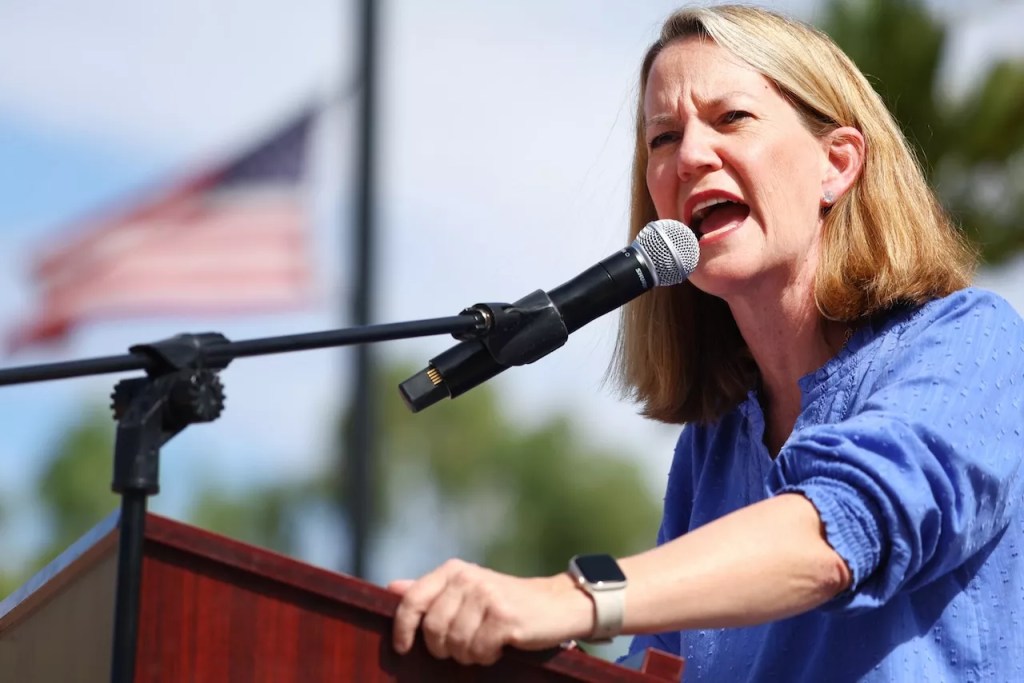
Just a day after the executive order was issued, Arizona Attorney General Kris Mayes joined a lawsuit challenging its constitutionality, arguing that it should be struck down for violating the 14th Amendment and upending more than a century of judicial precedent. If it’s allowed to go into effect, state officials predict it will have sweeping and expensive consequences.
On Dec. 5, the U.S. Supreme Court agreed to consider the legality of Trump’s executive order in a class action lawsuit similar to the one launched, in part, by Arizona. While no date has yet been set for the case to be heard, it will likely go before the justices sometime next year.
Gloria Rebecca Gomez/Arizona Mirror
Mandatory court hearings used to boost ICE arrests
In an effort to deliver on Trump’s promise to oversee the largest deportation campaign in history, federal immigration officials have sought to bulk up arrest numbers by looping in immigrant populations who were previously low-priority.
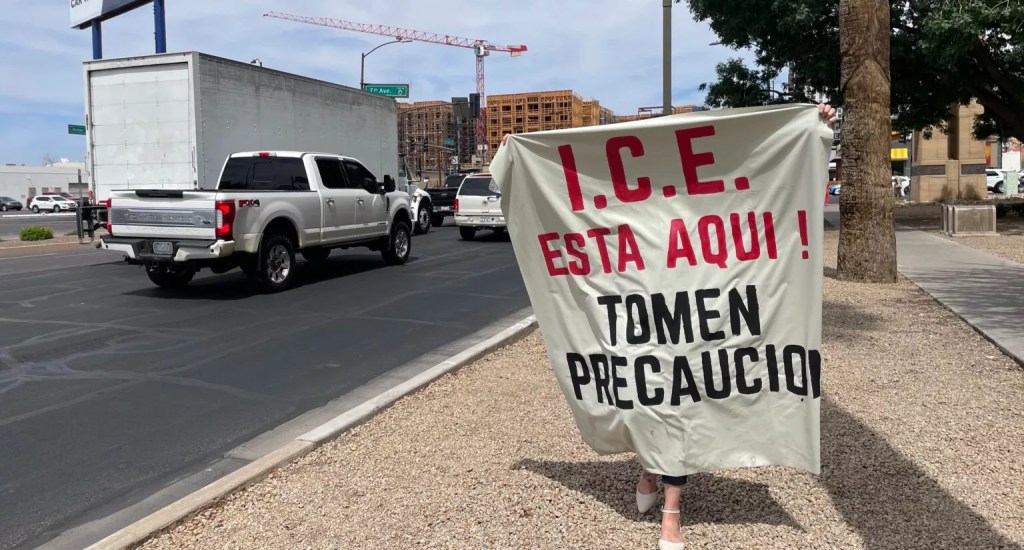
Under the Biden administration, immigration enforcement activity around schools, hospitals and courthouses was prohibited. That guidance was quickly rescinded once Trump took office. And in May, that new permission resulted in U.S. Immigration and Customs Enforcement raids descending on immigration courthouses in several major cities, including Phoenix. Federal prosecutors voluntarily dismissed cases against asylum seekers and migrants attending mandatory immigration hearings. When migrants walked outside the courtroom, ICE agents were waiting to take them into custody. Skipping those hearings guarantees a deportation order.
For several days, dozens of migrants were detained at Phoenix Immigration Court, and when advocates launched a protest and support effort, ICE agents changed tactics to follow and arrest migrants on the drive home.
Immigrant rights advocates say ICE agents haven’t yet returned to the court, but they continue to keep watch.

Matt Hennie
Who should get access to a college degree?
Along with a spike in raids and arrests, anti-immigrant sentiment has encroached on public education. One elementary school principal reported dozens of students withdrawing from a centrally-located school for fear of being caught in immigration enforcement activity, and several youth program organizations have noted a decrease in demand as migrant students and kids from mixed-status families seek to avoid unwanted attention, despite needing help.
And the post-secondary education of immigrant students is also under attack. In 2022, voters narrowly approved Proposition 308, granting undocumented students the opportunity to pay the same in-state tuition rate as their high school classmates. Before, immigrant students paid almost twice as much as their peers. But a once bipartisan idea is now strongly opposed by the Trump administration and Republicans across the country.
In April, Trump signed an executive order labeling in-state tuition rates for immigrant students illegal and shortly after the U.S. Department of Justice filed lawsuits against such laws in Texas, Minnesota, Kentucky and Oklahoma. No lawsuit has yet been filed against Arizona’s law and Mayes has since released a legal opinion reasoning that Prop. 308 perfectly complies with federal law. But the debate over whether Arizona’s law should stay remains unsettled.
Steven Hsieh
Can Arizona cops arrest migrants for crossing the border?
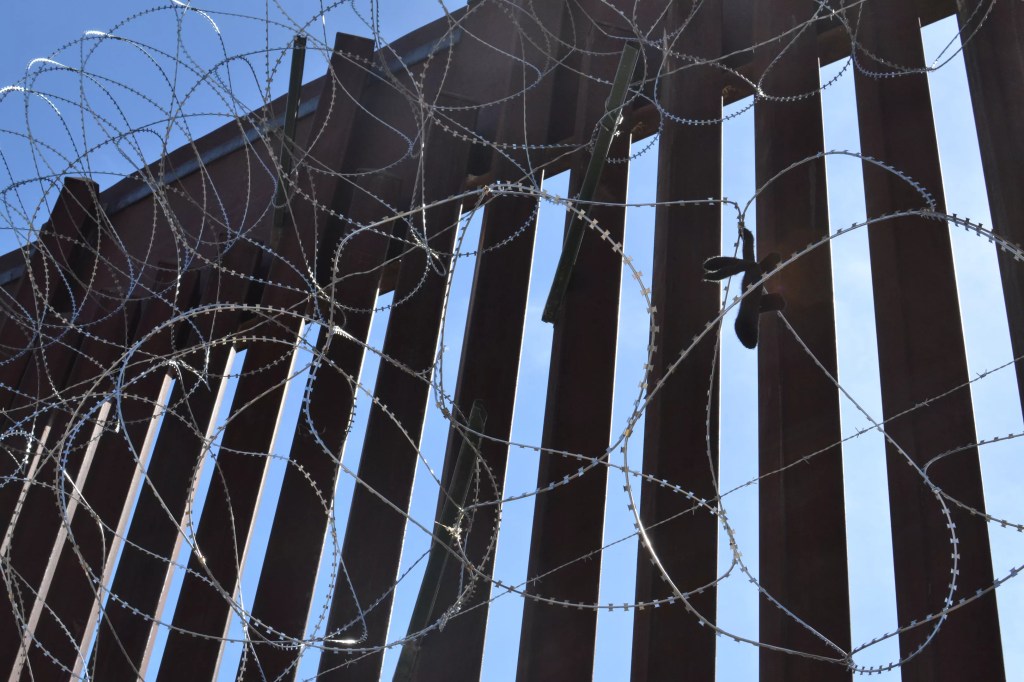
Last year, voters overwhelmingly backed Prop. 314, also called the Secure the Border Act. The initiative makes it a state crime for migrants to cross the border anywhere but at an official port of entry, and carries with it a six-month jail sentence. Local police officers would be able to arrest migrants they believe violated the law and state judges would have the power to issue deportation orders. The law also penalizes people for submitting falsified documents to apply for jobs or public benefits and enacts harsh prison sentences for people convicted of selling fentanyl that results in someone’s death.
The provisions in the law expanding Arizona’s ability to enforce federal immigration laws are currently on hold until the U.S. Supreme Court rules that states have a right to do so. Immigrant rights organizations that strongly oppose the law fear it could someday be enforced, and have launched a legal effort to strike it down before that can happen. In October, a trial court found that fear to be too speculative, and dismissed the lawsuit against the Secure the Border Act. The case has since been appealed, and arguments are set to pick back up in February.
Kevin Hurley
Immigrant rights advocacy continues, too
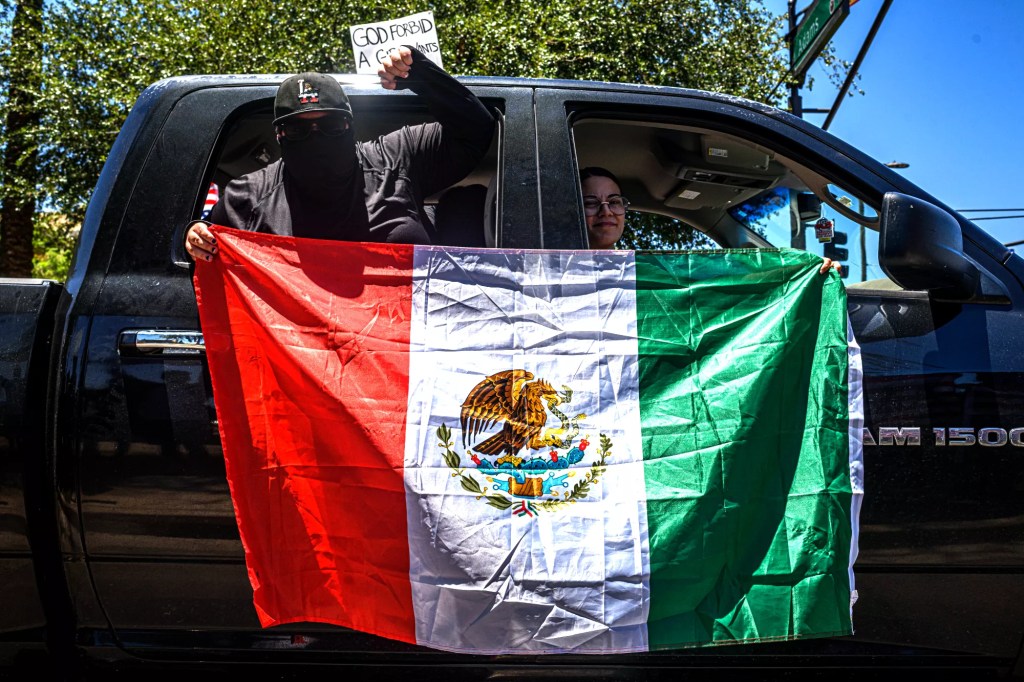
Even as efforts to curtail immigrant rights ramp up, advocates continue to push for change at both the federal and community levels. Despite facing obstruction from federal agents and even pepper-spray, Arizona’s elected officials have repeatedly called for transparency about raids and detention facility conditions. And yet the largest and most consistent pushback has been from everyday residents.
In Phoenix, community members rallied to condemn the deportation of veterans, and highlighted the plight of a woman whose family says she’s suffering from leukemia and stuck in ICE detention without adequate medical care. Protestors showed up to Phoenix Immigration Court to speak out against the arrests of migrants doing things the “right way” by attending mandatory hearings, and were on site sounding the alarm and collecting evidence when ICE agents swarmed an Avondale neighborhood after claiming a Honduran immigrant rammed a federal official’s car — while witnesses and video evidence said the opposite.
Even in deep-red districts like Mesa, advocates have been attending city council meetings every month to call for an end to the collaboration agreement between local police and federal immigration officials. And while that mobilization hasn’t yielded any results, organizers say they plan to keep showing up.
This story was first published by Arizona Mirror, which is part of States Newsroom, a network of news bureaus supported by grants and a coalition of donors as a 501c(3) public charity.