
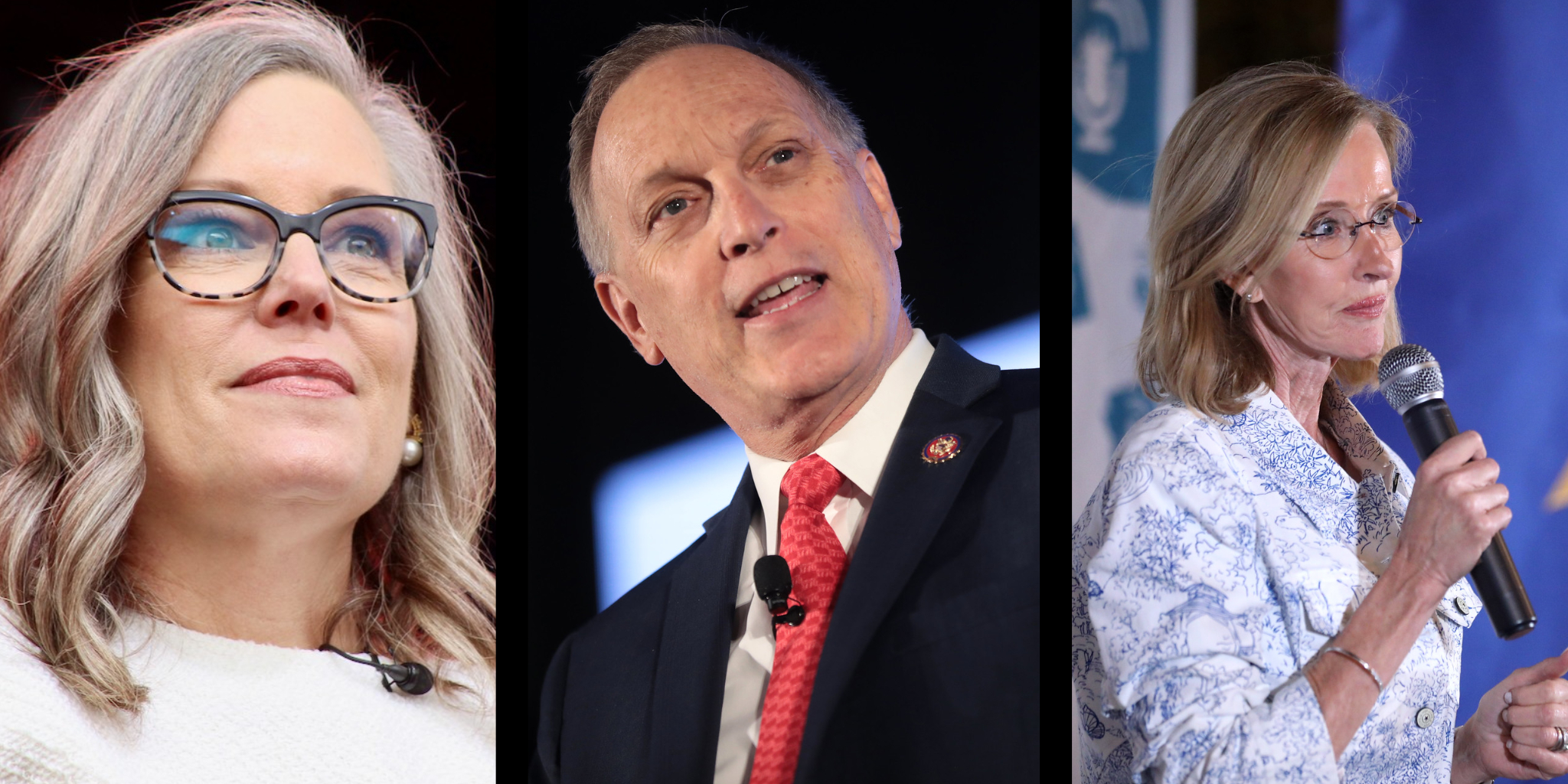
Photos by Elias Weiss and Gage Skidmore

Audio By Carbonatix
With the calendar flipping to 2026, the 10-month countdown to November’s midterm elections begins. Arizona voters soon will have the chance to assess President Donald Trump’s administration and determine the fate of the state’s top elected leaders.
The famously purple state could look quite different a year from now, depending on the results of key races.
Most of Arizona’s divided government is up for grabs. Republicans hope to flip the three most powerful offices away from Democrats — who all won in the last midterm elections during President Joe Biden’s term. Meanwhile, the state’s Dems hope to capture control of one or both chambers of the Arizona Legislature.
“Both chambers are very much in play and we are looking to get majorities in both,” Senate Minority Leader Priya Sundareshan told Phoenix New Times. She added that Democrats want to key on Republicans’ campaign promises to make life more affordable: “They don’t even appear to be trying with the policies they’re putting forward.”
Meanwhile, two Republican congressmen are clinging to their districts after having narrowly won seats in 2024, when Trump’s powerful performance in Arizona helped buoy the Republican ticket.
Here are the top races to watch in 2026.
Gage Skidmore/Flickr/CC BY-SA 2.0
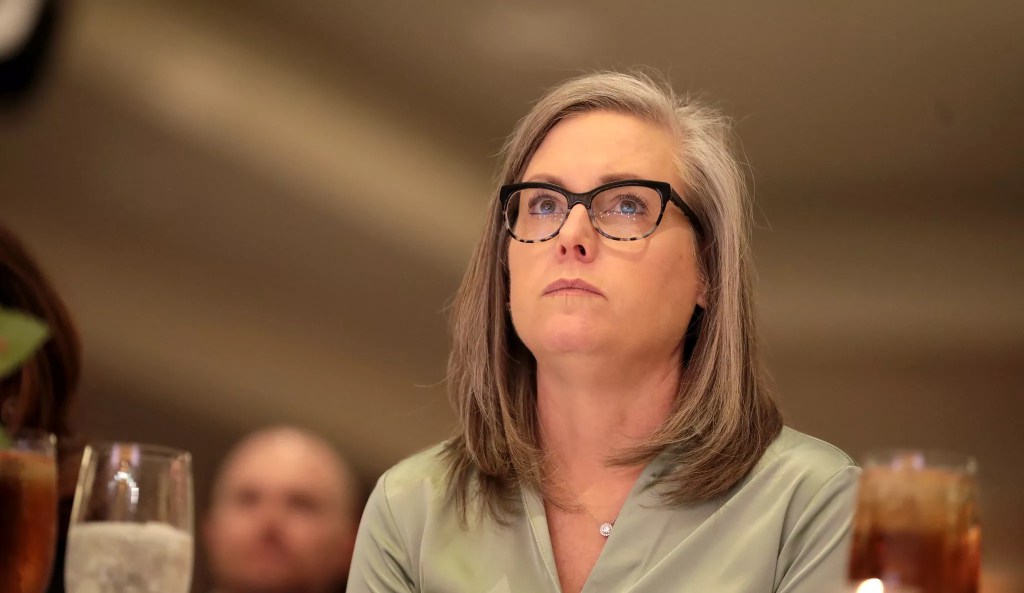
Governor
Gov. Katie Hobbs, the Democrat who narrowly eked out a win against now-veteran-political loser Kari Lake four years ago, is running for a second term by selling herself as the adult in the room. Her relatively calm first term saw her veto an Arizona-record 390 bills out of a largely MAGA state legislature, so her pitch isn’t far-fetched, especially as Trump’s approval ratings wilt. The Republican primary on Aug. 4 will determine her opponent.
Rep. Andy Biggs has positioned himself as a MAGA hardliner, while candidates Karrin Taylor Robson of Phoenix and Rep. David Schweikert of Scottsdale hover as slightly more donor-friendly, mainstream alternatives. Trump has endorsed both Biggs and Taylor Robson. Both parties’ candidates will also pick lieutenant governor nominees to run with them: That newly created position will launch in January 2027.
Mario Tama/Getty Images
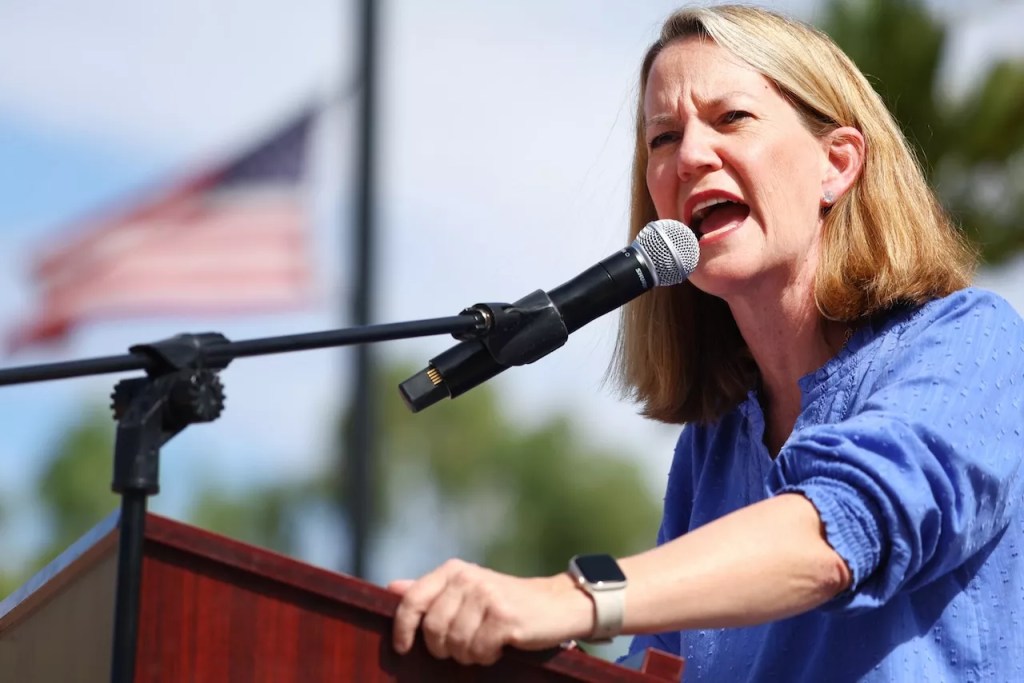
Attorney General
Attorney General Kris Mayes, who won her first term by a razor-thin 280-vote margin in a contest of 2.5 million votes, is back to defend the office as a consumer-protection watchdog against one of two GOP culture-war flamethrowers. Senate President Warren Petersen is leaving his seat of power on a pro-Trump crusade to take on Mayes. Rodney Glassman, a candidate around Arizona in at least four elections yet never a winner, is also running for the GOP nod, though he faces allegations of campaign finance violations and has at times been his own main source of fundraising.
The election will have huge implications for the public governance of the state, as Mayes’ efforts to bring oversight to corporate powers and Trump’s immigration efforts hang in the balance. To date, Mayes has filed 35 lawsuits against the president’s administration.
TJ L’Heureux
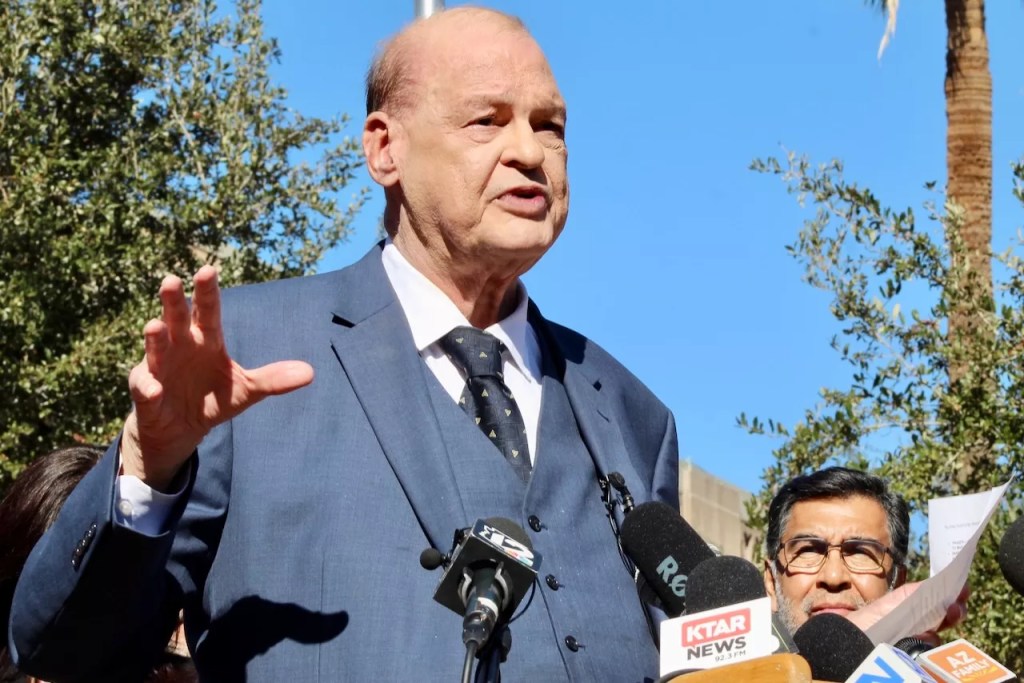
Superintendent of Public Instruction
The schools chief race features a Republican civil war. The incumbent, scandal-plagued octogenarian Tom Horne, faces a high-profile challenge from state Treasurer Kimberly Yee, who’s betting voters want less baggage and better optics. Right-wing Republicans have also been critical of Horne’s limited oversight of the controversial Empowerment Scholarship Account program, which has allowed parents to use state money to buy diamond rings and lingerie. Republican critics nonetheless have argued Horne is monitoring the program too closely.
Democrats disagree. Teresa Ruiz and Dr. Michael Butts are running on the Democrats’ side, arguing that Arizona’s classrooms are collapsing under voucher obsession and chronic underfunding. Education remains a political battlefield, and Arizona teachers have been fleeing the profession thanks to low pay and tense workplaces.
Arizona Corporation Commission
Corporation Commission
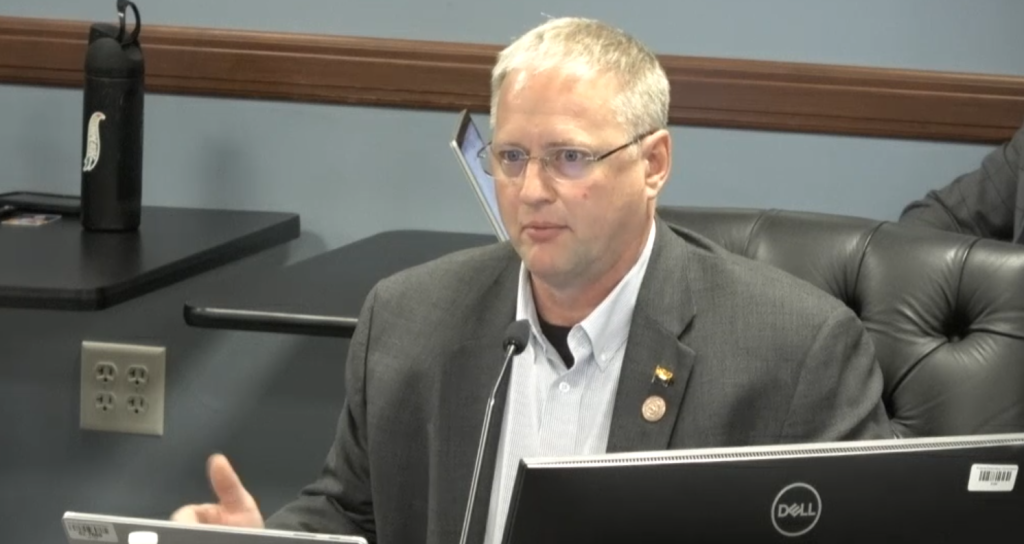
In what is quietly among the most important races in the state, the Corporation Commission election puts low-profile regulators into a rare spotlight. GOP incumbents Kevin Thompson and Nick Myers are trying to hang on amid rising frustration over huge utility rate increases. Republican challengers such as Ralph Heap and David Marshall want to reshape the commission from the right. Democrats such as Jonathan Hill and Clara Pratte argue the body has functioned more like a utility protection racket than a watchdog for consumers. The commission doesn’t make headlines — until your electric bill jumps.

Gage Skidmore/Flickr/CC BY-SA 2.0
Arizona’s 1st Congressional District
Schwiekert’s run for governor has opened up AZ-01 — and sparked a political free-for-all in Scottsdale and north Phoenix. Republicans like former Arizona Cardinals kicker Jay Feely, state Rep. Joseph Chaplik and Arizona Republican Party chair Gina Swoboda are vying for the chance to keep the district red. Each brings varying degrees of name recognition and experience. Swoboda, perhaps the most moderate candidate, was endorsed by Trump when she announced her candidacy — perhaps as a thanks from Trump for helping him dominate the state in 2024.
Democrats, including past candidates Amish Shah and Marlene Galán-Woods, see an opening in suburban fatigue and demographic shifts. The district has been a major battleground for years, and with Schwiekert leaving, Democrats hope this is the year it flips. Expect money, messaging and national attention far out of proportion to the district’s size.
Pinal County Sheriff’s Office
Arizona’s 5th Congressional District
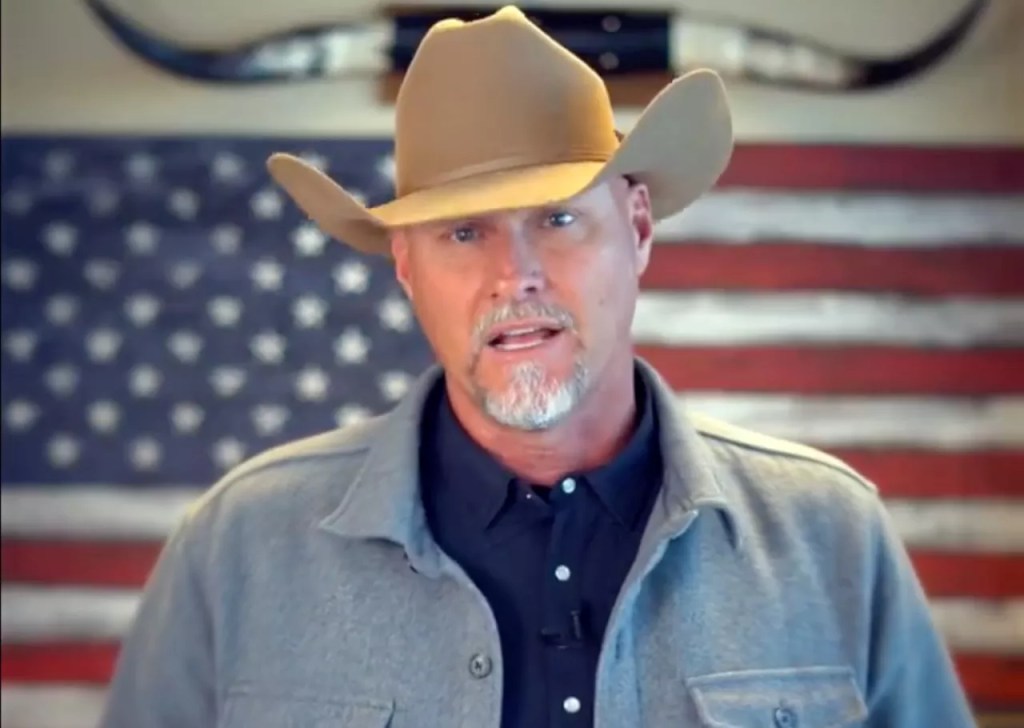
AZ-05, on the Valley’s southeast edge, remains deep-red territory. The real election is the Republican primary. Candidates like former sheriff Mark Lamb and ex-legislator Travis Grantham are competing to prove who best embodies the district’s brand of Trump-friendly conservatism. Democrats, including Chris James and Elizabeth Lee, will make the case until November, but history suggests the GOP nominee enters the general election with a built-in advantage. The district doesn’t ask whether Republicans should win — just which kind of Republican should represent them, and how loudly they should yell once they get to Congress.

Gage Skidmore/Flickr/CC BY-SA 2.0
Arizona’s 6th Congressional District
Arizona’s 6th, in the southeast corner of the state, is shaping up to be one of the nation’s hottest races. Republican incumbent Juan Ciscomani — fresh off a narrow 2024 win and lugging the baggage of the GOP’s unpopular immigration crackdown — is digging in on defense. On the other side, Marine Corps veteran JoAnna Mendoza’s campaign has been turning heads and attracting buzzworthy attention. In December, two other Democrats bowed out of the race after Mendoza out-fundraised Ciscomani in Q3, setting up a showdown between the ascendant challenger and the vulnerable freshman incumbent. According to Schweikert, internal polling indicates Ciscomani may be in some deep trouble.
Gage Skidmore/Flickr/CC BY-SA 2.0
Legislative District 4
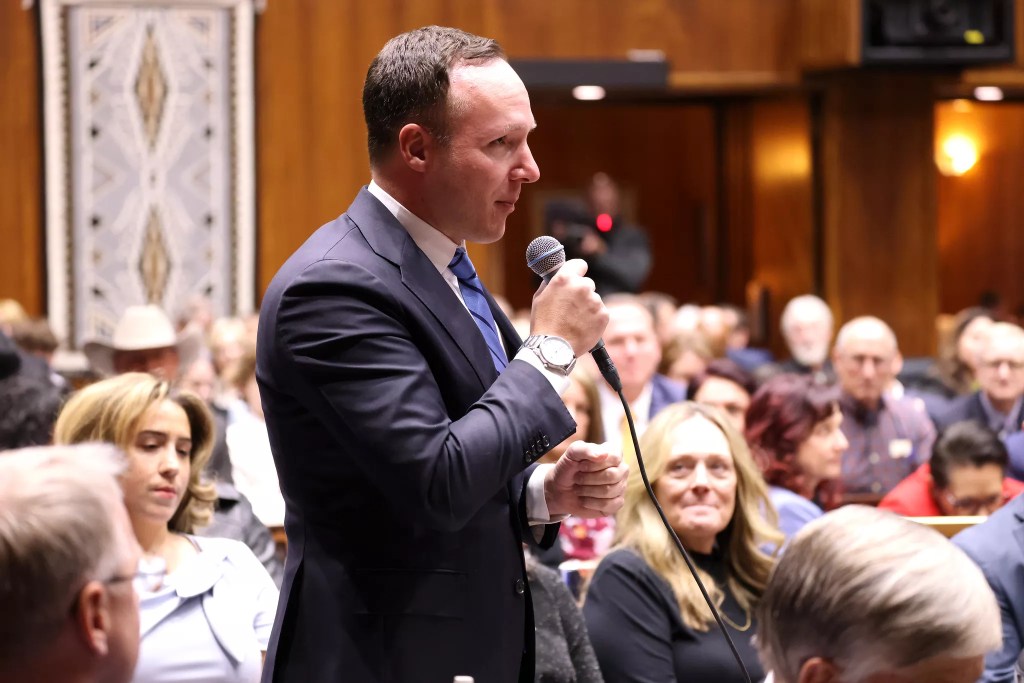
The state House and Senate are up for grabs in the Paradise Valley swing district, where Republican Rep. Matt Gress has survived recent efforts by Democrats to oust him and where Republicans were able to pick up seats last cycle. Former gubernatorial candidate and Democrat Aaron Lieberman is running for the state senate, hoping to cash in on name recognition and an anti-Trump wave. Karen Gresham will take up the mantle in the House for Democrats against incumbent Reps. Carine Werner and Pamela Carter. Both sides know the margins are thin and the voters fickle.
Mylie Biggs X Account
Legislative District 14
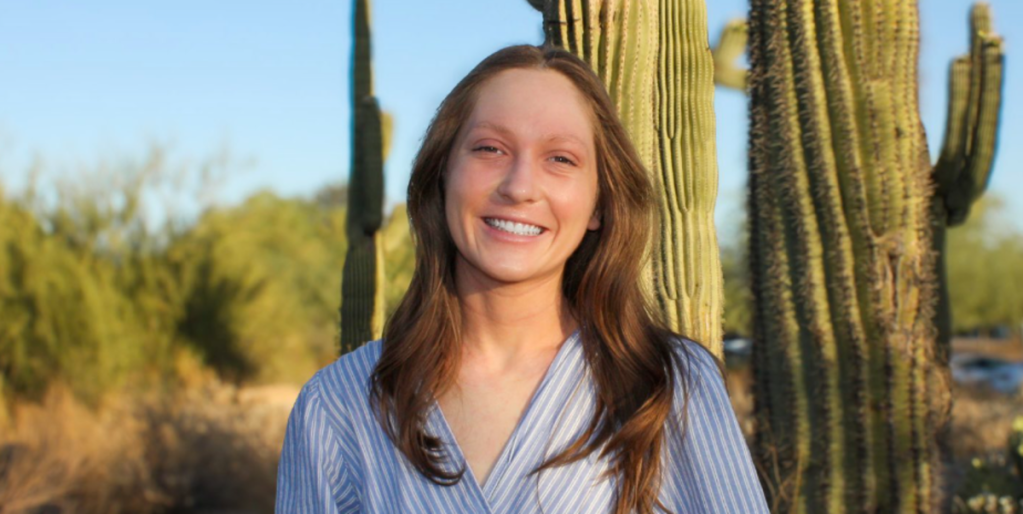
In outgoing Senate President Warren Petersen’s district, Andy Biggs’ 25-year-old daughter is running for the Republican nomination in the deep-red Maricopa County district. After Phoenix New Times broke a story about Mylie Biggs appearing on a podcast and saying women shouldn’t hold office, it will be intriguing to see whether voters agree with her or if another candidate will step to the callow nepo-baby. Whoever wins the GOP primary is about certain to carry the district.
Gage Skidmore/Flickr/CC BY-SA 2.0
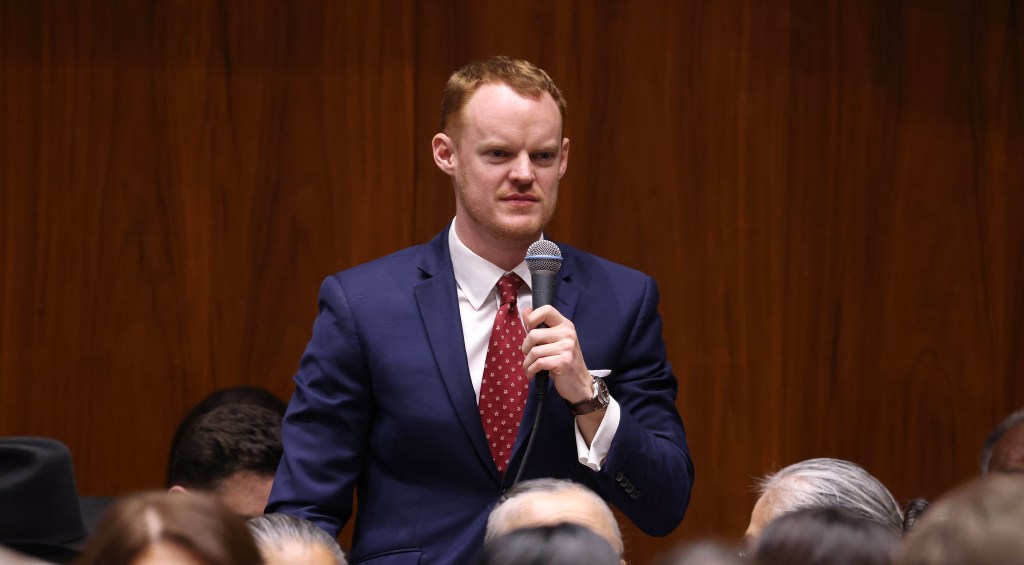
Legislative District 17
The Tucson district is the only one in which Democrats picked up a seat last cycle when Kevin Volk’s performance pushed state Rep. Cory McGarr out of office. All eyes are still on the solidly red district, where Republicans have a 10-point voter registration advantage. The Democrats have not yet announced a state Senate challenger candidate — though party leaders say expect to soon. Expect Democratic attacks on affordability and more Republican pushes on immigration in this critical district.