Scott Olson/Getty Images

Audio By Carbonatix
Reader support matters more than ever
We're in the final stretch of our summer campaign. Our goal is to raise $15,000 by August 9 to support the journalism our community relies on. Reader support is helping shape the future of local news.
Prediction markets are becoming ubiquitous.
You’ve probably seen the headlines. Disgraced former New York Rep. George Santos is under investigation for putting money on whether he’d attend the State of the Union. Huge, successful bets on world events have been documented taking place right before major decisions stemming from the White House.
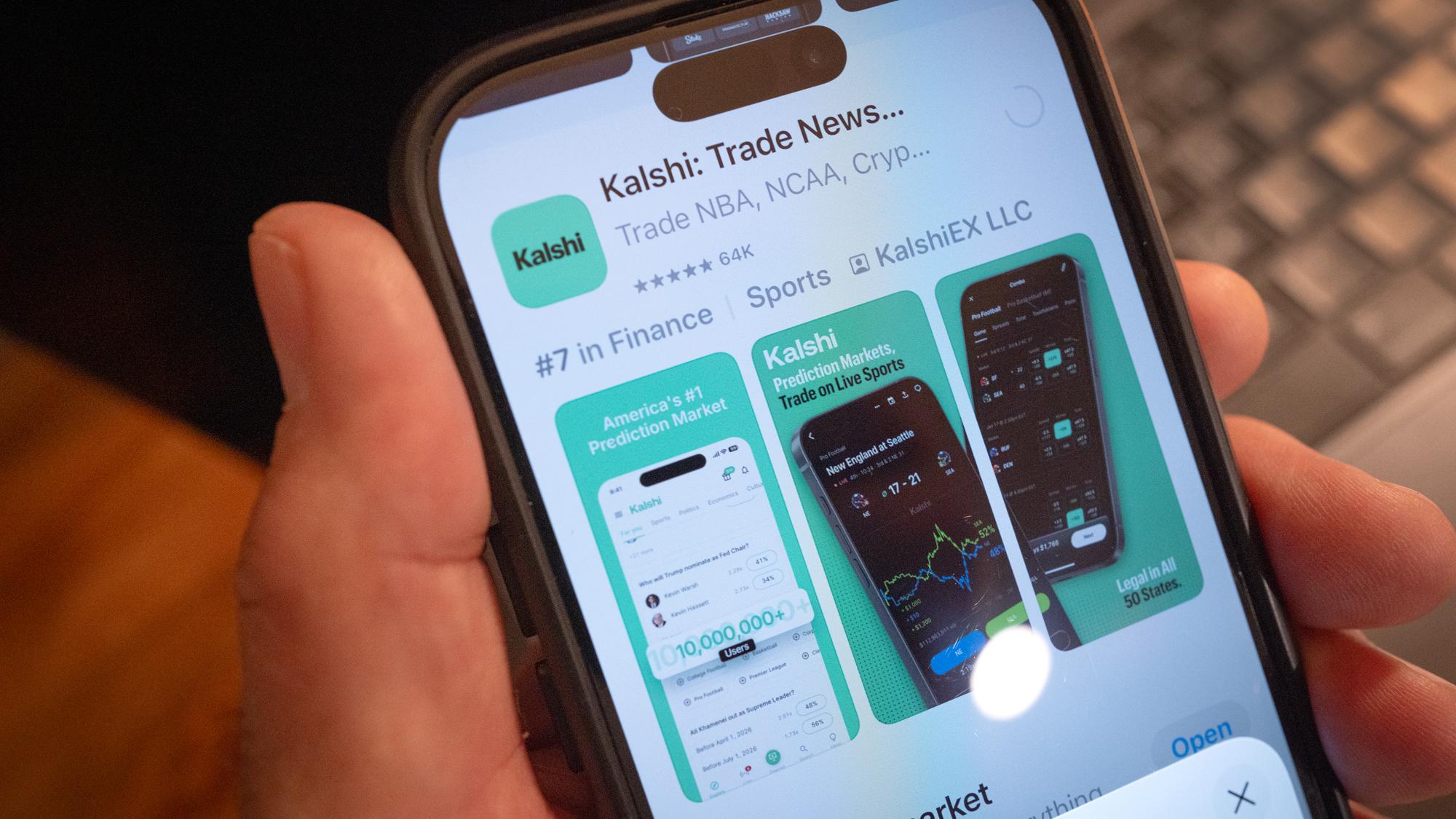
In Arizona, Attorney General Kris Mayes has tried to crack down on that activity, charging prediction market giant Kalshi with running an illegal gambling operation. But a federal judge shut that down on the grounds that regulating prediction markets is the purview of the federal government.
Kalshi and Polymarket have also started going mainstream, partnering with news services and sports leagues. But for the average person, all of this probably remains pretty foreign. Is this just betting? If not, how is it different? Should it be regulated?
That’s why Phoenix New Times sat down KJ, an Arizona native who has been able to turn playing the prediction markets into a living. He asked to be identified only by his initials out of concern that he might make himself a target.
Now in his 30s, KJ lost his job as a warranty analyst during the COVID-19 pandemic and started playing PredictIt, a prediction-market precursor, on a whim. His first bet was during the 2020 Democratic presidential primary: Despite Bernie Sanders riding high early in the primary cycle, KJ bet on Joe Biden to claim the nomination. At the time, that position was trading at 10 cents per share, meaning a 10-cent bet would net 90 cents in profit. That bet panned out — not the preferred outcome for KJ, who is a progressive, but what he felt was most likely — and now playing the prediction markets is basically how he supports himself financially.
“Betting on Biden to win the nomination and not Bernie was kind of an emotional hedge,” he said. “Like, I really don’t want this, but it’s probably going to happen.”
Are prediction markets good? Bad? Neutral? Was Mayes right to try to rein them in? Here’s what one of Arizona’s regular participants has to say.
This interview has been edited for clarity and brevity.
Scott Olson/Getty Images
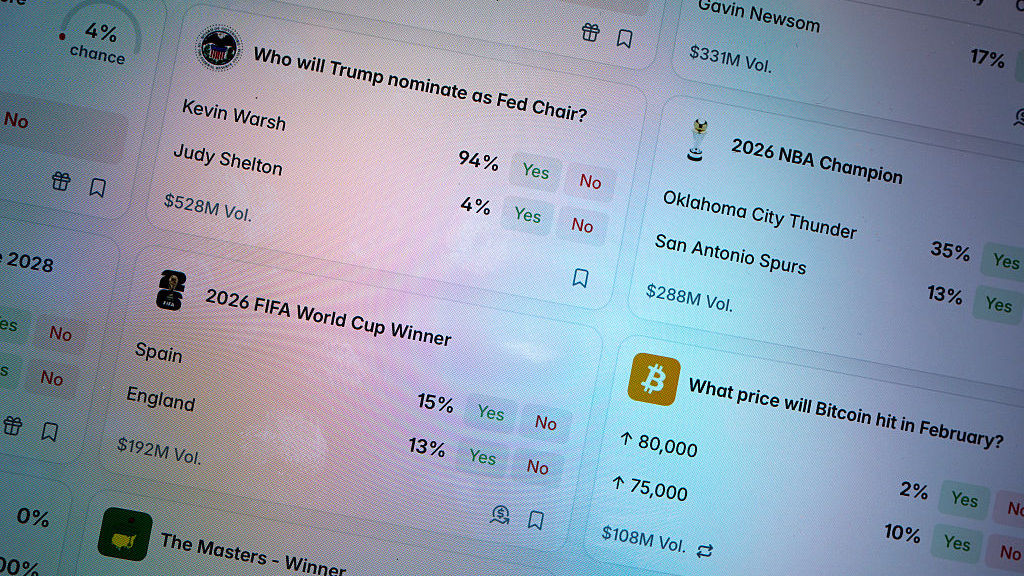
How would you describe what Kalshi and Polymarket do, and is it just betting by another name?
The question people are most interested in is your second one: Is it betting by another name? We can get into semantic arguments about what I call betting. I would say betting and investing and gambling are all distinct things that have overlap and areas where they’re different.
In what ways would you say playing a prediction market is different than betting on the Suns to win?
The basic difference is that there’s a much higher element of skill to what you’re doing. Sports betting for most people, and casino gambling, you are taking on risk that was not there. You are like, “I want to do this thing, and if it happens, then I want to win this much.” If you are participating in a prediction market, you are assuming risk that is already present in the world. What I think prediction markets have to offer is the ability to distill information about those risks. People are very interested in how likely something is to happen. Being able to have that distilled with people who have an incentive to be as right and close to reality as possible, I think that is very valuable. That’s not to suggest that I believe prediction markets are like this ultimate great source of truth that you won’t find anywhere else. But it’s a tool for helping us understand the world better.
So, compared to sports betting, you think that prediction markets have more predictive value.
There’s plenty of economic and social science research that would back this up. There’s a book called Super Forecasters that goes into the practical implications of the wisdom of crowds and how markets harness information in beneficial and accurate ways. The Federal Reserve recently released some studies that they have that prediction markets have been more accurate at forecasting macroeconomic trends than a lot of the banks and forecasting agencies.
How does it work? You are technically buying a contract?
It’s basically, “I’ll give you $20 if this happens, and you’ll give me $100 if it doesn’t happen.” Just scaled up to where people are able to do that in a centralized exchange.
That sounds like betting to me, though.
That’s a value judgment. Is Wall Street speculation betting? Is commodities trading betting? If I’m agreeing to buy something at this price now and sell it to you at this price later, is that betting? If you want to look at it cynically, yes, the whole financial system is just one big casino where people are placing bets. That’s fine, we can engage with that. The basic question it comes down to is: Can markets be useful for good things? A lot of people would argue no. I would argue yes.
How many, for lack of a better word, bets are you making in a given week, a month? In what ways are you participating?
I’m not working like 8 to 5. It’s not very structured for me. There are other traders I know who do very much treat it that way — they are very regimented and hyper-diligent about the way that they allot their time every day.
But are you making 10 bets a week? Twenty-five?
Maybe an easy way to put this is: How many markets do I keep up with at one time? How much you trade depends on how much interest there is from other people. You can only trade with people who are willing to make trades with you. The fall gets very dense. With midterms and general elections, there’s probably 10 markets that I would want to be watching very intently. Right now, there’s not really much happening. The other thing that I trade in a lot is the economic markets.
“Will GDP rise by more than 2%…”
Yeah, unemployment, inflation, other things like that. Just basic most economic questions.
Can you trade multiple times in a market?
Yes. Inflation numbers just came out. Kalshi would have a market of: ‘What will the inflation rate in May be, year over year?” You can trade on it being above 0.0, do a contract trade for it being over 0.1, and so on. As certain things get more or less likely, you can continue to trade on it.
So you might go in on a certain outcome and then decide, “I think this other outcome is more likely.” How do you trade one position for another? You have to find someone to buy your old position?
There is what’s called an order book. You’re basically putting out your offer of “I will trade you this much…” You have a large aggregate of people, ideally, for a market to be liquid. You have a lot of people doing that same thing, and that makes up an order book. You can see if someone who’s offering you a trade that you think is beneficial to you — they’re underrating the chances of something happening. Maybe they think the war is going to end soon, and oil prices are going to come way down. If you can see there’s volatility, that gives you an understanding of the risk profile. This is swinging really back and forth, no one is able to get a good handle on what is happening here. You’re really in a true fog-of-war situation, and that’s a beneficial thing to know. Does anyone have a real-life understanding of what’s happening right now? That’s something you would want to know.
Do you make enough money from this for it to essentially be your career?
My intention with this was to see the degree to which I can do this. Is this just some money on the side that I could use for a trip once a year? I’ve just kind of continued to pursue it to where I am now, where this is something that I’m able to comfortably do.
Scott Olson/Getty Images
And you clear enough money to support yourself?
Yeah. It didn’t happen immediately.
Do you have a background that predisposes you to be good at this?
I’ve always been very interested in statistics. You and I first met through baseball. That was my first love. I’ve always had a really large interest in politics, and then that interest in math and probabilities and statistics.
What’s the biggest bonanza that you had?
The Canadian election. I was buying the Liberal Party candidate to be the next prime minister when it was in the single digits. I was buying that for like six cents, so that six cents wins 94 cents. It’s not really bragging if it’s true, but I saw that before anybody else did, so that was a really satisfying thing. I felt there was this huge sentiment brewing that’s going to completely change the complexion of the race for Canadians, and that’s exactly what happened. Being able to spot that, in a sense, you’re telling people that there is someone out there who thinks that this is going to happen. It’s a demonstrable showing of a sentiment that there’s someone who’s put enough thought into this that they’re willing to say there’s a 6% chance.
What about one that burned you?
This would be the election for the president of Romania. I thought they were going to elect this really stupid populist guy, but he ended up just being a real laughing stock that nobody took seriously. I thought that the party vote would consolidate enough for him that he would win the election, but he just had the worst campaign I think I’ve ever seen.
The 2024 election must have been interesting.
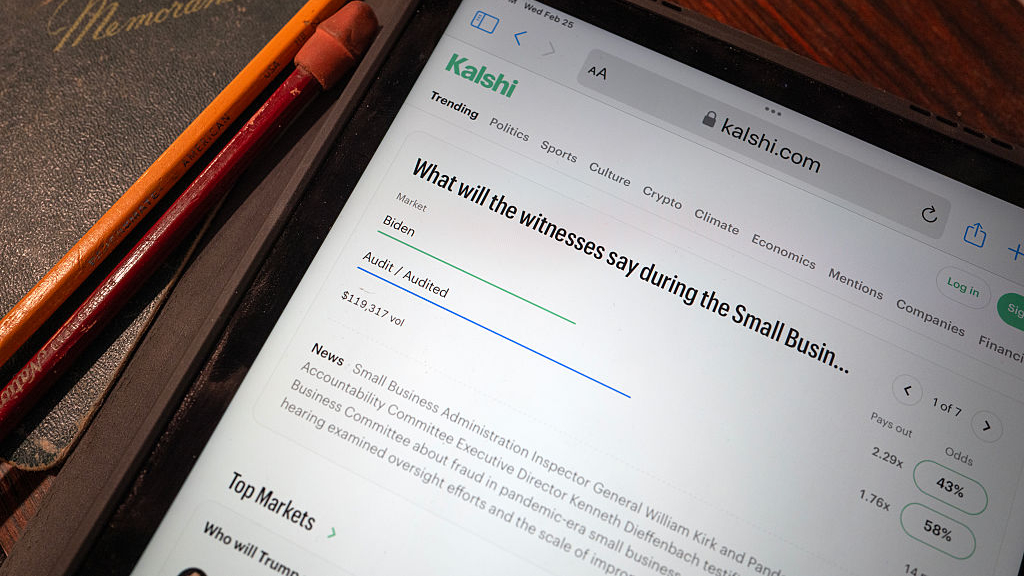
It was a crazy time. I was trading that Biden would drop out. I owned a lot of shares of Biden to win the presidency going into the debate. My original thesis was that he seems OK enough. High-information voters were extremely anti-Trump and lower-information voters, there was a real polarization along those lines. My theory was that as people who are lower-information start to tune in and synthesize more information, they’ll start to behave more like higher-information voters. But that’s not what happened. The debate happened, and within literally the first three minutes, I think before he finished answering his second question, I had traded out of my whole position. I was like, “He’s dead. I don’t even think he’s going to stay in the race at this point.”
I’m guessing if you’re doing this, you have to act that quickly.
You don’t want to be a prisoner of the moment, because that’s a great way to also get burned. People have a big tendency to overreact to news. People don’t always give a lot of sober second thought to things in the moment. But the Biden thing was just so obvious.
Give me a sense of what a typical person who does this exclusively is making.
I know people who make seven figures a year doing this. They are very intensive and treat it like any finance person.
How big is the community of people doing this in Arizona, at least to your extent?
I’m sure there’s probably quite few.
Morgan Fischer
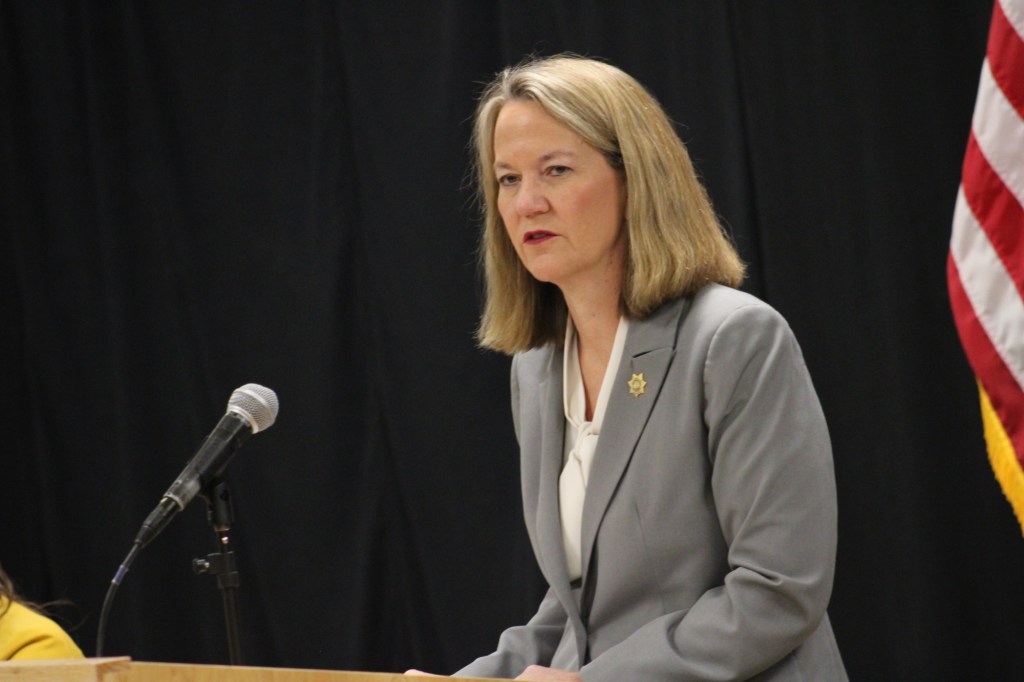
Kris Mayes tried to pursue criminal charges against Kalshi and a federal judge put the kibosh on that. I would guess that ideologically, you are aligned with Mayes on many things. But perhaps not that particular way?
It’s not going stop me from voting for her again. It’s inevitable that states, especially states where sports betting is legal, are going to protect their interests. It is in the interest financially of the state to make sure that Kalshi isn’t coming in and taking away sports betting volume from the sportsbook operators who pay taxes. It’s not out of the kindness of her heart that she’s trying to crack down on this.
It sounds like you would agree that some regulation is needed.
She’s going by like what state law is. I don’t think she’s in the wrong, per se. I think what’s wrong is that we don’t have a regulatory framework for this.
There are folks who say everything should be legal, and then there’s also this kind of current on the other side of “This is bad, and it’s bad that it’s everywhere.” I guess you fall somewhere more in the middle.
I definitely agree with that. The problem is that the people who operate these things don’t do themselves any favors. They don’t act in a mature way. It’s on prediction markets right now to prove their credibility to people, because they’re something that’s new, and people are naturally very skeptical of these things. It’s on prediction markets to act as responsible adults. I use Kalshi, but I do have a lot of concerns about their leadership. I think they have been maturing a lot more as actors and businesspeople lately, so I’m happy to see change and growth there, because I believe in prediction markets. I would like to see them stay and have a sound regulatory framework around them.
How would you diagnose the problems prediction markets have? Both Polymarket and Kalshi have cozied up to Trump. You’ve got many instances of people trading into markets at high positions right before big world events happen, suggesting they had inside information.
People obviously are not wrong to dislike insider trading. The only thing that I find a little rich is how useful that attention is compared to where financial crimes are really being committed — like with oil futures, like with the stock market. The returns that people are making on that are exponentially greater than anything that has been made manipulating prediction markets. In comparison to that, prediction markets are three-card monte on the Las Vegas Strip. That doesn’t mean that we should let people do three-card monte on the Strip, but first, let’s be honest about scale.
Are there certain types of markets that should be out of bounds?
Mention markets should not exist. Betting on what someone is going to say.
Should prediction markets get out of the sports trade?
Absolutely. Those two things should be distinct. I don’t think prediction markets and sports betting should have overlap.
Mayes’ criminal charges against Kalshi are dead in the water. What would you want her to do going forward?
What she’s doing now is acting in the state’s interest. That’s what I would want her to do. But I think she should use this to start a broader discussion of prediction markets and also of sports betting in society, because I don’t think sports betting is regulated nearly enough. These state gambling bodies are not giving adequate oversight and not providing adequate criticism of the industry. We should not have all these ads during games. Those just shouldn’t exist. Players shouldn’t have deals with sportsbooks.
Lastly, where do you think prediction markets wind up in 5-10 years? Does it become as big as sports betting, or does it remain more of a niche thing?
I think the sports markets probably go away. I don’t think Kalshi will be offering sports in five years. Putting sports aside, I think we probably will have some sort of federal regulatory regime. You’ll see it become more cemented, and the fences will start going up. It’ll get buttoned up.