

Richard Huante

Audio By Carbonatix
This article is a continuation of the Big Takeover investigative series begun last year by Cochise Regional News and Phoenix New Times. You can read an expanded version of this story on CRN. This story is part of the Arizona Watchdog Project, a yearlong reporting effort led by New Times and supported by the Trace Foundation, in partnership with Deep South Today.
The Army Navy Country Club is a high-class place.
The members-only club is located in Arlington, Virginia, five miles from the heart of the nation’s capital. The club bills itself as an exclusive “backyard” to the District of Columbia’s political and military “elite,” boasting a number of former presidents, congressional leaders and military brass among its legacy roster. Its 500 rambling acres of Virginia greenery offer a scene of antebellum pretense, filled with championship golf courses and innumerable tennis courts. There, within sight of the Washington Monument, D.C.’s creme de la creme can luxuriate and unwind in card rooms and at “roof top socials,” or gorge themselves at banquets and brunches.
Or, they can plot ways to deploy the military on U.S. soil, where troops could be used against Americans.
In May 2024, according to documents obtained by Cochise Regional News and Phoenix New Times, the Army Navy Country Club was the backdrop of just such a scheme. As Donald Trump was escalating his campaign to regain the White House, a cadre of figures from Trump’s orbit gathered at the club for a brunch meeting focused on military aspects of Project 2025. Among their ranks were law enforcement personnel and former military and civilian officials from the first Trump administration. Several would go on to work under Trump a second time.
This brunch was the first attended by the Border Security Workgroup, a little-examined division of the larger Project 2025 effort to plot a course for a second Trump presidency. CRN and New Times first reported the workgroup’s existence last year. This workgroup was ostensibly created to generate plans for the implementation of Trump’s promised mass deportations and other national security objectives. But as the brunch’s keynote speaker made clear that day, its mandate was broader and more alarming.
A round, balding man in his mid-50s, the speaker urged the assembled Trump loyalists, right-wing activists and policymakers to examine workarounds for one of the key protections of the American democratic experiment: the Posse Comitatus Act, which since 1878 has prohibited the use of the military to police Americans on American soil. They’d justify circumventing the law by claiming to secure the nation’s borders amid what Trump and MAGA types portrayed as an invasion of illegal immigrants, terrorists and “transnational criminal organizations.” Their effort was not confined to the border. To this group, the border extended to all 50 states.
Become experts on the Insurrection Act, the speaker counseled. That federal law — which Trump has repeatedly threatened to invoke since retaking office — is the primary exception to Posse Comitatus. It allows the president to seize control of state National Guard units and dispatch both the National Guard and active military forces to American states and cities to quell domestic “insurrections.” According to notes kept by one attendee, the speaker counseled the assembled Project 2025 crowd that the president is both commander in chief of the armed forces and the country’s chief law enforcement official. He said these powers should be “unified for border security.” Provisions of the Insurrection Act held the key to merging those two roles together, in order to “operationalize the capacities of the President’s national powers,” the speaker said.
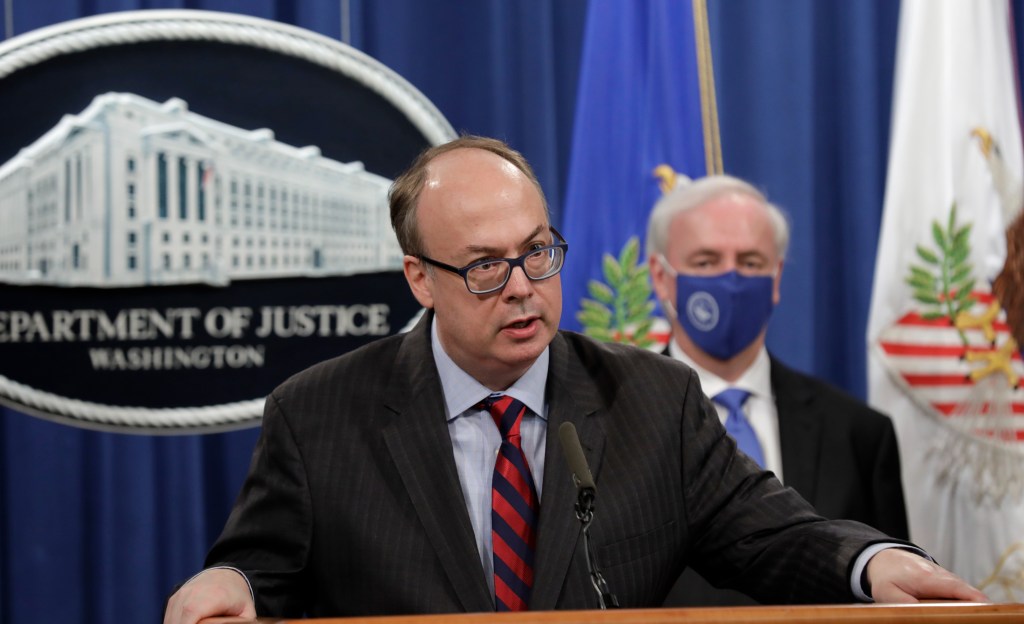
Despite the topic, the speaker was neither an expert on border security nor on military law. It was Jeffrey Bossert Clark, a former (and future) Trump official who’d already become infamous for sticking his nose where it didn’t belong.
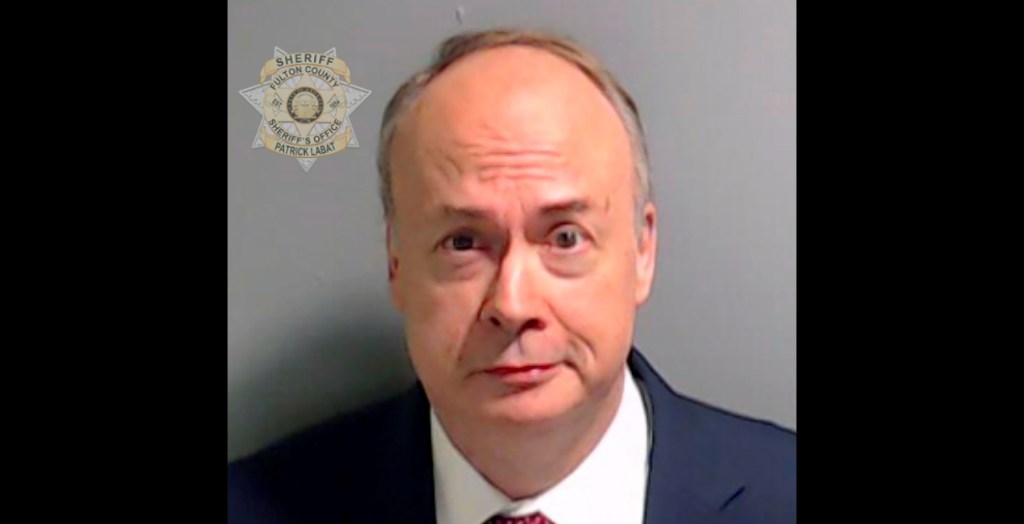
An environmental lawyer in the Department of Justice during the first Trump presidency, Clark gained notoriety for enthusiastically working to advance Trump’s efforts to overturn the 2020 election. As a result of that effort, Clark was among the Trump sycophants indicted in Georgia’s Fulton County, along with Trump himself. At the time Clark spoke at the Project 2025 brunch at the Army Navy Country Club in May 2024, that indictment was still active, though it has since been dropped.
Clark was most likely out of his depth. Yet he’d found the right audience for his expansive theories on Trump’s executive power. These were people with extensive ties to Trump, military professionals supportive of Trump, and the white nationalist and Christian nationalist substrate that undergirded Project 2025. And as is apparent in much of their work product over the next year — which CRN and New Times have acquired — they likely took Clark’s suggestions to heart.
Over the next several months, the Project 2025 Border Security Workgroup dreamed up a new fusion-center-style law enforcement model that would blend federal, state and local authorities with the military, nationwide. This new structure would theoretically be used to ferret out illegal immigrants and protect Americans against the invading hordes. Documents show the group also contemplated using it for much more.
Clark’s remarks to the Border Security Workgroup that day might be written off as crackpot theories from someone known to be several degrees less than reliable on the subject of what presidents can and cannot do. But his words should be taken seriously.
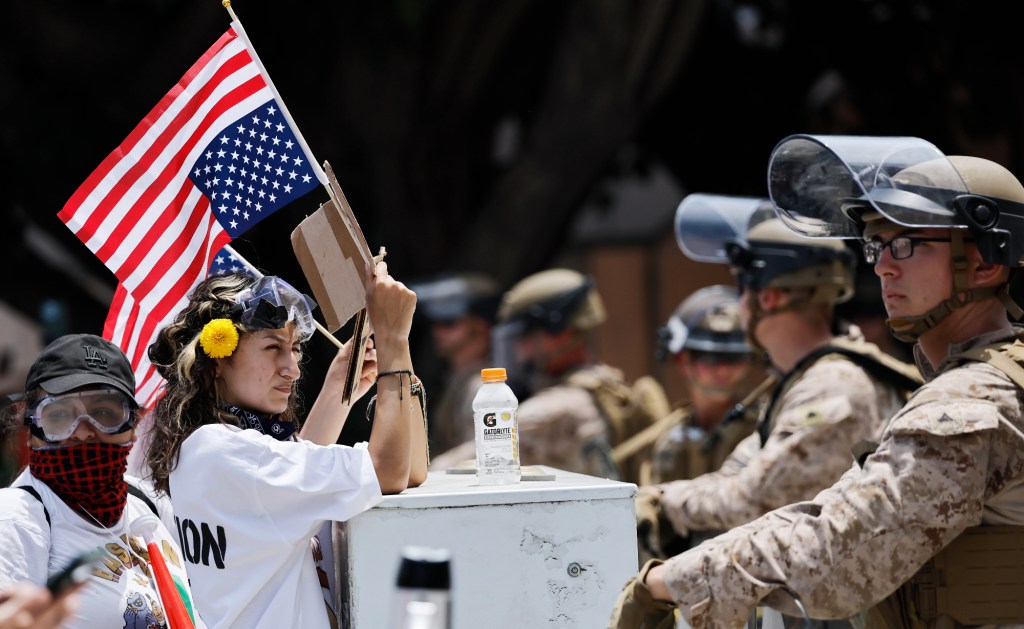
For one, Clark has gone on to serve in the second Trump administration as the associate administrator for the Office of Information and Regulatory Affairs, under the White House Office of Management and Budget. And many Border Security Workgroup members — who were among Clark’s brunch audience — have also turned up in positions of federal power. What’s more, Trump has already seized the California National Guard and deployed it on the streets of Los Angeles, along with active-duty Marines, spurring court battles over (you guessed it) Posse Comitatus. Trump has also sabre-rattled about invoking the Insurrection Act seemingly whenever a Democratic-led state or city displeases him.
These likely aren’t idle threats, documents from the Border Security Workgroup show. Its members spent months working to create plans for Trump that would merge military forces with domestic law enforcement through a new command structure that would ultimately answer directly to Trump. The fact that a man like Jeff Clark was an early source of guidance for those who created these plans does not bode well.
Yuri Gripas-Pool/Getty Images
Attempted coups don’t die, they just go to hell to regroup
Without Trump’s lies about the 2020 election, Jeffrey Clark probably doesn’t find himself preaching about circumventing Posse Comitatus at a Project 2025 brunch.
The three-month period between Trump’s 2020 election loss and Joe Biden’s inauguration was defined by the chaos of election denialism, culminating in the Jan. 6 attack on the U.S. Capitol by Trump supporters. In the weeks following the election, disgraced attorney Sidney Powell unleashed what she called “the Kraken,” a slew of litigation in various courts across the country, seeking to overturn the results of the election. When that fell flat, she and a coterie of Trumpists — including deep-pocketed Trump supporter Patrick Byrne, QAnon fan/former National Security Advisor Michael Flynn and fellow “Kraken” attorney Emily Newman — met with Trump on Dec. 18 to urge him to declare martial law and have the military and National Guard seize voting machines in various states. White House Counsel Pat Cippolone vehemently opposed these recommendations. Trump never implemented them.
Around the same time as that White House meeting, Attorney General William Barr departed his post as head of the Department of Justice. Barr’s deputy, Jeffrey Rosen, succeeded him. Three days after Rosen’s Christmas Eve appointment as acting attorney general, Trump attempted to enlist him and the DOJ in efforts to overturn the election. “Just say that the election was corrupt, and leave the rest to me and the Republican congressmen,” Trump told him. Rosen declined to accommodate Trump’s wishes.
Enter Clark, who was then serving as the assistant attorney general for the DOJ’s Environment and Natural Resources Division. Clark had no particular election expertise. His division at the DOJ handles litigation involving the fossil fuel industry and related regulatory issues, and prior to that posting, Clark had a career in the private sector specializing in such matters. Nevertheless, in Clark, Trump had found an ally willing to advance lies about the election.
The day after Trump pressured Rosen to cast doubt on the election, Clark emailed a draft letter to Rosen for his signature. The letter, addressed to the governor and state legislative leaders of Georgia, falsely stated that the DOJ had “identified significant concerns that may have impacted the outcome of the election in multiple states, including the state of Georgia.” Again, Rosen refused.
Not long after, Clark met with Rosen and advised him that Trump had offered Clark the position of acting attorney general — the gig Rosen had just assumed. Clark had accepted the offer, he told the man he was to supposedly replace. This precipitated an emergency White House meeting between Rosen, DOJ leadership, Trump and his advisors. Confronted with the threat of mass DOJ resignations if he installed Clark as head of the department, Trump backed down. The DOJ never issued statements falsely claiming it found irregularities in the 2020 election.
Fulton County Sheriff’s Office
How did this man wind up the keynote speaker at a brunch for the assembled “border security” and military wing of Project 2025, to whom he urged the invocation of the Insurrection Act to deploy the military on domestic soil? CRN and New Times sent questions to the White House Office of Management and Budget about Clark’s brunch guidance and involvement with the workgroup. OMB spokesperson Rachel Cauley responded only: “Please use this on record from me: ‘The Phoenix New Times is a communist rag that no one reads.'”
Following the ignominious end of the first Trump administration, many of Trump’s co-conspirators and their allies found refuge in the world of Project 2025, an effort led by the Heritage Foundation and comprised of several right-wing policy groups.
Many leading contributors to the project were unabashedly Christian nationalist, and entities of the anti-immigrant network founded by white nationalist John Tanton were among the project’s leading contributors. An examination of groups and the individuals involved in the world of Project 2025 also reveals a deep culture of anti-democratic actors who have long worked to restrict voter access, and/or have taken part in efforts to overthrow elections and undermine election systems. As such, Project 2025 was a synthesis of these pernicious threads of Christian nationalism, white nationalism and those who would seek to seize political power — seemingly at any cost.
At the time of Clark’s brunch appearance, he was working as a senior fellow and director of litigation at the Center for Renewing America, which was a Project 2025 advisory board member and significant contributor. CRA’s founding president was Russell Vought, a former Heritage official and avowed Christian nationalist who has served as head of the Office of Management and Budget in both Trump administrations. Vought wrote the Executive Office of the President chapter in Project 2025’s infamous 922-page “Mandate for Leadership” policy handbook, giving thanks to Clark for his contributions.
Others involved in election subversion efforts — including voter restriction activist Cleta Mitchell and former Trump chief of staff Mark Meadows — joined Conservative Partnership Institute, which had been founded by former Heritage leaders, and played a substantial role in Project 2025. CPI is an organization whose website says it works in “incubation” of other right-wing policy groups. It counts among its progeny Vought’s Center for Renewing America and longtime Trump advisor Stephen Miller’s America First Legal Foundation.
Many members of the Border Security Workgroup had connections to both Trump and such right-wing groups. For example, prior to the Clark brunch, Sheriff Roy Boyd of Goliad County, Texas, had been a panelist at a CPI event held in Coral Gables, Florida. Other speakers at that event included Meadows, Mitchell and Clark’s boss, Russ Vought.
Boyd and other Project 2025 Border Security Workgroup members — including workgroup leader Leon Rios, a retired Army colonel — also had substantial ties to the Texas Public Policy Foundation. TPPF was a heavy contributor to Project 2025, and during its leadership of this effort, Heritage was headed by former TPPF chief executive Kevin Roberts. Documentation we’ve obtained also shows that TPPF personnel worked directly with the Border Security Workgroup.
Like many groups in the Project 2025 sphere, TPPF contained elements related to attempts to overturn the 2020 election. This included Jacki Pick, wife of longtime TPPF director and Evangelical billionaire Doug Deason. According to court documents, Pick — who was an attorney working with the Trump campaign — presented Georgia lawmakers with false evidence claiming to show “suitcases” of fraudulent ballots introduced in Fulton County. At the time, she was a TPPF senior fellow.
Rios — who served as the overall leader of both the Border Security Workgroup and Project 2025’s Army Work Group, of which the Border Security Workgroup was largely an offshoot — was at the insurrectionist brunch at which Clark spoke. And he took notes.
Mario Tama/Getty Images
Working around Posse Comitatus
At the time of the brunch, the Border Security Workgroup was only about a month old. It was still feeling its way — filling out membership, establishing work plans and policy priorities. Documents obtained by CRN and New Times demonstrate that Clark’s guidance that day helped set the tone and trajectory of plans and policies the group would produce for Trump’s Resolute Desk.
Rios took notes of “key talking points” from Clark’s address and distributed them among workgroup members. According to these notes, Clark spoke of the need for the federal government to “provide protection” to states under threat from “transnational criminal organizations.” In service of this federal “protection” of states, the notes stated, “the President has authority to employ military.”
“Recent events have led to the misconception that the military cannot be used at borders due to” Posse Comitatus, Rios wrote — though the former Army colonel mangled it as “possession comitatus.”
Federal military forces may provide support to civil authorities, and often do in emergencies such as natural disasters. But they are prohibited from acting as enforcers of civilian law. Federal active-duty military and state National Guards have been employed at various times in support roles on the border by state governments and Democratic and Republican presidential administrations. Because state National Guard units are under state and not federal control, they are not generally seen as being subject to the prohibitions of Posse Comitatus.
But therein lies the rub for supporters of extreme presidential power. Which may be why Clark cited code under the Insurrection Act that would allow Trump to seize control of state National Guard units and deploy them along with active-duty military forces — in a domestic law enforcement capacity — to quell “insurrections.”
Clark went on to urge the use of capabilities that would merge domestic law enforcement with the military, in Trump’s hands. As such, Clark told the assembled Project 2025 participants that they needed to “become experts” on sections of federal law codified under the Insurrection Act.
For example, Clark told the assembled Project 2025 crowd they needed to bone up on Section 253 of the Insurrection Act, which states that “the President, by using the militia or the armed forces, or both, or by any other means, shall take such measures as he considers necessary to suppress, in a State, any insurrection, domestic violence, unlawful combination, or conspiracy.”
For an entity called the Border Security Workgroup, these were hardly border security laws.

Records obtained by Cochise Regional News and Phoenix New Times
Strangely, according to Rios’ notes, the chief rationale cited by Clark in his attempt to tie such extraordinary actions to border security was the Army’s deployment during the 1915 Bandit War, during which bandits from Mexico attacked towns in Texas. The episode was not an actual declared war, nor was it an instance in which the Insurrection Act was invoked.
According to documentation obtained by CRN and New Times, Clark’s guidance didn’t sit right with at least one member of the Border Security Workgroup. A few days later, Rios received an email from John Whitley, a veteran who participated in several Project 2025 workgroups and served for a brief period in 2021 as the acting secretary of the U.S. Army.
“I don’t know if (the Department of Defense) has ever been used for interior enforcement,” Whitley wrote. “I wasn’t sure if the brunch speaker was saying that DoD could or not. I suspect that (National Guard) could be used in a similar role to the border with logistical support and the like.”
When domestic law enforcement has required help, it’s generally been the National Guard that has provided it in supported roles, Whitley continued. Clark — or “the brunch speaker,” as Whitley labeled him — “may have been saying DoD could be used in other ways, e.g., active duty in a direct interdiction role (e.g., with arrest authority). We could obviously do that if it is legal and the President decides to do it.” But, he added, “I am not sure it would be helpful for a few reasons.”
Using the military in such a way would be “much more politically contentious and, thus, undermine their support and increase the risk of failure,” Whitley prophetically warned. Military intervention probably wouldn’t help the Department of Homeland Security much, he added, since DHS has Border Patrol and ICE agents to make arrests. Nor would it help the Department of Defense, he wrote, going on to describe the shell game the Pentagon would need to play in order to cycle active, reserve and National Guard components while still meeting the Pentagon’s other foreign deployment obligations.
CRN and New Times sent questions to Whitley about his participation in the Border Security Workgroup and his thoughts and reservations related to Clark’s guidance and involvement. He has not responded.
As well-reasoned as Whitley’s reservations may have been, they apparently didn’t move Rios, the workgroup’s leader. A day after Whitley expressed his concerns, Rios sent an email to group members recounting the key points of Clark’s Insurrection Act guidance. He also made an announcement.
“I have asked Mr. Clark (and/or his colleagues),” Rios wrote, “to participate in the Border Security Work Group.”
Tom Williams-Pool/Getty Images
‘Operation Demonstrate Resolve’
The Border Security Workgroup apparently took Clark’s guidance and ran with it. Throughout the rest of the year, its members worked to develop plans to link military forces with all levels of domestic law enforcement.
Emails show there were more Project 2025 brunches at the Army Navy Country Club, and the group also received continued guidance from Project 2025 leadership and its “DoD leads.” That included Clark. Emails show that Clark was included in Border Security Workgroup correspondence relating to this ongoing guidance and development of hybrid military/domestic law enforcement plans.
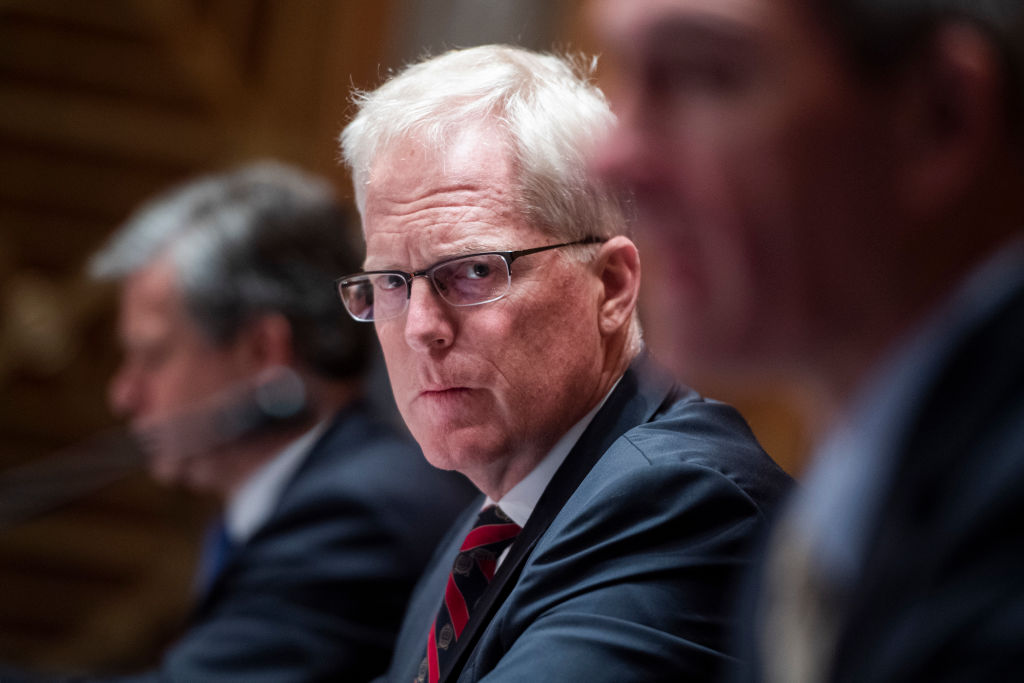
The group also received guidance from “Chris Miller (Project 2025 DoD lead)” at multiple points, according to records. Former Trump acting Defense Secretary Christopher Miller wrote the “Mandate for Leadership” chapter on the Department of Defense, in which he called for “true alignment” between the Pentagon and the Department of Homeland Security for “border protection operations” and “defense of critical U.S. infrastructure.” Miller did not respond to inquiries from CRN and New Times.
Following guidance from “Chris Miller (Project 2025 DoD lead),” the Border Security Workgroup crafted a number of avenues through which active military forces — as well as National Guard units, operating either under the command of willing governors or under imposed federal command — could support law enforcement or serve in a direct law enforcement capacity.
To be very clear: Documentation shows that the group envisioned these militarized “border security” operations taking place in all 50 states, not just at the border.
The group’s “main operational effort” was planning for the creation and implementation of a new nationwide “multi-jurisdictional” fusion center-style system of law enforcement. Plans produced by the group by the end of 2024 proposed linking military forces with every level of American domestic law enforcement — local, state, tribal and federal — through the new fusion-center-style command system. This system would be overseen by a “Commander of Domestic Security Operations” appointed by, and answering only to, Trump.
Dubbed “Operation Demonstrate Resolve,” the plan was to be rolled out in phases as the administration pursued its mass immigrant deportation and other national security efforts. (For a deeper exploration of the structure, see the expanded version of this story on CRN.)
“Demonstrate Resolve” timelines contained in documents produced by the group bear a striking, though imperfect, resemblance to actions undertaken by the administration throughout the first year of this Trump presidency. A draft policy paper produced by the group toward the end of 2024 recommended plans to facilitate the deployment of up to one million Army soldiers — reserve, active forces and National Guard — on American soil, noting that the president would need to declare an emergency to initiate such a deployment. (Trump did just that soon after taking office, allowing him to deploy troops at the border, and he has threatened, attempted or executed military deployments to a number of cities.) The group also prepared several draft emergency declarations for Trump. Other Border Security Workgroup documents seem to propose deployment of these military forces to all 50 states over the course of 2025 and 2026, with the initial militarization of the Southwest border serving as “‘pilot’ for future operations.”
Importantly, as proposed by the group in timelines and other documentation it produced, following initial phases of immigrant detentions and deportations, the new militarized fusion center-style system would persist “in perpetuity thereafter.” It would shift to “sustained operations” so as to mitigate “all threats,” including perceived domestic threats.
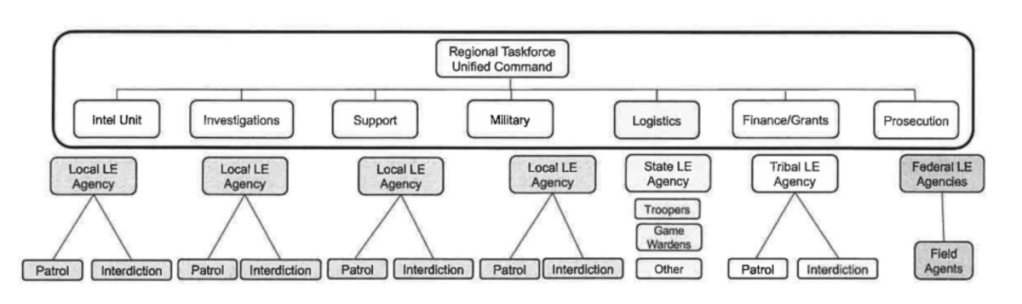
Records obtained by Cochise Regional News and Phoenix New Time
To be clear: Creation of this new militarized “multi-jurisdictional law enforcement” system would constitute the most substantial reworking of American domestic law enforcement since the Sept. 11 terrorist attacks. The post-9/11 era gave rise to the Department of Homeland Security, our current nationwide network of fusion centers and the Office of the Director of National Intelligence. Like this new proposed system, the post-9/11 system eventually shifted from a mission of “counter-terrorism” to one of “all threats/all hazards” mitigation. In doing so, it has frequently infringed on the civil liberties of Americans engaged in constitutionally protected speech and assembly.
The Border Security Workgroup also contemplated “counter-intelligence” work to combat an “insider threat” working “to subvert the President’s plan.” Records show the group considered using a variety of means to target a number of different groups, including certain non-governmental organizations, government agencies, judicial districts and a number of states or cities governed by the Democratic Party. They also contemplated targeting college students who were protesting Israel’s actions in Gaza. In a July 2024 email, group member Collin Agee — the “senior Army operations advisor” to the National Geospatial Intelligence Agency, per his LinkedIn — railed against immigrants who, “under the guise of free speech,” protested against Israel’s genocidal war in Gaza.
“We have entire communities (see Michigan) where the loyalty is to other nations, groups or causes, rather than America and Americans,” Agee wrote.
Agee did not respond to questions about his views, but Dearborn, Michigan, is known for having one of the largest Muslim immigrant communities in the United States.
These “counter-intelligence” plans came from the Border Security Workgroup “intelligence team,” which Agee was on. The team was primarily led by retired U.S. Navy Rear Admiral Tony Cothron, who has a long career in military intelligence agencies, including time at the National Security Agency and as the Director of Naval Intelligence. At the time of his involvement with the workgroup, he was the director of national security and intelligence programs at Liberty University, where he was also an associate professor of government. Liberty was founded by televangelist Jerry Falwell Sr., and the evangelical school has long served as an incubator for right-wing and Christian nationalist leadership in the United States.
Core proposals created by Cothron’s team, and related teams, sought the integration of a number of law enforcement, intelligence, military and other government databases — to be data-mined by AI, an undertaking the Trump administration has since pursued. Cothron and his team also proposed the creation of a new “Border Security Intelligence Officer” — “a senior Intel professional (3-star equivalent),” Cothron wrote in a July 2024 email — who would oversee these domestic intelligence operations and report to the “Commander of Domestic Security Operations.”
That intelligence officer would be “responsible for the counter-intelligence mission,” Cothron added. That mission was described further in a policy paper drafted by the Border Security Workgroup in September 2024. “An insider threat to this strategy can be expected that works with nation-state, transnational and non-governmental entities to subvert the President’s plan,” reads a portion of that paper. It continues: “An active counter-intelligence effort must be organized, integrated across all levels, and actively conducted to identify and prosecute any individuals working for and providing classified or operationally sensitive information on border security plans and activities.”
Again, plans crafted by the Border Security Workgroup did not end on the border. They were proposed for action in every state and territory of the United States.
Cothron did not respond to questions from CRN and New Times.
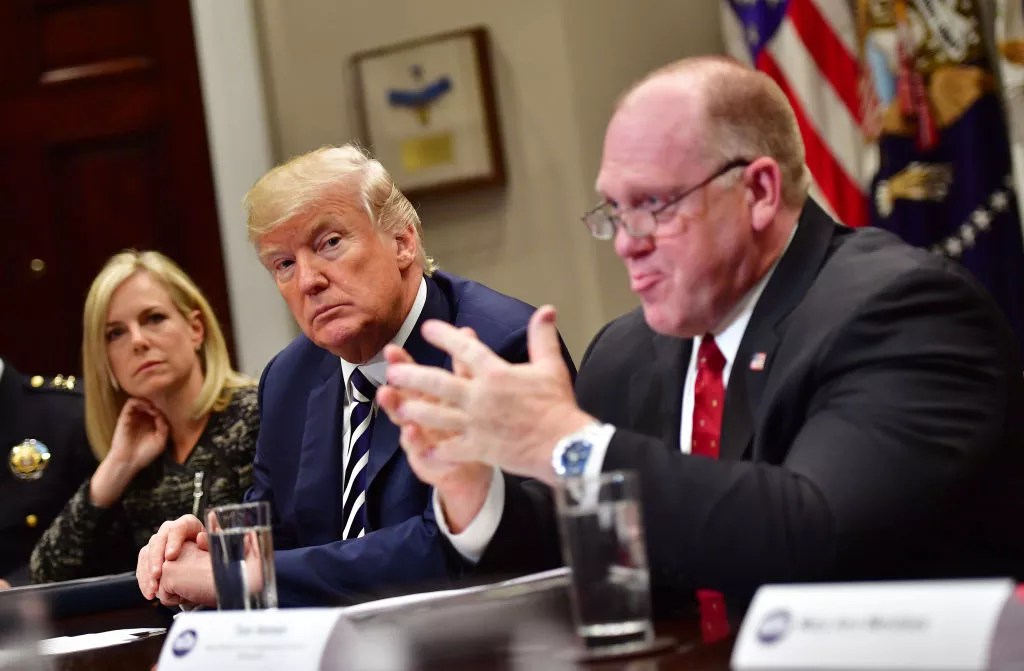
Kevin Dietsch-Pool/Getty Images
To the east, to meet the Czar
Trump loudly denied any involvement with Project 2025 throughout the 2024 election, and it’s not clear what sort of reception the Trump “team” gave to the plans and proposals crafted by the Border Security Workgroup. But documentation suggests they were given at least some consideration, and that the Trump “team” did share some connective tissue with the Border Security Workgroup.
Records relating to the May 2024 brunch stated that retired Army Colonel Sergio de la Pena provided guidance to workgroup members at this event, pertaining to expectations of both Project 2025 leadership and “the candidate’s team,” which would “provide insight — guidance — once we get into the swing of the campaign process.” If Trump won, the group anticipated that they would continue to work with the forming administration once the transition process commenced.
De la Pena had worked in the transition team of the first Trump administration and as Deputy Assistant Secretary of Defense for Western Hemisphere Affairs. Documents show that the workgroup received regular briefings relating to transition efforts throughout 2024, and that de la Pena continued briefing the group on “transition update(s)” into 2025. Records also demonstrate that the Border Security Workgroup was used as a recruitment pool for “transition team” personnel.
De la Pena did not respond to questions. Asked if the Trump campaign or transition team consulted with or recruited from Project 2025 and its subgroups, White House spokesperson Abigail Jackson did not directly answer. “Only the Fake News media would continue to peddle a bogus narrative that no one — except big time loser Kamala Harris — cared about in 2024 and no one cares about now,” Jackson wrote in an email to CRN and New Times.
Documents also show the group continued its discussion of invoking the Insurrection Act well into September 2024, when it was finalizing plans and proposals for Project 2025 review. This was also a time when the group expected to “receive guidance and input from the Presidential candidate and other key members of the executive team,” seemingly putting the lie to Trump’s frequent and obviously bullshit claims that he had nothing to do with Project 2025.
Tom Homan, who was to be Trump’s “border czar,” was the person the group clearly favored to serve as its proposed “Commander of Domestic Security Operations.” A heavily redacted December 2024 workgroup email, obtained by CRN and New Times, indicates that members of the group likely met with Homan — with their proposals in hand — following the 2024 election.
In the email, Rios told workgroup members that early that month, he and Boyd — who headed the workgroup team tasked with creating proposals for the militarized fusion center system — had met with an individual (name redacted) to present their plans for the new militarized law enforcement command and discuss the structure of that individual’s “nascent office.” As Rios stated in the email, that “nascent office” would have “the authority to develop, coordinate, and provide oversight for national interagency operations dealing with border security and deportation.” It would likely follow a similar “organizational design” to that of the Office of National Drug Control Policy, which operates under the purview of the White House and is led by an individual colloquially known as the nation’s “drug czar.” Further, Rios wrote, “resourcing options (…) for Border Czar activities are being considered.”
The email also states that this meeting took place in Fredericksburg, Virginia, where Homan has long maintained a residence, according to Virginia Corporation Commission records. Immediately following this meeting, documents show, the Border Security Workgroup began drafting plans for the “proposed organization” of the “Office of the Border Czar.”
CRN and New Times submitted numerous questions to Rios — including about this apparent meeting with Homan, the workgroup’s proposals, guidance it received about the Insurrection Act and involvement with the Trump team. Rios declined to answer these questions, opting only to state that the Border Security Workgroup had “no formal affiliation” with Project 2025 and had “never formally submitted” any materials. When provided with a litany of documentary evidence to the contrary, the retired colonel chose to “stand by” his denials, though he did admit participation in the related Project 2025 Army Work Group. He didn’t respond to further questions.
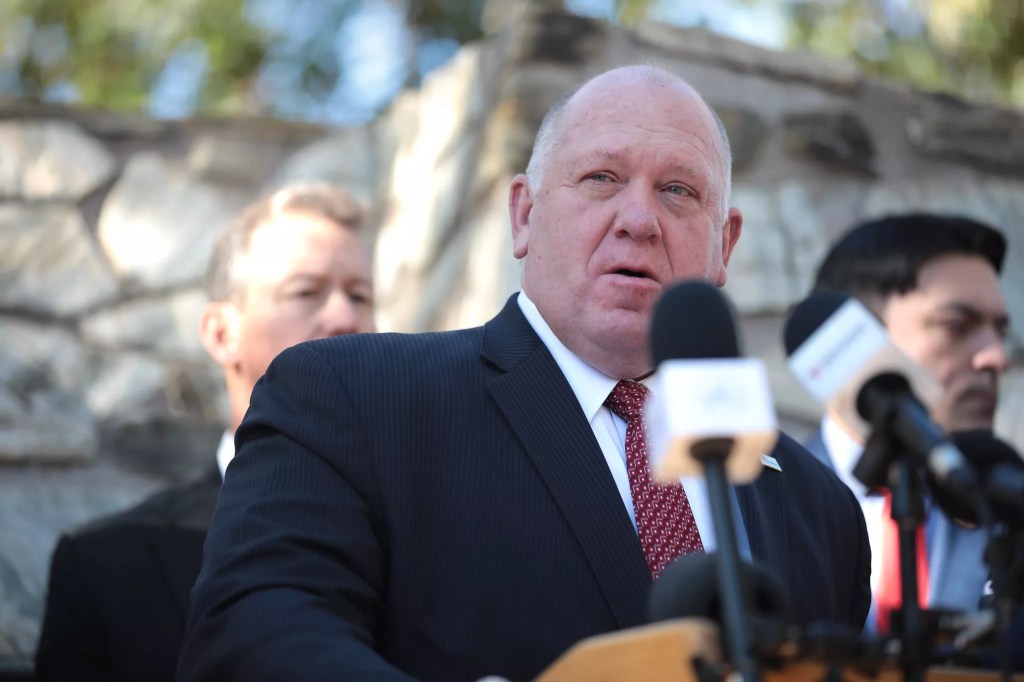
Gage Skidmore/Flickr/CC BY-SA 2.0
Like others in the realm of Project 2025, Homan had cultivated strong ties to anti-democratic extremists tied to efforts to overthrow elections. Specifically, to the America Project.
The America Project had its roots in the chaotic December 2020 White House meeting in which Michael Flynn, Sidney Powell, Patrick Byrne and Emily Newman urged Trump to seize voting machines. The organization was founded in 2021 by Byrne, Flynn and his brother Joseph. In congressional testimony, Byrne described the America Project as a direct successor to the “Defending the Republic” organization — helmed by Powell and directed by Joseph Flynn, Newman and others — that had pushed the “Kraken” lawsuits. Newman joined America Project as president for a period of time.
Another attorney on Powell’s “Kraken” cases, Julia Haller, was included on Project 2025 Border Security Workgroup emails pertaining to merging domestic law enforcement with the military, among other aspects of the group’s proposals. During that time, Haller worked as senior counsel at Stephen Miller’s America First Legal Foundation. Haller did not respond to question from CRN and New Times.
Someone else who hopped on board with the America Project was Homan, who had been ICE director during Trump’s first administration. In 2023, America Project filed a report with the Florida Department of State listing Homan as “director and CEO.” That same year, Homan incorporated multiple entities under the name “Border911,” according to Virginia Corporation Commission records. America Project and Border911 would hold a number of tandem campaign-style events throughout 2023 and 2024 — including at Trump’s Mar-a-Lago resort — with America Project promoting Border911 events as its own. A central theme of these events was “every state is a border state.” The events often combined or conflated issues of border security and election security.
“Border security” got mere lip service compared to “election integrity,” though. America Project tax records show that while the group did spend tens of thousands of dollars on “border security” causes and often used Homan and Border911 to fill seats at events, it spent millions in relation to efforts to undermine the results of the 2020 presidential election and 2022 midterms.
That included around $710,000 in “legal support” to attorney Stefanie Lambert of “Kraken” infamy. She is currently awaiting trial in Michigan on charges related to her alleged accessing of voting machines and non-public voter data in several Michigan counties. In 2021, America Project also paid at least $2.75 million to Cyber Ninjas, the firm hired to conduct the lengthy “audit” of Maricopa County votes cast in the 2020 election. America Project also funded We The People AZ Alliance, which worked to undermine results in the 2022 Arizona midterm elections. During this period, the group employed now-disgraced attorney Bryan Blehm, who represented both Cyber Ninjas and failed 2022 candidate Kari Lake in her attempts to overturn her election loss to Arizona Gov. Katie Hobbs.
Homan served as something of a lynchpin among various players in the Project 2025 realm, particularly regarding border security and elections. Tax records show that Homan’s private firm, Homeland Strategic Consulting, was paid at least $480,000 in “media consulting” fees by the Immigration Reform Law Institute, the legal arm of the anti-immigrant network founded by white nationalist John Tanton. (To be very clear, the Tanton network is not anti-illegal immigrant, but fully anti-immigrant.) In 2023, Homan was paid $120,000 as a director of the America Project. That same year, he was listed as a contributor to Project 2025 in his capacity as a Heritage “visiting fellow.” That same year, Homan was also listed as a member of the Texas Public Policy Foundation’s “Border Security Coalition,” a group that included Rios and de la Pena of the Border Security Workgroup.
In 2024, the FBI reportedly recorded Homan accepting $50,000 in cash supposedly for his help in securing contracts from the next Trump administration. Once Trump took office, his Department of Justice reportedly shut down that investigation.
Homan did not respond to multiple questions from CRN and New Times, including about whether he met with members of the Border Security Workgroup, what he thought of its plans and whether he — as “border czar” — would support invocation of the Insurrection Act in the name of border security. In response to the same questions, White House spokesperson Abigail Jackson wrote that Homan “is an American patriot” who “continues to adhere to federal ethics and conflicts of interests rules.”
Jackson continued: “As a private citizen and government official, Tom has met with and heard from many different organizations who want to share their opinions — this is standard practice. Meetings have never been considered an endorsement of independent organizations’ ideas.”
Scott Olson/Getty Images
This is happening
Since the president’s inauguration in January 2024, many events have unfolded that bear a striking resemblance to the Border Security Workgroup’s plans.
One workgroup participant was Joseph Humire, who was hired at the Pentagon in June 2025 as “deputy assistant secretary of Defense for homeland defense integration and defense support of civil authorities.” Humire has since been promoted to “deputy assistant secretary of War for Americas security affairs.”
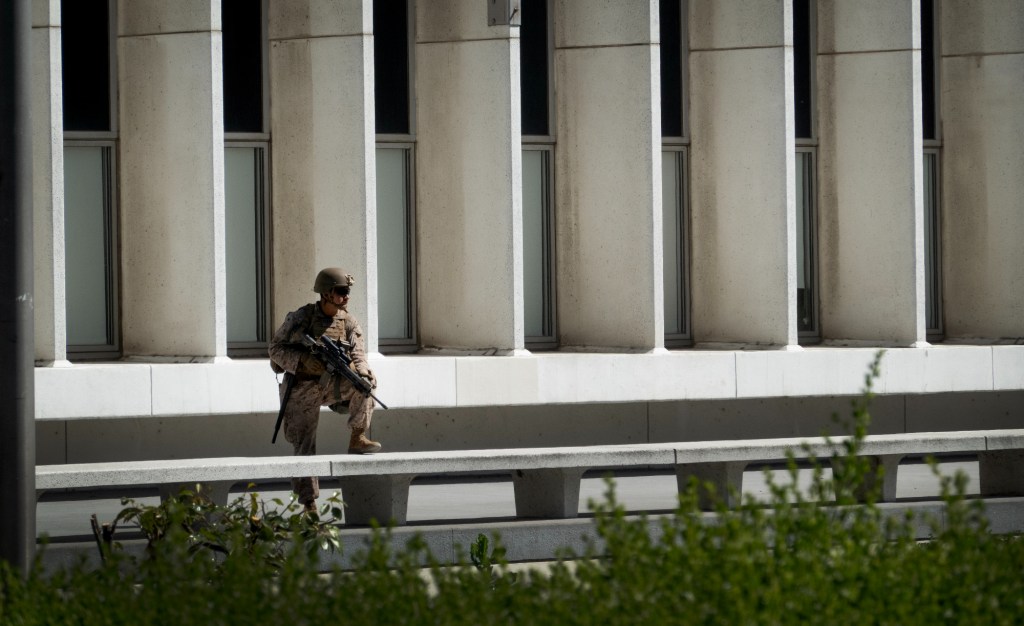
His initial placement occurred right around the time Trump decided to seize California’s National Guard and deploy them, along with active U.S. Marines, to Los Angeles. Trump has since deployed the National Guard to the District of Columbia and threatened other military deployments — through a number of means, including the Insurrection Act — to Portland, Chicago, New Orleans, Charlotte and Minneapolis. In many cases, court orders have enjoined him from following through.
Another group participant, Earl Matthews, was confirmed as general counsel at the Department of Defense in July 2025. In this position, Matthews is the top attorney consulted by Defense Secretary Pete Hegseth. Matthews did not respond to questions from CRN and New Times, including about whether he would support invoking the Insurrection Act.
Jon Feere, who at the time was the “director of investigations” at the anti-immigrant Center for Immigration Studies, also participated in the workgroup. Prior to joining the first Trump presidential campaign and transition team, he had worked at CIS for at least a decade. In his time there, he advocated for draconian measures such as ending birthright citizenship, a cause the current Trump administration has pursued. During the first Trump term, Feere served as chief of staff to multiple directors of Immigration and Customs Enforcement, including Homan. He returned to that role last year before being promoted to “senior advisor” to acting ICE director Todd Lyons.
Ronald Vitiello — one of Lyons’ predecessors as ICE director, and one of Feere’s bosses in that role — was also a member of the Border Security Workgroup. He is now a “senior advisor” with Customs and Border Protection. That agency oversees the Border Patrol, which is now led by former Texas “border czar” Michael Banks, another workgroup participant. Another member, Jason Killmeyer, replaced Feere as ICE chief of staff late last year. Yet another, David Vandenberg, is now an attorney in the DOJ’s Civil Rights Division, where he is leading several lawsuits seeking access to voter registration records in blue states.
While many things called for by the Border Security Workgroup have transpired, events that have unfolded during this Trump term have not perfectly mirrored its plans. The Trump administration’s many overreaches have prompted spirited and vociferous pushback. Several states, including California, have successfully blocked Trump’s domestic military ambitions in the courts. Trump’s “surges” of thuggish masked immigration agents to Democratic-led cities — which have resulted in the shooting deaths of two American citizens — have sparked a backlash that has tanked Republicans’ approval numbers and resulted, at least for now, in a drawdown of those hamfisted deployments.
But Trump and the true believers and opportunists who surround him in government are nothing if not persistent. They’ve persevered despite adverse court rulings and other impediments. It stands to reason that they’ll continue to grab for as much power as they can before what appears to be an inevitable vivisection in the 2026 midterms.
This November’s elections loom like a deadline. They could flip power in Washington, empowering Democratic lawmakers intent on reining in Trump. For that same reason, it is difficult to gauge what Trump might attempt in order to retain power, spurred on by the same election-denying sycophants who did his bidding in 2020 — some of the same sycophants who guided the Border Security Workgroup as it crafted plans that could be used to deploy the military against Americans.
Plans that the Trump administration may still try to put into effect.