
Jennifer Goldberg

Audio By Carbonatix
Keep Phoenix New Times Free
We’re aiming to raise $10,000 by April 26. Your support ensures New Times can continue watching out for you and our community. No paywall. Always accessible. Daily online and weekly in print.
“Pompeii — The Exhibition” last visited the Arizona Science Center in 2017-2018. Back then, the artifacts were merely treasures, beautiful pieces of ancient history miraculously brought to us via chance and archaeology.
The thought of a world-changing event like the eruption of Vesuvius, something that altered lives overnight and forever, was fascinating, but unrelatable.
Then came COVID-19.
When the exhibition returned to the Arizona Science Center in November, the items looked … different. More poignant. A reminder that people before us have gone through unimaginable circumstances, too.
Jennifer Goldberg
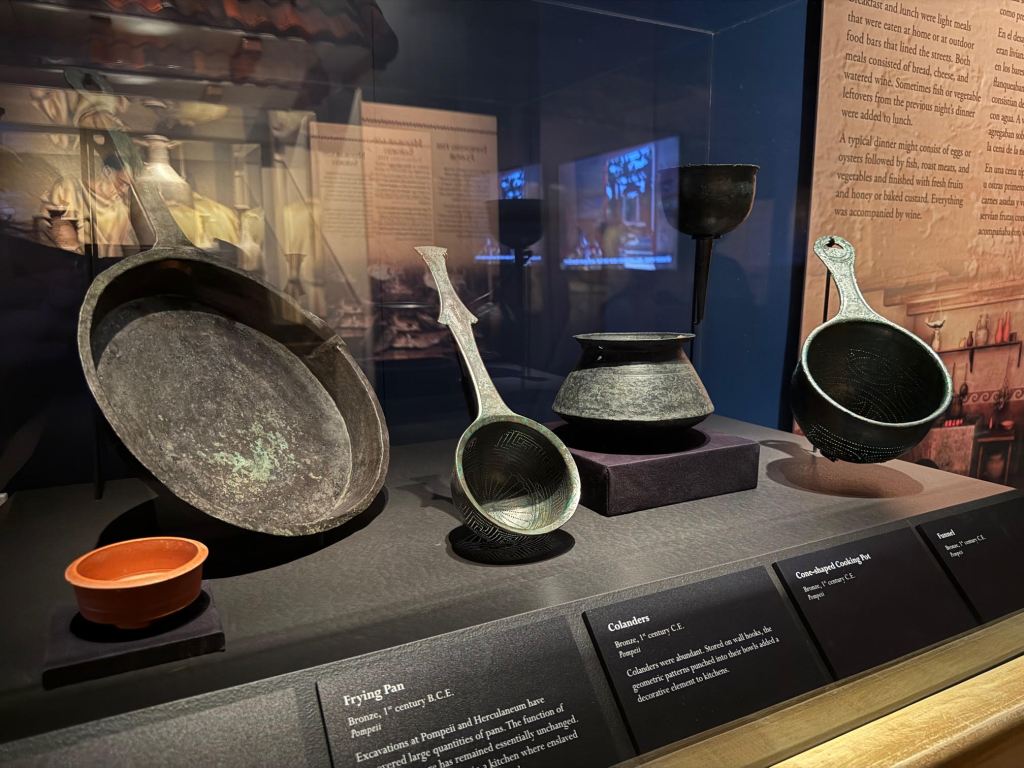
A patio table. A necklace. A colander. Graffiti on a chunk of wall. They’re what’s left of that day in August 79 C.E. when Mount Vesuvius erupted, dumping rock and ash on thousands of people in Pompeii and surrounding towns and villages.
Brought back to the Valley by popular demand, “Pompeii — The Exhibition” closes at the Arizona Science Center on Sunday, April 12. And moreover, this is the last North American stop for the show before it returns to Italy, and it won’t travel again for a very long time, perhaps ever.
Alix Bierson, senior scientist of biology, earth and environmental sciences at Arizona Science Center, sees the parallel between the recent pandemic and what happened in Pompeii.
“I think a lot about, how do these big things affect the people who are living in a space? We’ve had this really dramatic shift in our society and now we pick up the pieces and see how life goes on and what changes and what stays the same after that,” they say.
Life in Pompeii before the eruption wasn’t so different from the 21st century.
“You know, we think of 2,000 years ago, we think of history as this far-flung distant thing,” Bierson says, “but we have more in common with the Romans than one might think.”
Jennifer Goldberg
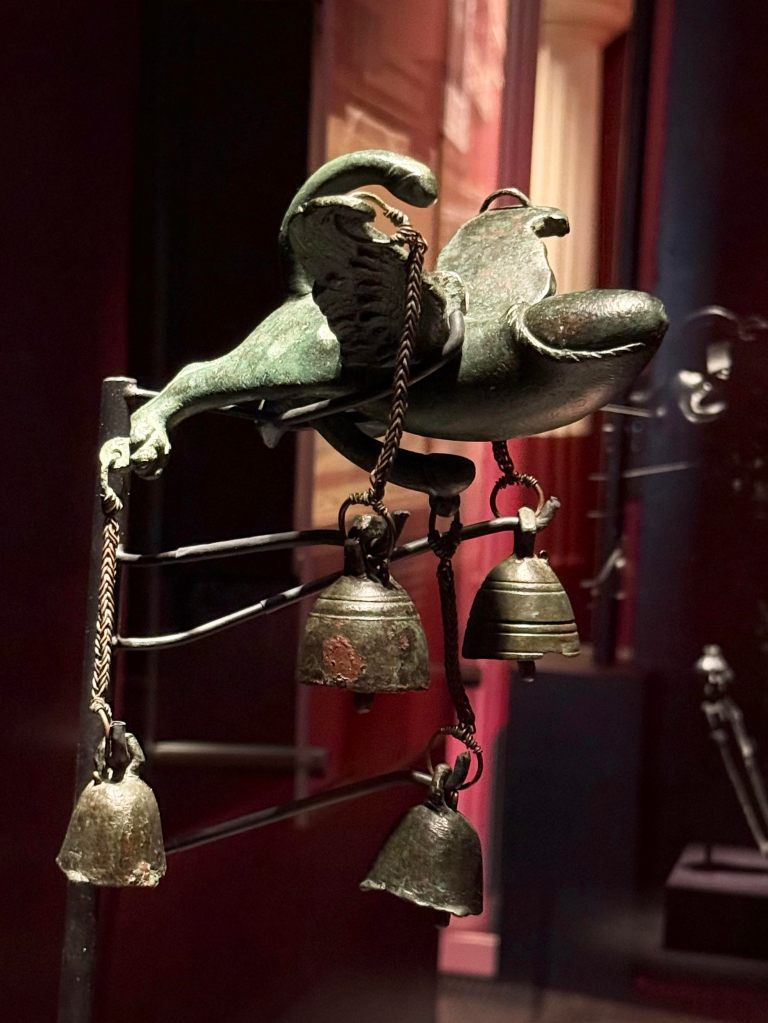
The items in the show include furniture, wall art, bottles to hold fish sauce and wine. Hooks for the fishermen, scalpels for the doctors, helmets for the gladiators. In a passageway marked to wave off children and the easily offended, items depicting erotic imagery show that folks in Pompeii were just as horny as people in the 21st century.
All taken, many of the things in “Pompeii — The Exhibition” aren’t far removed from the ordinary objects we use and see today. They’ve been made significant by time and tragedy.
Jennifer Goldberg
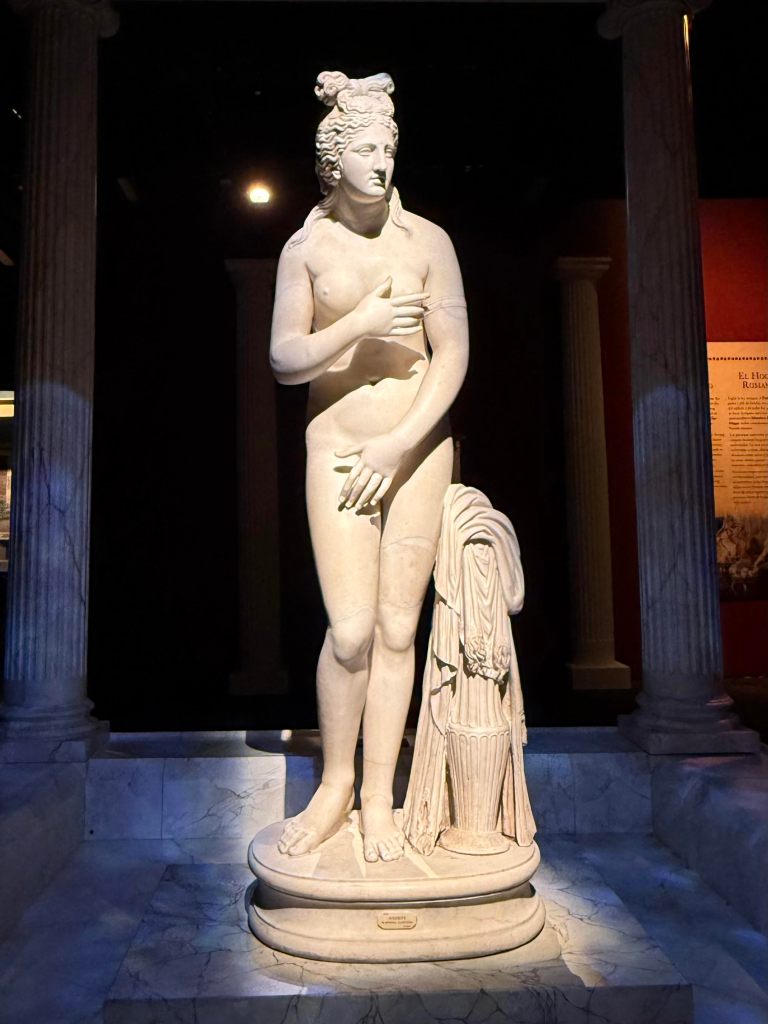
Everyday items aren’t the only things in the exhibition, which was put together using items from the National Archaeological Museum of Naples in Italy and the Archaeological Park of Pompeii. An exquisite white marble statue of Aphrodite greets visitors at the entrance of the exhibition space. An interactive activity illustrating the different types of matchups that could be seen in the gladiator arena is new to the show for this run. The eruption experience uses rumble plates in the floor, smoke and wind to give guests a taste of the first 24 hours after the disaster.
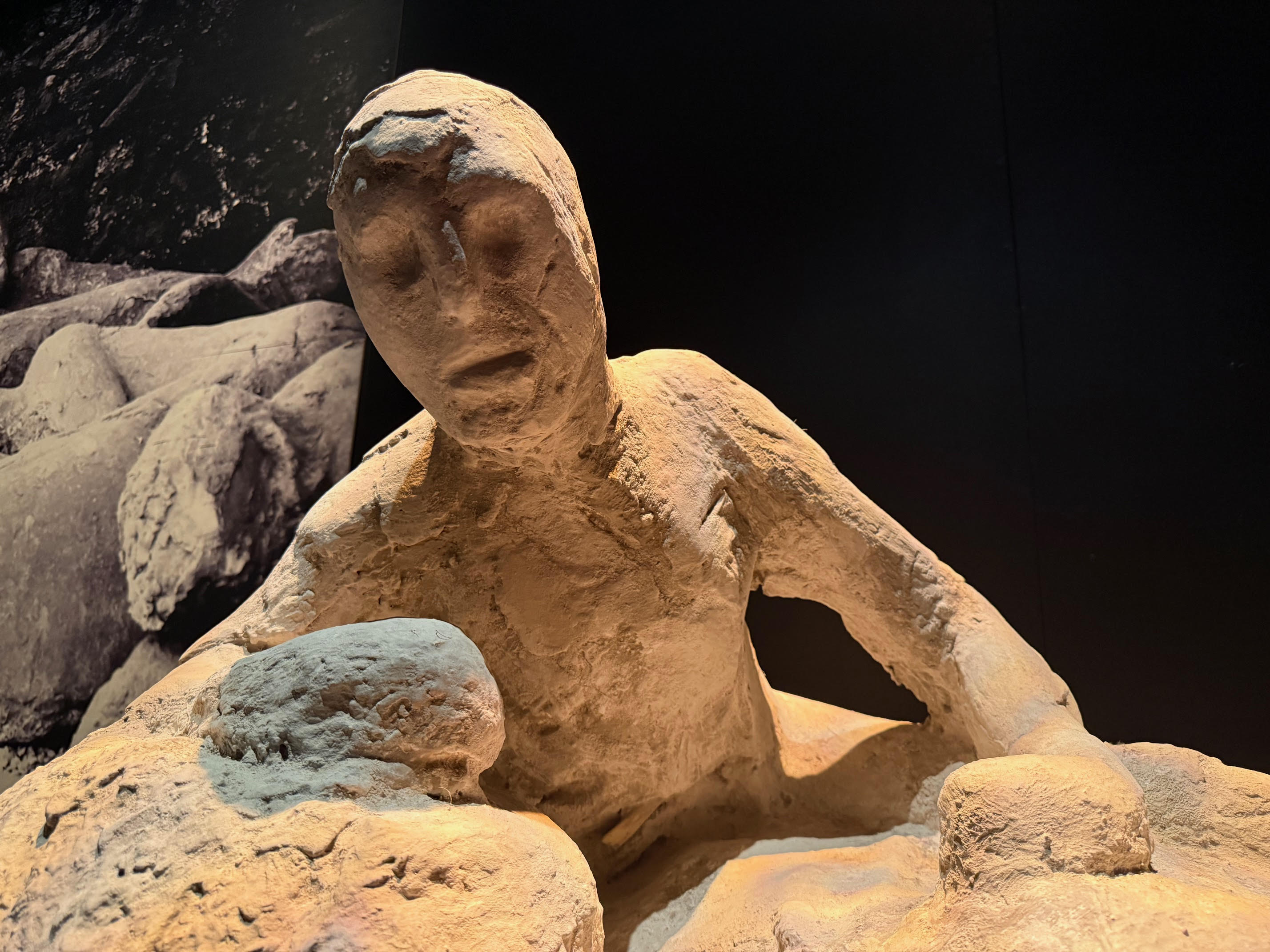
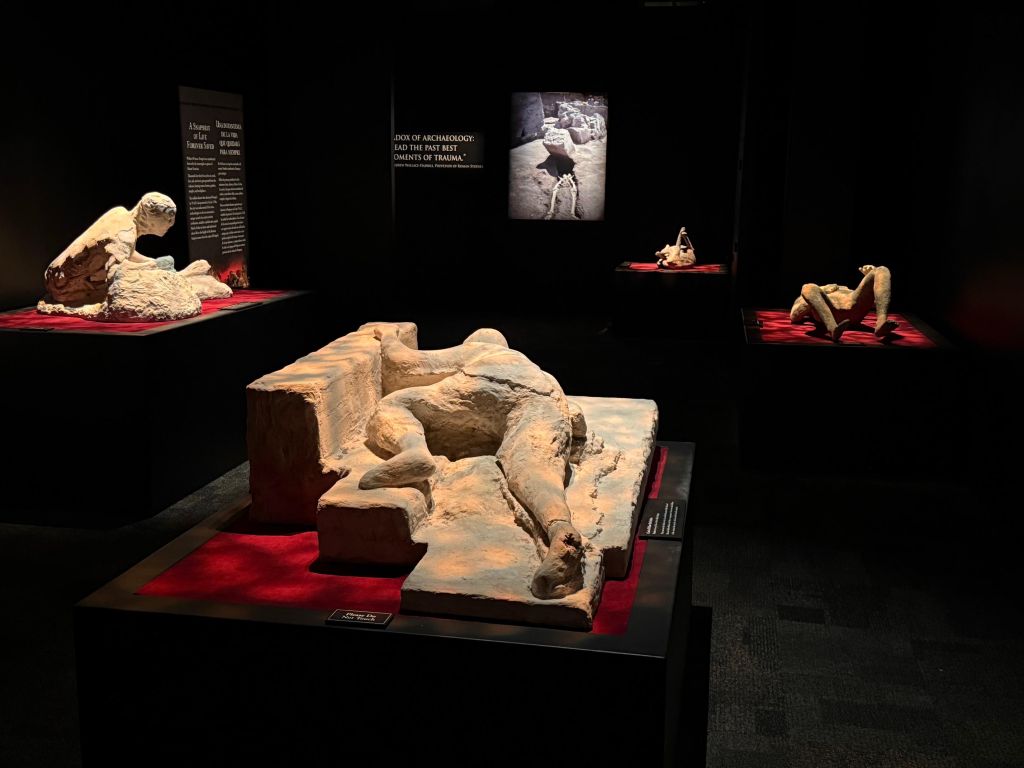
Past the eruption experience is perhaps the main attraction of the exhibit — full-body casts of people and animals who died at Pompeii. There’s a dog twisted in anguish, the outline of his collar still visible. Elsewhere, we see a child sprawled out, a man on his side, a teenager curled up.
Jennifer Goldberg
The casts are both heartbreaking and macabre. “People have really mixed reactions” to them, Bierson says. “I think the most common response I hear is curiosity and fascination of really getting to understand.
“My background is in paleontology so in many ways,” they continue. “I view (the casts) as a very recent kind of fossil. They’re a record of preservation of people, of life that is no longer with us. So it’s very deeply impactful, but with my science background it’s also absolutely fascinating to me.”
So after an almost-five-month run, “Pompeii — The Exhibition” will soon be on its way out of town. But for people who have experienced the show, the lessons will remain.
“We tend to put Greek and Roman society up on a pedestal, and (the exhibition) really contextualizes that no, these were just people living their lives in many ways very similarly to how we still do today,” Bierson says.
“Pompeii — The Exhibition.” Through Sunday, April 12. Arizona Science Center, 600 E. Washington St. Cost is $17 general admission, plus an additional $23 for the exhibition. Discounts are available for children. Visit the Arizona Science Center website for tickets and information.