
Jason Tang

Audio By Carbonatix
Kristin Key is used to strange questions. The comedian ends every one of her live shows with a question-and-answer session, giving audience members an opportunity to ask her anything. And, boy, do they. “What is the acceptable number of cats for a throuple to have?” The answer: Get a pregnant cat and see what happens. “Who’s the gayest Muppet?” Janice, obviously. “If you could do a duet with either Amy, Emily or Brandi, who would it be and why?” The only acceptable choice would be to duet with Brandi on an Amy and Emily song.
And if you don’t have to ask who Amy, Emily, or Brandi are, you might already be a member of the Lesbian Army.
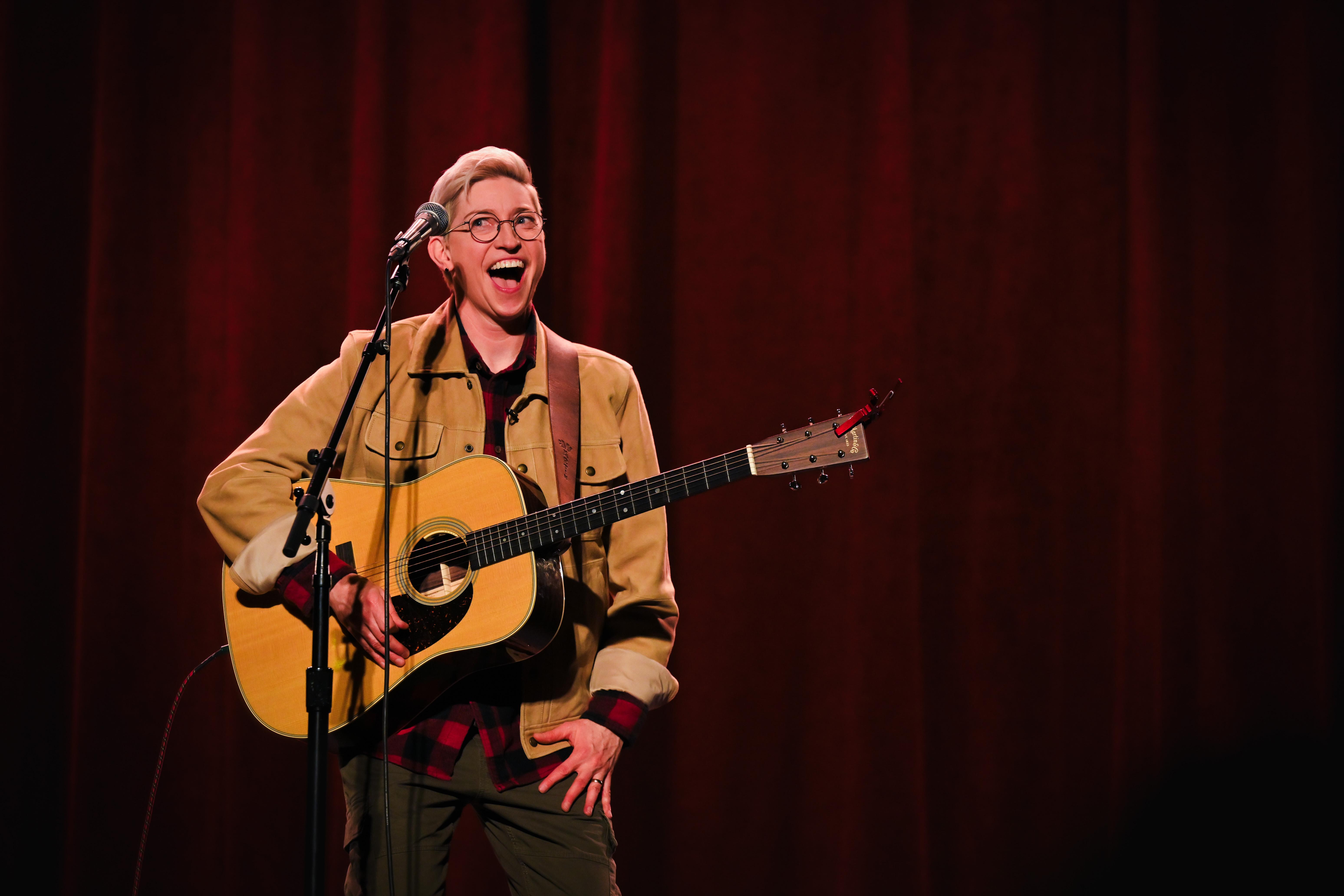
The Lesbian Army is the nickname for fans and followers of Key, a queer standup comedian whose quirky, joyful, high-energy act has won over LGBTQ+ and straight audiences around the country and on social media. And now she’s bringing her lesbian humor and ever-present guitar to Phoenix for three nights of shows at Desert Ridge Improv.
Key’s “Ca-Caw Tour” lands May 15 to 17, with five shows: two on Friday and Saturday, and one on Sunday. Tickets start at $31.90, with a portion of proceeds going to local LGBTQ+ youth-empowerment organization one·n·ten.
In advance of the shows, we sat down with Key for an exclusive interview about her journey as a comedian and as a lesbian — and finding success by embracing your true self.
In your new comedy special, “Lesbian Army,” which just came out on Apple TV and Amazon Prime, one of your first lines is, “This is not how my life was supposed to go.” What do you mean by that?
I was born to a family full of preachers — super evangelical nondenominational preachers who don’t believe in instrumental music or dancing — so the fact that I turned out to be a touring, very openly gay comedian is just bananas. I went to college to be a paramedic. I didn’t know that comedy was even an option. Where I grew up, in Amarillo, you didn’t see a lot of entertainers. Now I live in Los Angeles, and I have friends with kids who know that when they grow up, they can decide to go into the arts and entertainment. But in the panhandle of Texas, you didn’t pursue creative careers. You got a job that makes money or, if you’re a woman, you found a husband and had a baby. That’s just the societal norms.
Then I ran into Susan Gibson. She wrote the song “Wide Open Spaces,” which was the title track for The Chicks’ first album. Susan was from my hometown, and I would go watch her sing. I was fascinated by the fact that someone who grew up in Amarillo was doing this. One day, I said to her, “I don’t want to be a musician, but I think it would be real fun to be a standup comic. How do I do that?” I mean, it was so random. How would she even know? But then she said, “That’s so weird. My bass player’s brother just opened a comedy club in Amarillo.” Two weeks later, I was on stage, and I’ve been doing this ever since.
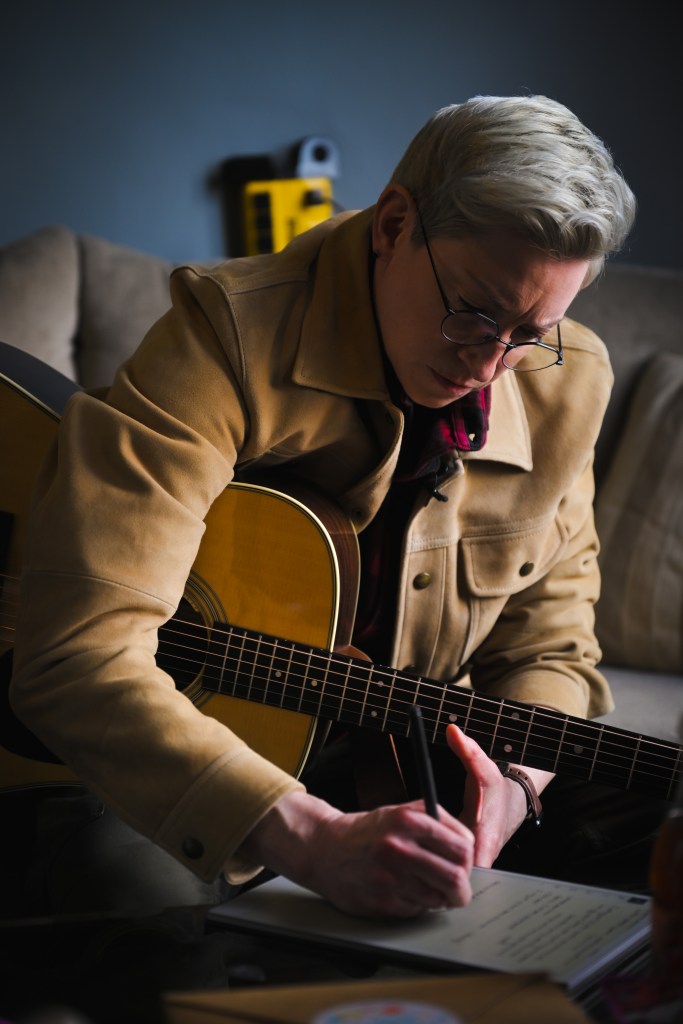
Key grew up in an evangelical Texas household.
Jason Tang
When you started in comedy, you were still in the closet. How did coming out affect your career?
I cannot believe that it took so long for me to figure out the value of being genuine. My whole approach to comedy from Day 1 was to pretend to be someone else, because I felt like who I was wasn’t working. So I tried so hard to project this persona of, “I’m mainstream. I play to regular audiences. I hang out with the guys; the guys love me. I’m not gay. I may look gay, but we don’t need to talk about that.” Then at some point when I was in my late 30s, a comedy club owner challenged me to talk about it. She said, “You know, it feels like there’s a real disconnect, like there’s an elephant in the room. Why don’t you talk about being gay?” No, I’m not supposed to do that. But I agreed to try it for just one show. I did it one time, and I wasn’t able to do it the other way ever again. It was so much — I don’t want to say easier, but it really was. I didn’t have any self-limitations. When I was trying not to look gay all the time, I wasn’t talking about liking cats or crocheting or all those little things. I didn’t talk about that because that looked gay. But the minute I said, “Well, who cares what you look like. You are gay,” suddenly I could talk about anything. My act got more fun to write, and I began connecting more with the audience.
Queer people historically have been the butt of jokes. But you embrace those stereotypes. I mean, just look at the lyrics for the “Lesbian National Anthem”: “I drive a Subaru, donate to dog rescues, have arm tattoos.”
Our community — the big, inclusive, wonderful, loving, queer and queer-adjacent community — is just starving for content that makes them feel seen and showcased. Once I wrote that song, it became apparent that people like it. It became a way to embrace queer culture. For a while, lesbians were such a punchline. In the ’90s, people would make fun of the Indigo Girls and Lilith Fair. But then you look back and go, “Why?” We have the best haircuts, we are so civic-minded, we are the best activists, we take care of our community. When you take all the mean-spiritedness out of these stereotypes, there’s nothing wrong with them. I do drive a Subaru. I wear Keen hiking sandals. My wife and I are very crafty. We take very good care of our cats, and we’re the reason there aren’t more dogs in the streets. We’re practical people. We have practical footwear, practical vehicles. What’s funny about that? When you get that stuff out of the way, there’s room for real jokes and real comedy.
Even though you’re known as a queer comedian, and a lot of your comedy draws on lesbian themes, your act is welcoming to everyone, including men and straight folks.
When I started talking about things that I had not been talking about before, my audience expanded so much. Standup is about showing everyone a unique human experience. Honestly, you can’t pretend to be someone else on stage. There’s a vulnerability to standup. At its core, it’s one person standing in front of hundreds or thousands of people trying to have a connection. It’s so much easier when you’re unique and honest. I’m a lesbian person who loves cats and crochets and just bumps through life. And as I talk about my journey, I’ll have people go, “Oh my God, that sometimes happens to me,” or “That’s exactly how me and my partner communicate,” or “That’s a stereotype I find true for myself.” I have jokes about old lesbians going to bed early and their bedrooms smelling like ointment, and a lot of old men are like, “Am I an old lesbian?” Yes. Yes, you are because there’s room for everybody in this. Everybody is laughing together and it’s just such a wonderful human moment. It connects us all, absolutely.
In addition to embracing your queerness, you also share your struggles with alcohol.
The Venn diagram of addiction and recovery and queer people overlaps heavily. For me, being told by a religious group that I was so much a part of that I didn’t belong — I mean, how does one live in that world? So alcohol became my solution as opposed to, like, unaliving. If I was going to have to be alive, alcohol helped. And I’ll say this to anyone who is thinking about sobriety or struggling to stay sober: If alcohol still worked, I’d still be drinking. I’m sober because alcohol stopped working. It’s never meant to be long-term. It got me through some really tough years, and I’m grateful for it and any drugs I took because they kept me alive. But at some point, they do run out of magic.
I was really nervous when I realized I needed to get sober. I thought I wasn’t going to be able to do standup, that I wasn’t going to have fun anymore, that my life was going to suck. That was 10 years ago. And as you can see through my social media, or just through my career, my life has gotten so much better. It’s much more fun and more fulfilling. I practice a daily recovery program, and thankfully, I don’t have to use alcohol or drugs to deal with my trauma anymore.
Do you think that by sharing your own story — your childhood, coming out, your battle with alcohol — you might be helping someone else who is going through what you did?
It definitely seems to be a side effect. People tell me that because I talked about going to church camp or getting kicked out of a church or finding out late in life that it’s OK to be gay, it’s easier for them to do that and makes them feel as though they’re not alone. It wasn’t intentional, but I feel good knowing that my story can help someone else feel more comfortable in their skin. It’s definitely not always the easiest process, but it feels good to just be authentically yourself.
With everything you’ve been through, you easily could have become the angry lesbian comic. But instead, your act is very uplifting and positive.
I don’t punch down, and I don’t villainize. I used to do that when I first started in comedy; I was always trying to find someone to make fun of or be different than. Now, because I don’t have any self-censoring, literally everything’s on the table. So I have a lot of different potential premises. There’s no reason to have a villain.
There’s a time and a place for all different kinds of comedy and for different voices. There are some great comics who do a good job with ranting or finding a way to fan the flames of a dumpster fire, and that gives a lot of people a cathartic outlet. And namaste, to each his own, but that’s just not my style. What feels best for me as an artist is being a conduit of joy and positivity. So when you come to my show, you’re going to have a silly, uplifting, positive good time.
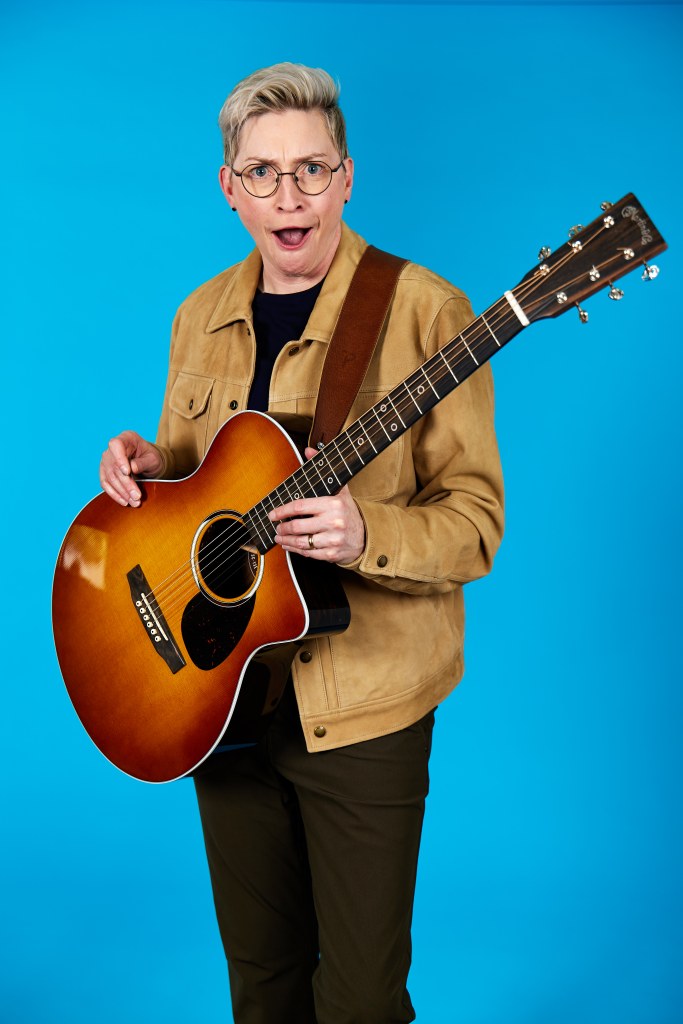
See Kristin Key all weekend at Desert Ridge Improv in north Phoenix.
Courtesy of Kristen Key
One element of your show that the audience really seems to enjoy is the Q&A session. Is that part of every show?
I always do a Q&A in every show, near the end, once all the material is done, and every single Q&A is different. I give the audience the opportunity to ask me literally anything in the whole wide world. Sometimes they’re simple questions, like “How did you meet your wife?” Other times, they’re kid-in-the-pool questions, like “If you could be any insect in the world, which insect would you be?” And then sometimes, they’re very clever and creative, like “If you could have sex as a Muppet …” I had that one the other night. I really wish my answer was Animal, but it’s more like Fozzie Bear, because when someone wants to have sex with me, I’m like, “Ahh, wokka wokka!”
For each show you do, you donate a portion of your proceeds to a local charity or nonprofit. Why is that important to you?
We kicked off the “Lesbian Army Tour” in late 2023, and it occurred to us after about the third city sold out that we were going to make some money. As a comic, it feels good to make money, because you spend most of your time not making money. But it also feels weird to make money off my community without giving something back. And so now, in every city that we go to, we pick a small nonprofit — usually, because in California, we do the Trevor Project because it’s very well-vetted — where a small or midsize donation will go a lot further. We find one that focuses on LGBTQIA+ youth or unhoused queer youth. And we always say the name of the organization during the show so that other people can gain awareness so if they want to help out, they can do so as well.
What can people expect from your shows at Desert Ridge Improv?
Prepare to laugh. Prepare to laugh hard. There’s going to be music, there’s going to be comedy, there’s going to be spontaneous moments you don’t even see coming. So bring your curiosity and know that by the time you leave, you’ll be in a good mood.
Kristin Key. 7 and 9:30 p.m. Friday, May 15, 6 and 8:30 p.m. Saturday, May 16 and 6 p.m. Sunday, May 17. Desert Ridge Improv, 21001 N. Tatum Blvd. Tickets start at $31.90.
