
Rosalie O’Connor

Audio By Carbonatix
Don’t call Daniela Cardim the “new” artistic director of Ballet Arizona.
While it’s true her predecessor is Ib Andersen, whose 24-year tenure indelibly shaped the company, Cardim will mark two years in Arizona on July 1.
Born in Rio de Janeiro, Cardim’s dance career, both on and offstage, has taken her around the world. She’s performed with companies in Monaco, Brazil, the Netherlands and the U.S., and choreographed productions from Australia to England with many stops in between. She was the assistant director and associate choreographer of the New English Ballet Theatre before coming to Arizona.
“When the position was announced here, I researched a lot about Ballet Arizona and about Phoenix,” Cardim recalls. “And I realized I knew of the company, (and it) had a good reputation already, but I got to know a little bit more and I saw it was financially stable (and) had a good size. I decided to apply, and here I am.”

Peter Leung
Ballet Arizona is in the middle of its run of “Ballet in Bloom,” the 2026 iteration of the annual open-air production that takes place at the Desert Botanical Garden. This year, it runs Tuesdays through Saturdays through May 30, and there are some new aspects.
For starters, the program includes two short pieces instead of one, making for a longer and more satisfying experience. Secondly, one of the pieces is choreographed by Cardim herself, set to music by Gabriel Prokofiev. (The other, “Concerto Six Twenty-Two” choreographed by Lar Lubovitch, is set to a work by Mozart.)
“I like the idea of … if you have two works, you can have two very different works and people can prefer one or the other. So there is something to talk about,” Cardim says. “We still have the wonderful setting — that same stage, same lighting and structure, same lovely experience for the audience, but this time, we’re having two ballets instead of one. … So yeah, I think it will look slightly different, but the essence of the performance, the outdoors and all of that atmosphere, I think remains the same.”
The duality of respect for tradition juxtaposed with the desire to innovate has characterized Cardim’s tenure at Ballet Arizona thus far and is reflected in the company’s upcoming 2026-27 season, which also marks its 40th anniversary.
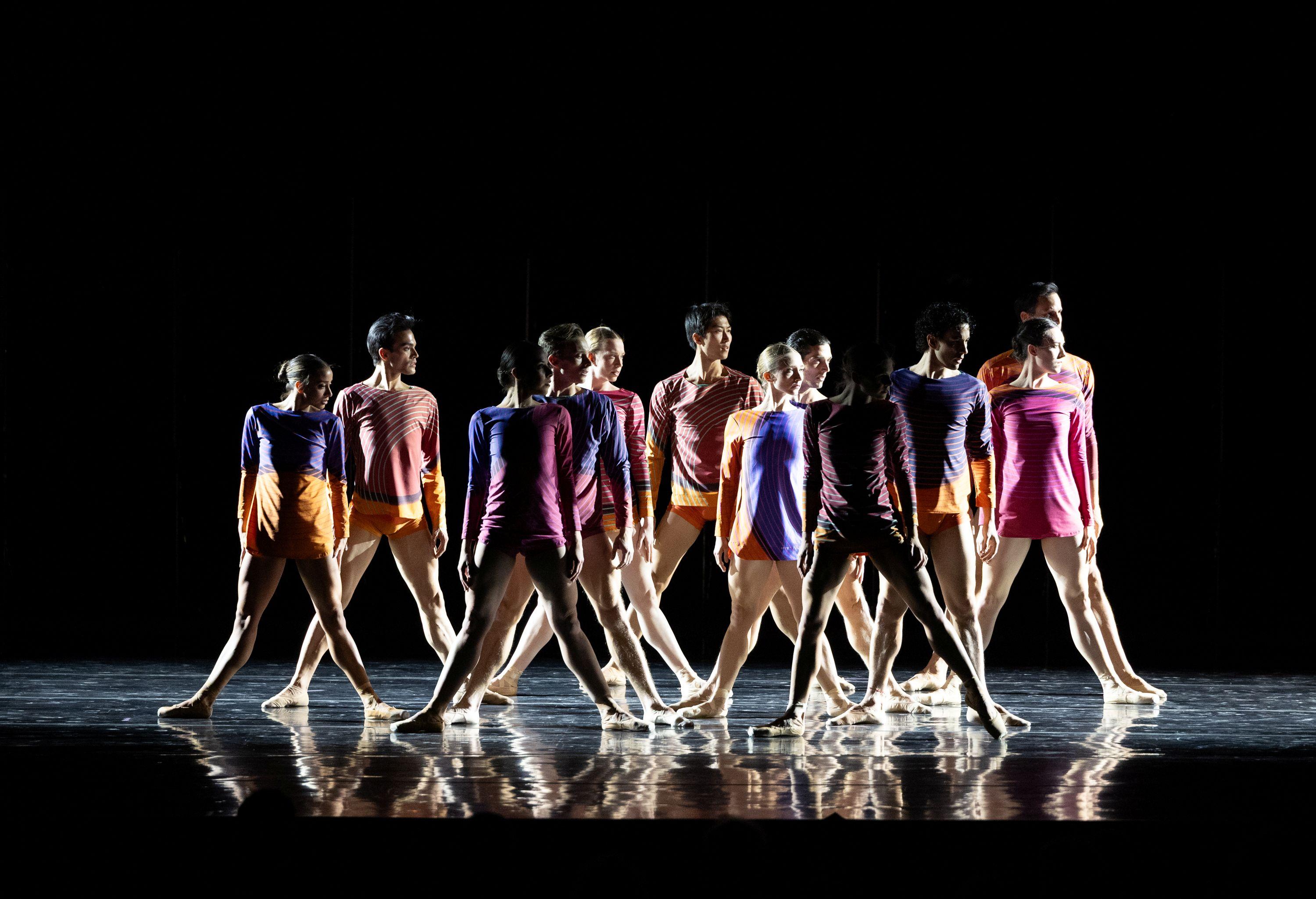
The 2025-26 season, which closes with “Ballet in Bloom,” blended selections from the classical repertoire (“The Sleeping Beauty,” “The Nutcracker“) with some more eclectic productions (“Alice in Wonderland” and “Cacti and Other Works“).
“I’m keeping the classical repertoire, I’m keeping the excellence and the level of the work that (Andersen) did with the dancers on stage, but I guess my slightly different angle is that I want a little bit more of a diverse repertoire,” Cardim says. “So I think my mark will be more about curating and making sure that our artistic vision is quite open and quite broad. … We are going to still present the classical ballets, the repertoire, and we always do because that’s also the duty for me, a duty that every ballet company has, to keep the repertoire that made ballet what ballet is. So of course we are going to keep doing ‘Nutcracker’ and ‘Swan Lake‘ and ‘Sleeping Beauty’ and all those ballets sometimes, but also, I think, tell new stories or tell stories in a different way.”

Ed Flores
For the 2026-27 season, that looks like traditional productions such as “Romeo & Juliet,” “Don Quixote” and holiday classic “The Nutcracker,” but also “Pulse: Three Works Shaping Ballet Today,” a dynamic program of contemporary works, and a 2027 production at the Desert Botanical Garden.
Cardim’s mission also includes training up the next generation of choreographers. Ballet Arizona will offer a choreography lab for its dancers to develop their skills, a project that is rooted in Cardim’s own experience.
“I only became a choreographer because that space existed at Dutch National Ballet. … It was called a choreography workshop. And that’s how I started. That’s how a lot of my fellow choreographers from Dutch National Ballet started — they’re now very successful. Every year, there was this space, this opportunity, there was no pressure, you could just try something. … It’s very important that for choreographers to develop, they need to first understand who they are as a choreographer. And the only way for you to do that is to experiment,” she says.
Before the 2025-26 season is over, before the 2026-27 season even begins, Cardim’s eyes are already on the future of Ballet Arizona.
“I know there are a few ballets that I want in the future, but those choreographers are busy. So I am already talking to choreographers about ’28, ’29, ’30,” she says. “I have a spreadsheet with five years in advance because that ballet that I want won’t be available until 2029.
“It’s exciting times. We just had one of the best seasons ever. … This company is amazing. I was so lucky. I inherited an amazing company and these dancers are beautiful and so professional and I’m very proud of the level of performance that we are putting on stage.”